
Ethereum (ETH), Shiba Inu (SHIB), Bitcoin (BTC), XRP and Hyperliquid (HYPE) Price Analysis for May 19th: Volatility Is Back on Menu
Ethereum, Shiba Inu, and Bitcoin face renewed volatility as traders grow defensive.
U.Today1 min read
1.3% of all XRP is now unavailable due to U.S. ETF activity, with $1.18 billion worth sidelined. Vitalik Buterin made a notable 64 ETH donation, while Arthur Hayes predicts Bitcoin could reach $126,000 amid fiat expansion.
Mentioned in this story
TL;DR
A massive supply squeeze is unfolding this midweek across the U.S. spot XRP ETF market as funds methodically absorb XRP from free circulation. According to fresh SoSoValue data, total net assets across the funds have reached $1.18 billion. At XRP's current price near $1.48, this means institutions have fully isolated around 1.3% of XRP's entire supply.
Cumulative capital inflows now stand at $1.358 billion, which means that right now, more than 770-840 million XRP are effectively locked inside the vaults of Canary, Grayscale, Bitwise, and Franklin Templeton. This makes every hundredth XRP token quietly removed from the market.
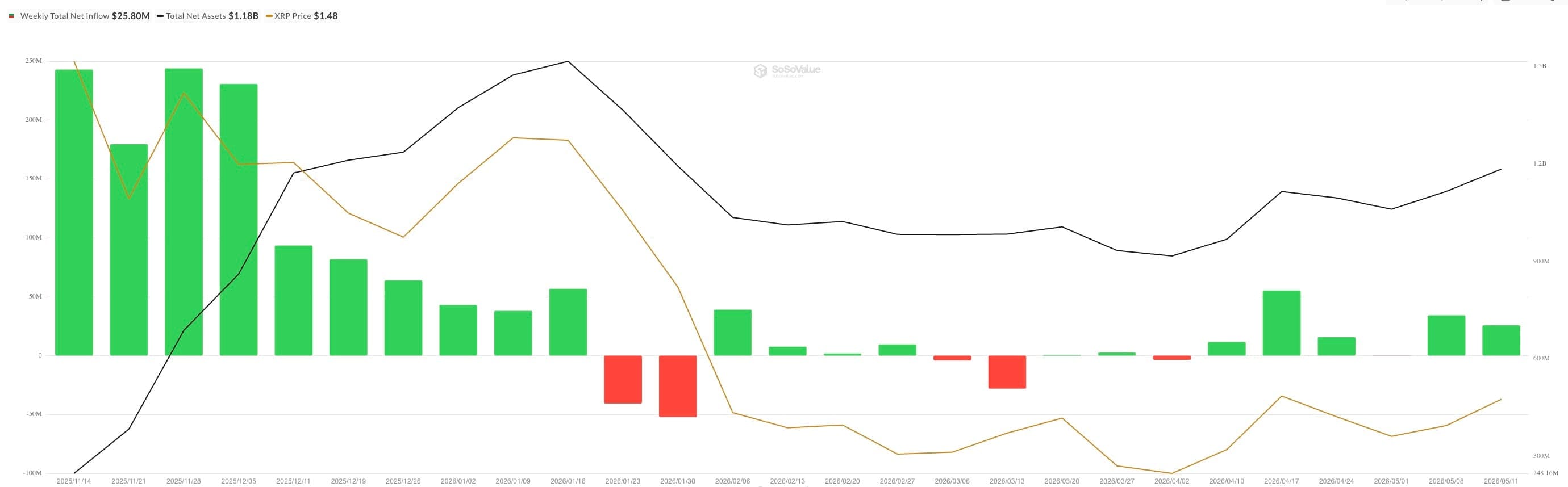
Net weekly fund flows into XRP Spot ETF in the US, Source: SoSoValue
The most telling part is that this total absorption of supply has not yet affected price action in any visible way. XRP continues its 80-day sideways drift inside the $1.3-$1.5 range. The late 2024 period already demonstrated that even during record ETF inflows, was still capable of falling 27%, confirming that coin absorption is happening privately and does not immediately impact order books.
1.3% of XRP is unavailable due to U.S. ETFs absorbing $1.18 billion worth of XRP, creating a liquidity crunch.
Vitalik Buterin donated 64 ETH to animal welfare, signaling a shift towards ideological uses of cryptocurrency, similar to his past actions with SHIB.
Arthur Hayes predicts Bitcoin could reach $126,000, driven by hidden fiat expansion as the U.S. and China debase their currencies.
Currently, between 770-840 million XRP are locked in institutional vaults, contributing to the supply squeeze in the market.
Ethereum, Shiba Inu, and Bitcoin face renewed volatility as traders grow defensive.

Ethereum whales have flooded Binance with 225,000 ETH, the largest inflow since 2022.

SEC may soon introduce a framework for trading tokenized stocks, enhancing Wall Street's blockchain efforts.

Tom Lee connects Ethereum's recent struggles to rising oil prices, noting an unprecedented inverse correlation.

Lawyers admit to using AI-generated quotes in Trump layoffs case, apologize for the error.

What the CLARITY Act Means for XRP: Key Sections Explained
See every story in Crypto — including breaking news and analysis.
However, once a global risk-on environment begins and a fresh wave of buyers floods the spot market, the absence of those 1.3% locked coins could trigger a severe supply squeeze. Pushing the price of XRP higher would become significantly easier because of the growing emptiness inside exchange order books.
Ethereum co-founder Vitalik Buterin made known this May afternoon that he transferred 64 ETH to an animal protection fund, accompanying the transaction with a manifesto about the progress of vegan cuisine and artificial meat technologies.
The market immediately recalled the famous meme-era precedent from five years ago involving the Shiba Inu coin, which reflected Buterin's characteristic style of turning digital assets into real social change. Back in 2021, SHIB creators sent half of the entire token supply to Buterin as a publicity move.
(yes, even the shrimp matter. Many people have the impression that shrimp welfare is some kind of nerd thought experiment gone crazy, but the reality is, well ... ask your bot about "eyestalk ablation")
— vitalik.eth (@VitalikButerin) May 12, 2026
Instead, he shocked the market by burning 90% of the tokens while donating the remaining 10% - worth around $500 million at the time - to India's CryptoRelief fund. Since then, any direct charitable transfer from Buterin has been perceived as a declaration of his personal values rather than an attempt to satisfy speculative expectations.
The current 64 ETH transfer does not reshape the market in terms of scale, but it carries a deeper ideological message. Vitalik Buterin openly called on the crypto industry to pay more attention to "our non-human companions," arguing that technological progress has made helping animals easier than ever before.
The current Bitcoin bull trend is not being driven by retail speculation but by forced hidden fiat expansion from the world's largest economies, according to Arthur Hayes. In his new essay, "The Butterfly Touch," Hayes stated that Bitcoin's return to $126,000 is the inevitable conclusion of a massive macroeconomic transition.
According to the BitMEX founder, the geopolitical confrontation between the United States and China has transformed artificial intelligence, data centers, and semiconductors into national security assets. AI infrastructure spending (CAPEX) has risen so dramatically that technology giants can no longer finance it purely from profits.
As a result, both the U.S. and China are effectively forcing central and commercial banks to flood the sector with cheap credit. Hayes argues that regulators are now prepared to completely ignore inflation risks and continue expanding the money supply in order to preserve technological sovereignty.
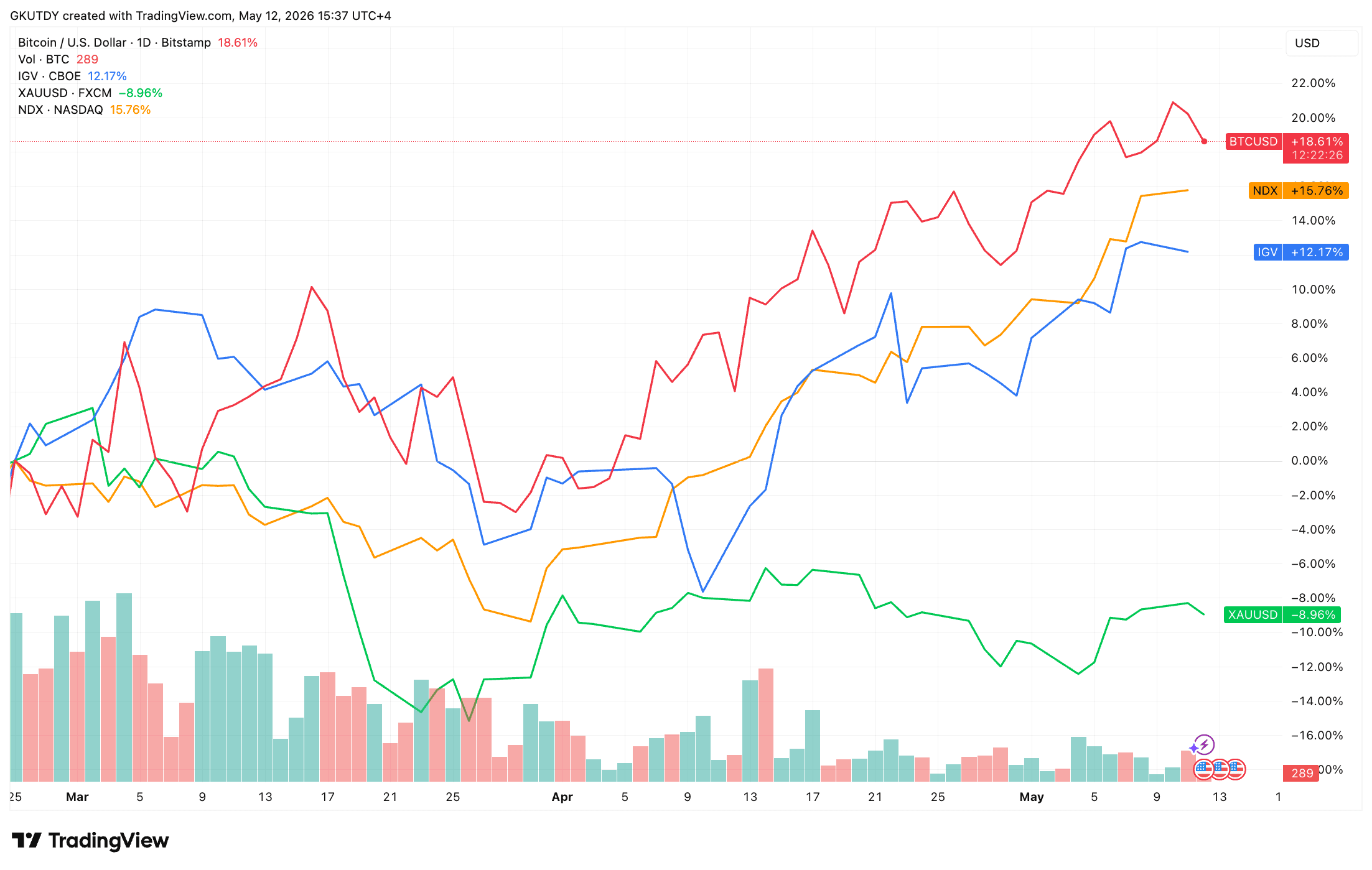
Post-war performance of Bitcoin, Nasdaq 100 Index, IGV US, and gold - Source: TradingView
The second catalyst behind this new money-printing cycle emerged after February 28, as instead of continuing to accumulate U.S. Treasuries, countries have started partially liquidating dollar reserves, redirecting capital toward the real economy.
To prevent the U.S. debt market from collapsing under declining foreign demand, the Federal Reserve and the U.S. Treasury will likely be forced to activate hidden liquidity mechanisms - expanding dollar swap lines and modifying banking regulations to facilitate Treasury absorption. Combined with stimulus measures from the People's Bank of China, this could unleash another global wave of fiat currency debasement.
As a result, while trillions of dollars and yuan are still preparing to enter the market, Bitcoin has already completed its cyclical bottom near $60,000, front-running the future liquidity wave. Hayes believes the rally will become parabolic once BTC confidently secures a position above $90,000.
At that point, large option sellers and institutional short positions may be forced into emergency covering, potentially triggering a violent short squeeze toward $126,000.
Hayes himself remains positioned for "maximum risk" through his fund Maelstrom. His largest positions remain Hyperliquid and Zcash, while his newest strategic bet is NEAR Protocol. Hayes expects NEAR to benefit from the adoption of "intent-based" architecture and privacy infrastructure.
At the same time, Hayes warns that the AI bubble will inevitably burst. He expects this to happen closer to the 2028 U.S. election cycle, triggered by reckless technology IPOs and social unrest caused by rising electricity prices and job displacement.
But before that happens, Bitcoin may fully absorb the coming wave of fiat liquidity.
As of the second week of May, the crypto market has secured itself in a phase of moderate growth while waiting for fresh catalysts from the U.S. regulatory environment. Bitcoin is trading around $81,000, supported in part by the resumption of MicroStrategy's BTC purchases through MSTR.
Key checkpoints: