
Trump Media’s Q1 loss widens to $406 million on bitcoin, CRO markdowns
Trump Media's Q1 loss widens to $406 million, heavily impacted by crypto markdowns.
CoinDesk1 min read

Charles Hoskinson criticizes Bitcoin's choice of SPHINCS+ for post-quantum security, calling it the least expressive option. He argues that while it offers quantum resistance, it lacks adaptability and could hinder future innovations.
Mentioned in this story
Charles Hoskinson, the founder of Cardano and Midnight projects, has mocked Bitcoin's post-quantum security strategy. In a direct response, he claimed that Bitcoin is choosing the least expressive and interesting post-quantum signature scheme over something more adaptable and future-proof. Design philosophy is the main point of contention.
SPHINCS+ is a hash-based stateless signature system. Although it is thought to be safe from quantum attacks, it is heavy, inefficient, and has a restricted range of features. It is not as flexible for more complex scripting or composability as other post-quantum cryptographic systems. When Hoskinson refers to it as the least expressive, he is referring to this.
Lol, let's use the least expressive and interesting PQS to solve the quantum issue. Never change Bitcoin
— Charles Hoskinson (@IOHK\_Charles) April 21, 2026 To put it simply, it resolves the specific issue of quantum resistance but does not significantly increase Bitcoin's potential. On the other hand, Bitcoin developers are not optimizing for expressiveness. Reducing attack surface and upholding cautious, tried-and-true design principles are their top priorities. Because SPHINCS+ relies on simple hash functions rather than more intricate mathematical constructions, it fits that model. That simplicity is deliberate from a security perspective.
According to Hoskinson, there was a chance to update the protocol more widely that was lost. A practical trade-off also exists. Compared to existing ECDSA or Schnorr signatures, SPHINCS+ signatures are substantially larger, which may affect scalability and result in larger transaction sizes. That limitation supports the notion that this is a defensive rather than an innovative upgrade. Large-scale quantum computers cannot yet crack the current cryptography used by Bitcoin. However, if more effective or adaptable post-quantum schemes develop in the future, selecting a rigid solution now could lead to conflict. Any decision made today will probably last for years due to Bitcoin's slow upgrade cycle. From the price perspective, Bitcoin is currently in a recovery phase and is moving back toward the upper $70,000 range. Price action remains compressed under resistance, reflecting a market that is stabilizing but not yet trending decisively.
SPHINCS+ is a hash-based stateless signature system considered safe from quantum attacks, but it is criticized for being inefficient and lacking flexibility compared to other cryptographic systems.
Hoskinson argues that Bitcoin's choice of SPHINCS+ limits its potential for future innovations and adaptability, making it a defensive rather than an innovative upgrade.
The larger size of SPHINCS+ signatures compared to existing methods like ECDSA could impact Bitcoin's scalability and lead to larger transaction sizes.
Trump Media's Q1 loss widens to $406 million, heavily impacted by crypto markdowns.

Australian police seize $4.2 million in Bitcoin during raids on darknet marketplace operators.

Bitcoin miners have withdrawn 3,400 BTC as prices rise; could this impact recovery?

Experts at Consensus Miami 2026 argue sports betting should be a financial product, not gambling.
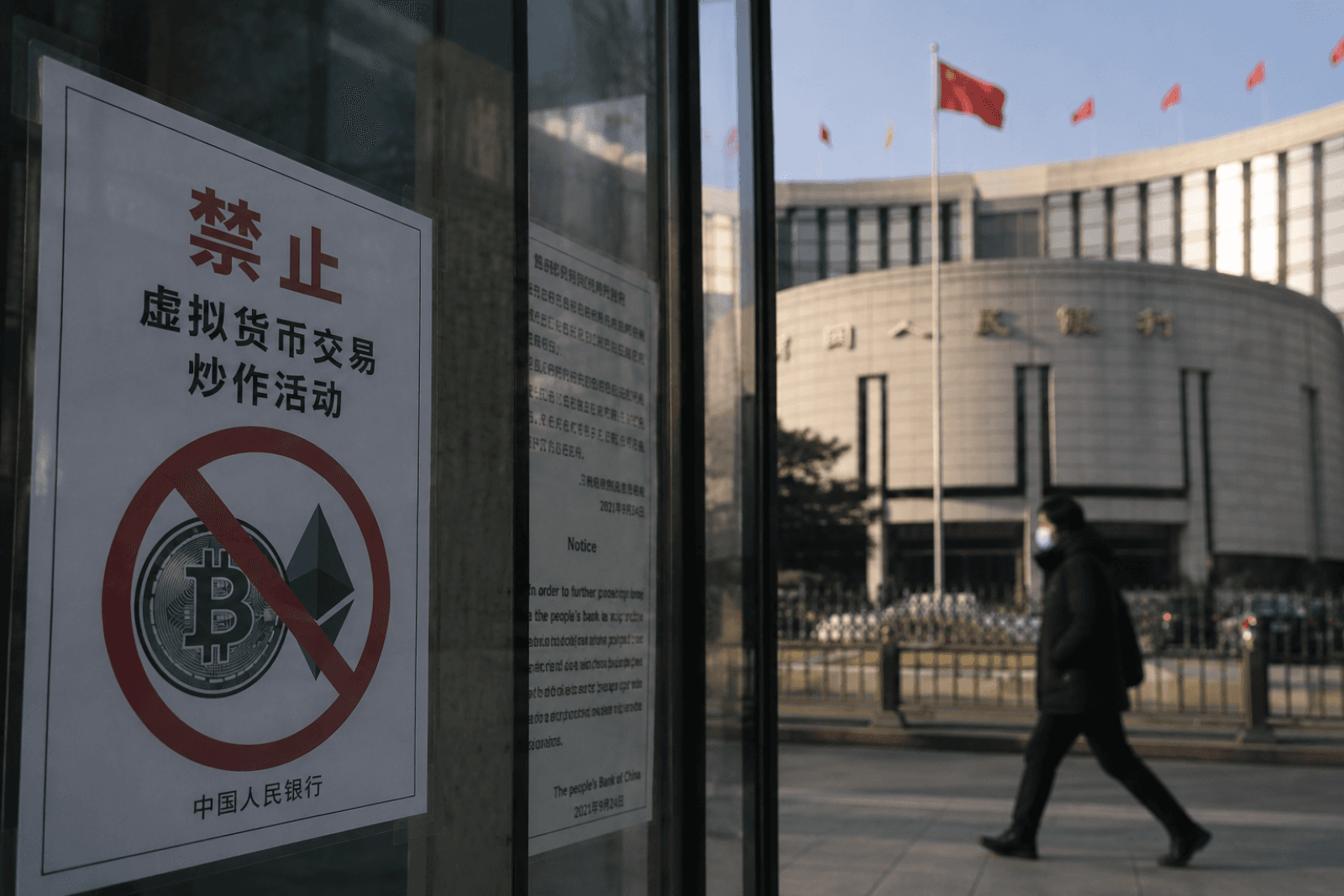
Exploring China's dual-track strategy on crypto regulation and Bitcoin mining.

New report warns that bitcoin and $3 trillion in digital assets face quantum threats.
See every story in Crypto — including breaking news and analysis.