Canadian Government Pushes for Sweeping Ban on Bitcoin, Crypto ATMs
TL;DR
Canada's Department of Finance is proposing a nationwide ban on Bitcoin and crypto ATMs to combat scams targeting vulnerable populations. The ban would still permit cash-to-crypto exchanges at staffed locations.
Key points
- Canada's Department of Finance proposes a ban on Bitcoin ATMs
- The ban aims to protect vulnerable populations from scams
- Cash-to-crypto exchanges will still be allowed at staffed locations
- Similar measures have been enacted in U.S. states like Indiana and Tennessee
- Quebec has required licensing for crypto ATM operators for years
Mentioned in this story
Canada's Department of FinanceCanadaQuebecIndianaTennessee
In brief
- Canada’s Department of Finance is pushing for a sweeping ban on Bitcoin and crypto ATMs, in an attempt to clamp down on a growing number of scams.
- The measure would still allow Canadians to exchange cash for crypto at brick-and-mortar stores, where employees are present.
- The government’s proposal comes amid similar measures enacted or passed by U.S. states, including Indiana and Tennessee.
Canada’s Department of Finance has proposed a total ban on Bitcoin and crypto ATMs, describing the measure as a way to protect seniors and vulnerable people.
In an economic update released on Wednesday, the country’s government described machines that let customers exchange cash for digital assets as “a primary method” for scammers set on bilking a growing number of Canadians out of their hard-earned cash.
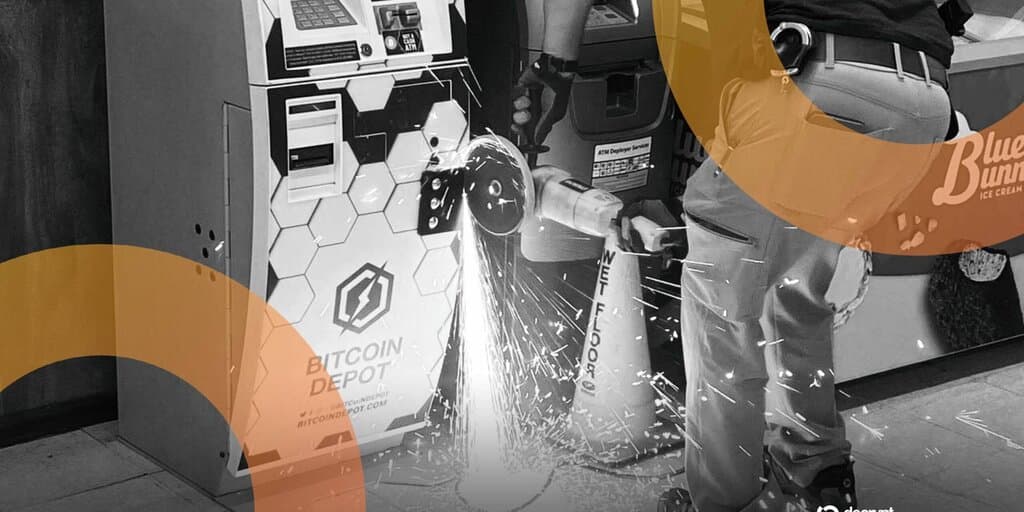
Provinces like Quebec have required crypto ATM operators to secure licenses as money-services businesses, or MSBs, for years, yet the proposal would effectively supersede localized frameworks by ordering a nationwide shutdown of the self-service kiosks that are commonly found at gas stations and convenience stores to combat rising fraud.
The government noted that the Financial Transactions and Reports Analysis Centre of Canada, or FINTRAC, has been proactive about cracking down on MSBs to thwart money laundering, terrorism financing, and sanctions evasion.
In March, for example, the regulator revoked licenses for 84 MSBs. Around 70 of the affected companies were engaged in the “transfer of virtual currency,” including names such as ATM Token Financial, according to the regulator’s website.
The government said that the measure still allows Canadians to purchase digital assets from brick-and-mortar MSBs, which are obligated to maintain a physical office space with employees present during business hours to manage compliance and operations.
Canada is currently home to nearly 4,000 crypto ATMs, according to Coin ATM Radar. More than a quarter of those machines are clustered around Montreal, Canada’s second-largest city. For comparison, the U.S. currently supports more than 30,000 crypto ATMs.
Scammers commonly impersonate government officials, law enforcement, or tech support to trick victims into depositing cash into crypto ATMs. Once the cash is converted—often under pressure—victims are duped into sending the money directly to the criminal’s wallet.
In the U.S., FBI numbers released this month showed that Americans over the age of 60 lost $257 million to scams involving crypto ATMs last year, a 58% increase year-over-year. Indiana has outlawed the machines entirely, while Tennessee to do the same, with its recently passed bill set to take effect on July 1.
Q&A
Why is Canada banning Bitcoin and crypto ATMs?
Canada is banning Bitcoin and crypto ATMs to protect seniors and vulnerable individuals from scams that exploit these self-service kiosks.
What alternatives will Canadians have for exchanging cash for crypto?
Canadians will still be able to exchange cash for crypto at brick-and-mortar stores where employees are present.
Which provinces in Canada have already regulated crypto ATMs?
Provinces like Quebec have required crypto ATM operators to secure licenses as money-services businesses for years.