
Core Scientific plans $3.3B debt raise to fund AI data center push

TL;DR
Core Scientific plans to raise $3.3 billion in debt to expand its data center operations in the U.S. The financing will support ongoing development and refinance existing short-term debt.
Key points
- Core Scientific seeks to raise $3.3 billion in debt
- Financing will support data center expansion across the U.S.
- Proceeds will refinance existing short-term debt
- Expansion projects identified in Georgia, Texas, North Carolina, and Oklahoma
- The offering involves senior secured notes due in 2031
Mentioned in this story
Core ScientificMorgan StanleyGeorgiaTexasNorth CarolinaOklahoma
Core Scientific is seeking to raise $3.3 billion in debt to support its expanding data center operations across the United States, as crypto miners increasingly pivot toward high-performance computing and artificial intelligence workloads amid tighter conditions in the mining sector.
The financing will come through senior secured notes due in 2031, the company disclosed Tuesday. The notes will be backed by Core Scientific’s assets, giving investors priority claims in the event of default. Unlike an equity raise, the offering allows the company to access capital without diluting existing shareholders.
Proceeds from the offering are expected to fund ongoing data center development and refinance existing short-term debt.
In particular, Core Scientific plans to repay borrowings under its 364-day credit facility, effectively extending its debt maturities as it scales infrastructure. The company has identified expansion projects in Georgia, Texas, North Carolina and Oklahoma.
The proposed raise follows a separate $1 billion credit agreement with Morgan Stanley announced in March, underscoring Core Scientific’s push to secure long-term financing for its data center buildout.
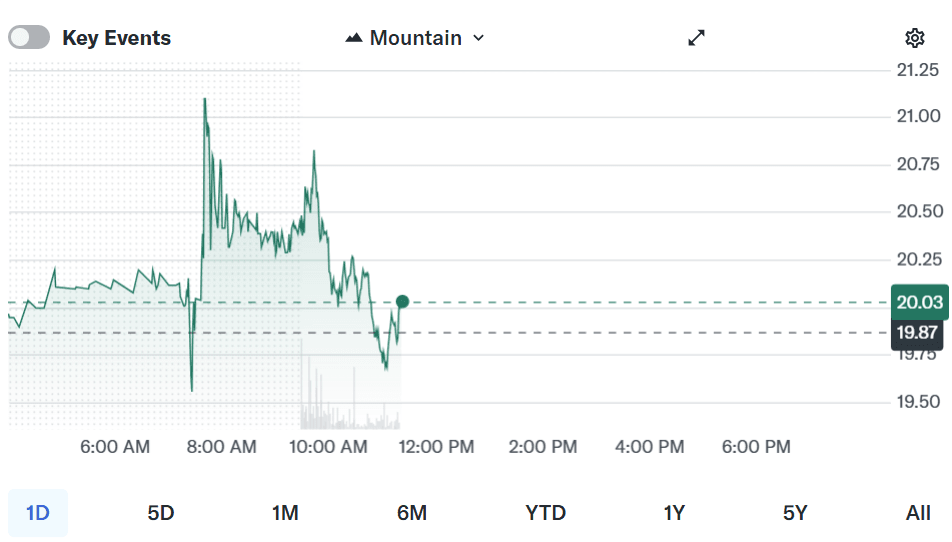
Core Scientific (CORZ) shares were little changed in early Tuesday trading, extending a year-to-date rally of more than 37%. Source: Yahoo Finance
Core Scientific is among several crypto miners that have turned to leverage to expand beyond traditional bitcoin mining, particularly into high-performance computing and AI-focused data center services. Peers, including MARA Holdings, Riot Platforms and Hut 8 have pursued similar strategies, investing in infrastructure and partnerships to diversify revenue streams.
Q&A
What is Core Scientific's plan for the $3.3 billion debt raise?
Core Scientific aims to use the $3.3 billion to fund data center development and refinance existing short-term debt.
How will Core Scientific's debt raise impact its shareholders?
The debt offering will not dilute existing shareholders, as it involves senior secured notes rather than an equity raise.
Which states are included in Core Scientific's expansion projects?
Core Scientific plans to expand its data center operations in Georgia, Texas, North Carolina, and Oklahoma.