
Analyst Says Don’t Buy Bitcoin Until This Happens
Crypto analyst Gargoyle advises waiting to buy Bitcoin until high volume signals a bottom.
NewsBTC1 min read

Digital asset investment products attracted $857.9 million last week, the largest single-week total since April. Bitcoin led with $706.1 million, while Ethereum saw $77.1 million in inflows, reversing prior outflows.
Mentioned in this story
Digital asset investment products just pulled in nearly $860 million in a single week, extending a six-week streak of inflows as momentum builds around the U.S. Digital Asset Market Clarity Act.
Inflows hit $857.9 million last week, the largest since late April, pushing total assets under management to $160 billion, according to CoinShares’ Monday report.
Crypto ETPs and ETFs saw inflows of US$857.9MM last week.@Bitcoin and @ethereum both saw inflows of US$706.1M and US$77.1M respectively. @solana recorded US$47.6M and XRP (@Ripple) US$39.6M, both notable accelerations on recent activity.
USA: + US$776.6M
GER: + US$50.6M… pic.twitter.com/muTOWvbM1i— CoinShares (@CoinSharesCo) May 11, 2026
Bitcoin led inflows with $706.1 million, bringing its YTD total to $4.9 billion, while altcoins also gained traction, with Ethereum attracting $77.1 million, Solana with $47.6 million, and XRP $39.6 million.
Digital asset investment products attracted a total inflow of $857.9 million last week.
Bitcoin attracted $706.1 million, while Ethereum saw inflows of $77.1 million.
The Digital Asset Market Clarity Act has driven market optimism, contributing to a six-week streak of inflows.
Total assets under management for digital asset investment products have reached $160 billion.
Crypto analyst Gargoyle advises waiting to buy Bitcoin until high volume signals a bottom.
Exploring the HYPE: Is Hyperliquid Worth the Hype?
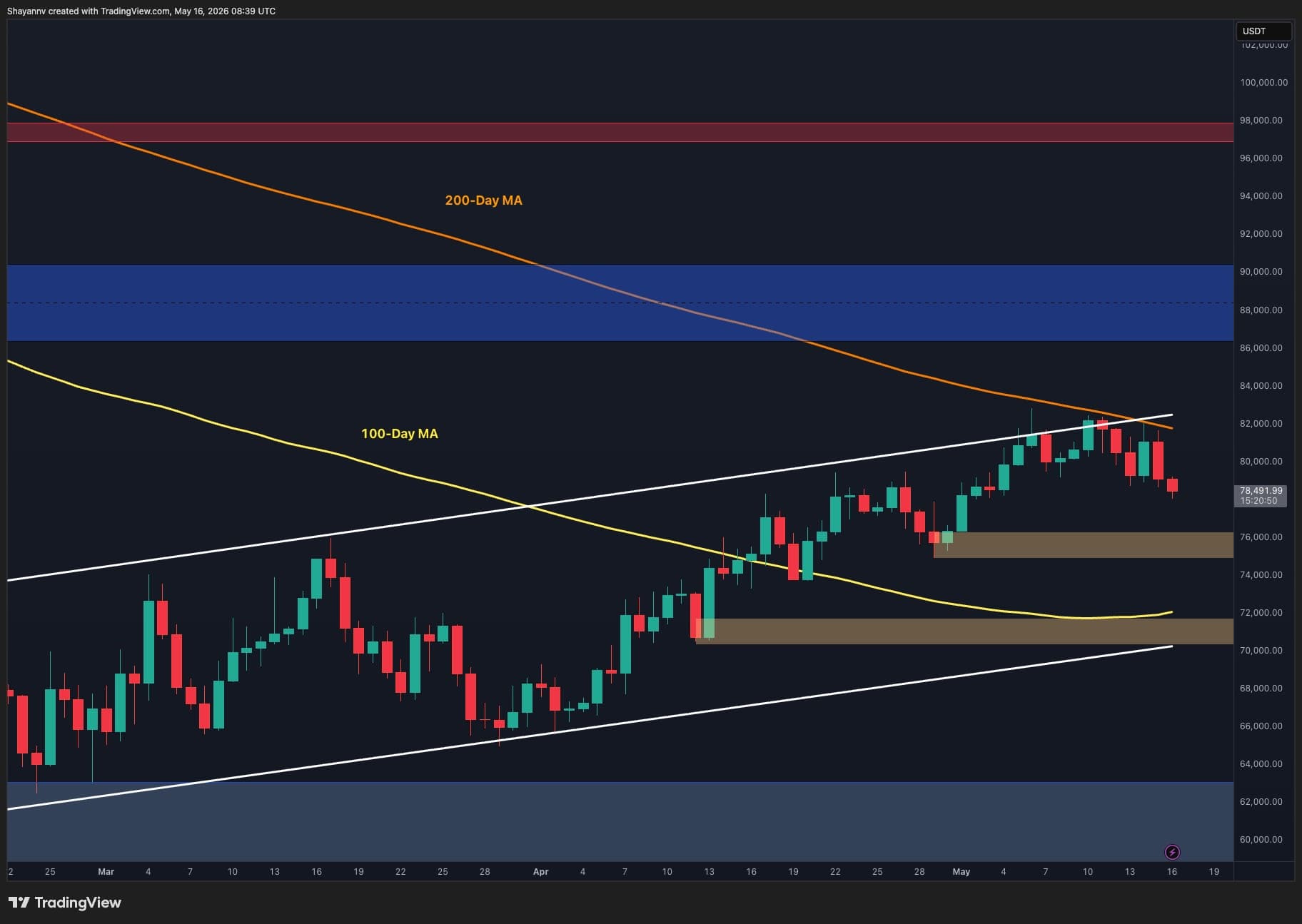
Bitcoin struggles below $80K, signaling potential bearish correction.

Liberland awards Ethereum co-founder Vitalik Buterin its highest honor at ETH Prague 2026.

Senate Banking Committee advances CLARITY Act, but money laundering concerns loom.
Ripple's CTO David Schwartz joins the XRPL Foundation to enhance leadership.
See every story in Crypto — including breaking news and analysis.
Meanwhile, short-Bitcoin products recorded $14.4 million in outflows, the largest this year, suggesting investors are unwinding bearish hedges as confidence builds.
The surge came as Bitcoin briefly climbed above $80,000 mid-week, supported in part by improving sentiment tied to the CLARITY Act’s progress through Congress.
The world’s largest crypto briefly topped $82,000 over the weekend before pulling back to the $81,000 range, according to CoinGecko data.
The CLARITY Act moves to a key Senate markup this Thursday, with a June floor vote planned and the White House targeting July 4 passage.
“The Clarity Act has been the major driver for the inflows — it's something both the crypto industry and institutions have been waiting for since last year,” Nic Puckrin, co-founder of Coin Bureau, told Decrypt.
He added the Act is “a catalyst rather than the sole reason,” as institutional interest has been “building in the background this whole time,” and that resolving the legislation would “remove a major regulatory obstacle.”
Dean Chen, analyst at crypto exchange Bitunix, described the current trend as "capital rotation and dip-buying activity rather than the beginning of a fully confirmed long-term bull cycle."
Bitcoin retraced nearly 50% from its October 2025 all-time high of around $126,200, he told Decrypt, making recent inflows look more like value-seeking than structural re-rating.
"I believe the recent inflows are more reflective of spillover capital from overheated traditional risk assets and value-seeking flows into heavily corrected crypto assets," Chen said.
A coalition of major banking trade groups wrote to the Senate Banking Committee on Friday, saying that Senators Thom Tillis (R-NC) and Angela Alsobrooks (D-MD)'s proposed compromise language contains loopholes that could allow crypto firms to effectively pay interest-like rewards using stablecoins.
Tillis responded that he and Alsobrooks "respectfully agree to disagree," signaling the committee intends to proceed regardless.
Puckrin said that if banking opposition stops the CLARITY Act “in its tracks,” it would hit sentiment, though the bigger risks remain “geopolitics, energy shocks, and inflation.”
He warned that without a near-term resolution to the Iran conflict, rising oil prices could trigger broader inflation and tighter liquidity, hitting crypto as “the most liquidity-sensitive asset there is.”
On macro risks, Chen flagged this week's CPI print as the key short-term catalyst, warning the backdrop "increasingly resembles a 'slowing growth but sticky inflation' environment."
A hotter-than-expected inflation reading could reprice Fed cut expectations, lift Treasury yields, and strengthen the dollar, conditions under which recent inflows "may prove to be more tactical and short-term in nature rather than evidence of a durable long-term trend reversal," he said.