
Ethereum Price Reaching $4,000 Isn’t A Moonshot, Here’s What It Is
Analyst Tice says Ethereum's rise to $4,000 is imminent, citing strong technicals.
NewsBTC1 min read

Crypto hackers have stolen over $17 billion through 518 incidents in the past decade, primarily due to private key compromises. Recent data highlights that wallet security weaknesses are a significant factor in these losses.
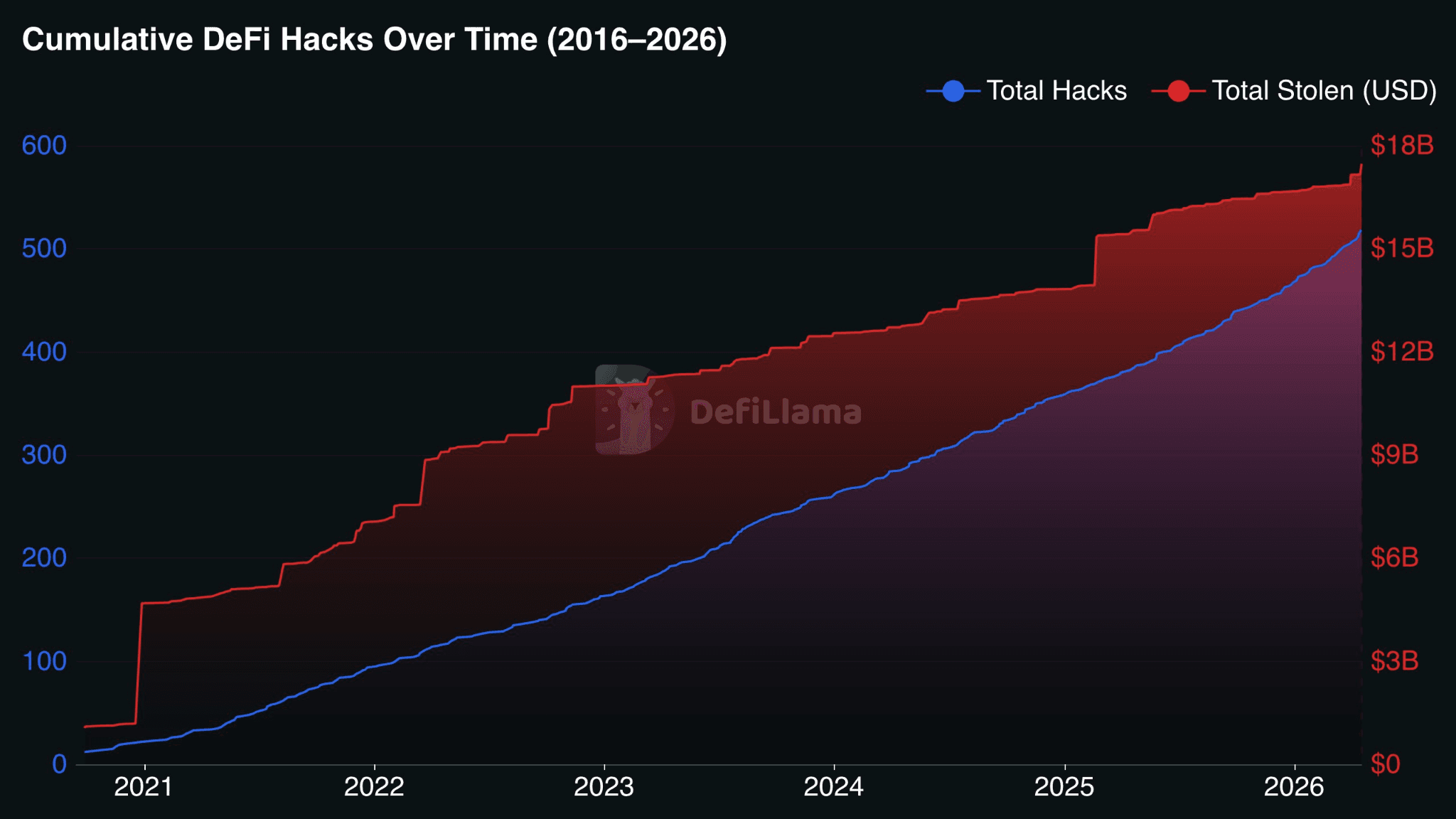
Private key compromises are emerging as one of crypto’s costliest attack vectors, with hackers stealing more than $17 billion across 518 recorded incidents over the past decade, according to data platform DefiLlama.
In data shared Tuesday, DefiLlama’s dashboard shows a large share of those incidents stemmed from compromised private keys, alongside phishing and other credential-based attacks. The figures add to evidence that some of the industry’s biggest losses are increasingly coming from weaknesses in wallet security, signing infrastructure and user behavior, rather than from flaws in protocol code alone.
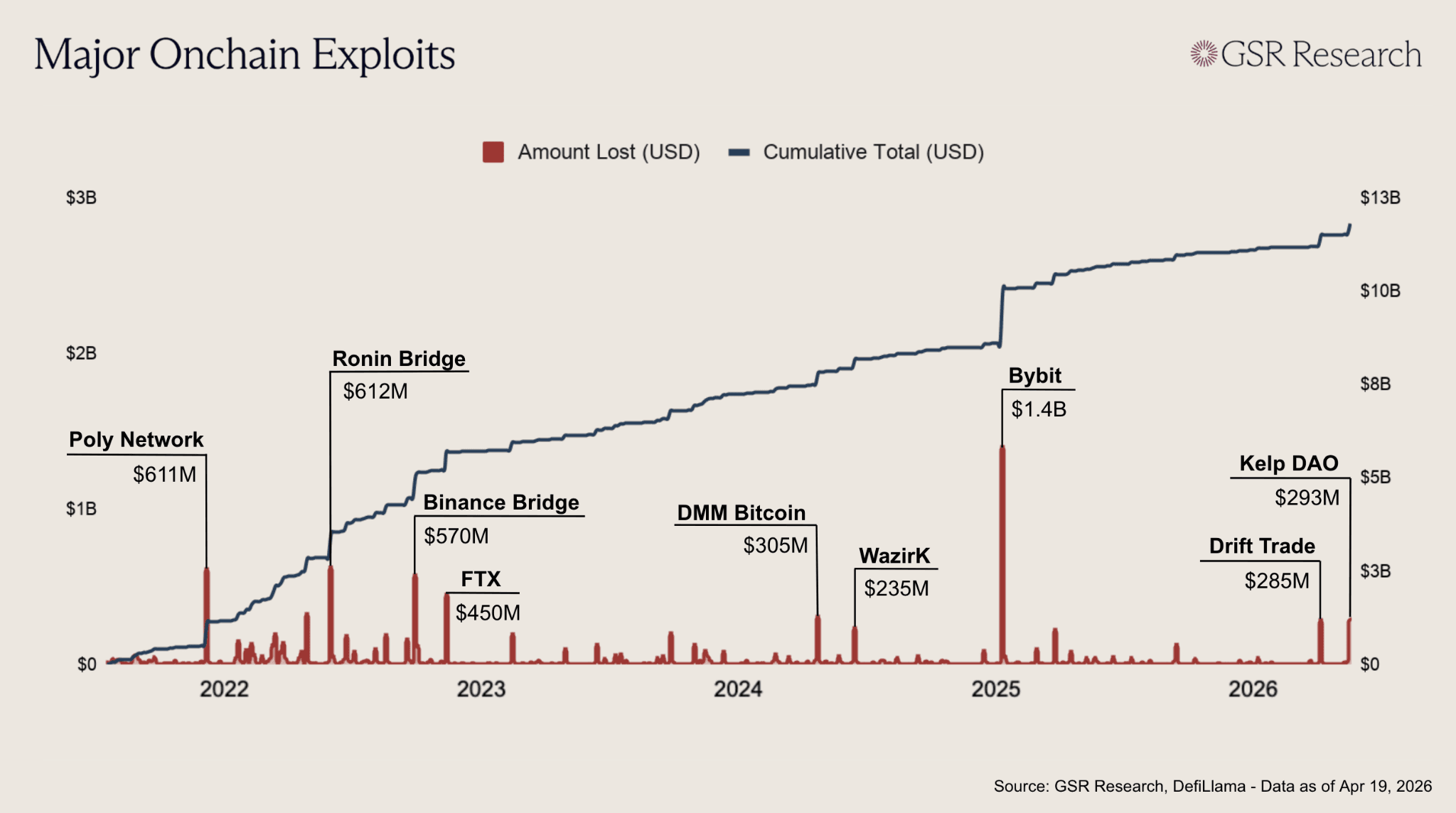
The findings come days after the crypto industry suffered its largest hack so far in 2026 on Saturday, when an attacker drained about 116,500 restaked Ether (rsETH), worth roughly $290 million to $293 million at the time, from Kelp DAO’s LayerZero-powered rsETH bridge.
Source: DefiLlama
The recent wave of losses has also hit decentralized finance hard. More than $600 million was stolen from DeFi protocols over the past 60 days, according to a Monday report from crypto trading company GSR, with the Kelp exploit and the April 1 exploit involving Solana-based decentralized exchange Drift Protocol accounting for most of the total.
The attacks are raising new questions about whether improving smart contract audits alone is enough to protect users. In its report, GSR said attackers appear to be shifting toward “operational security, signing infrastructure, developer tooling, and the humans behind them” as smart contract security continues to improve.
That shift is pressuring a sector already facing narrower returns. “DeFi yields have compressed toward TradFi rates, raising the question of whether depositing onchain is still worth the risk,” GSR wrote.
Hackers have stolen more than $17 billion across 518 recorded incidents in the past ten years.
The main causes include compromised private keys, phishing, and other credential-based attacks.
The largest hack in 2026 involved an attacker draining approximately 116,500 restaked Ether, worth around $290 million.
Losses are increasingly attributed to weaknesses in wallet security, signing infrastructure, and user behavior.
Analyst Tice says Ethereum's rise to $4,000 is imminent, citing strong technicals.

Discover Myriad: A New Platform for Prediction Markets

Bitcoin struggles below $79K as inflation fears outweigh CLARITY Act progress.

Payward, Kraken's parent company, cuts 150 jobs as it prepares for an IPO.

Gemini's stock jumps after reporting $50.3M revenue and $100M investment from Winklevoss Capital.

Flare and Monarq introduce a new XRP yield vault for diversified returns.
See every story in Crypto — including breaking news and analysis.
Major DeFi exploits. Source: GSR Research
Cybersecurity companies say advances in malware and artificial intelligence are making social engineering and wallet-targeting attacks easier to scale, which involve scammers tricking victims into sending crypto to illicit addresses by first sending them small transactions, hoping that investors copy and paste the attacker’s address from the transaction history.
The rise of hacking-as-a-service tools is also lowering the barrier to entry for would-be attackers, according to Dyma Budorin, co-founder and CEO of cybersecurity firm Hacken.
“If people are getting these links, their wallets can be completely drained,” Budorin told Cointelegraph in an interview at EthCC 2026. “The platform on the darknet will take the commission for their tools and [scammers] get the bigger portion of the drained wallets.”
Budorin added that hackers are usually seeking out the easiest targets that require the least effort to scam.

Dyma Budorin, co-founder and CEO at Hacken, interview at EthCC 2026. Source: Cointelegraph
Web3 projects lost $482 million in the first quarter of 2026, as phishing and social engineering scams drove $306 million of those losses as the largest attack vector, according to a report by Hacken.
Even so, some parts of the threat picture have improved. Scam Sniffer said in a January report that losses tied to crypto phishing attacks fell sharply in 2025, suggesting users were becoming more aware of the threat, even as wallet-drainer scripts and new malware strains continued to circulate.