
Ethereum's (ETH) Survival in Question as Investors Pivot Like Never Before

TL;DR
Ethereum faces a critical period as investor sentiment declines, with ETF withdrawals and slowing network growth contributing to skepticism. Competitors are gaining market attention, challenging ETH's position as a leading cryptocurrency.
Key points
- Ethereum faces declining investor sentiment
- ETF withdrawals are impacting Ethereum's market position
- Competitors are gaining more attention than Ethereum
- Institutional inflows favor Bitcoin over Ethereum
- Slowing network growth raises concerns for Ethereum
As investor sentiment declines in both institutional and retail markets, Ethereum is about to enter one of its most uncertain periods in years. ETH, which was once thought to be the unquestionable second pillar of cryptocurrency behind Bitcoin, is currently facing increasing skepticism due to ETF withdrawals, slowing network growth, and an aggressive shift in market attention toward competitors that move more quickly.
Capital flows aren't looking good
A significant imbalance in demand was revealed by the recent launch cycle of spot cryptocurrency ETFs. Ethereum-related funds were unable to create the same momentum as Bitcoin products, which attracted billions in institutional inflows. Concerns that traditional investors no longer view Ethereum as the market's strongest growth story have been reinforced by the persistent outflows from a number of ETH ETFs in recent weeks.
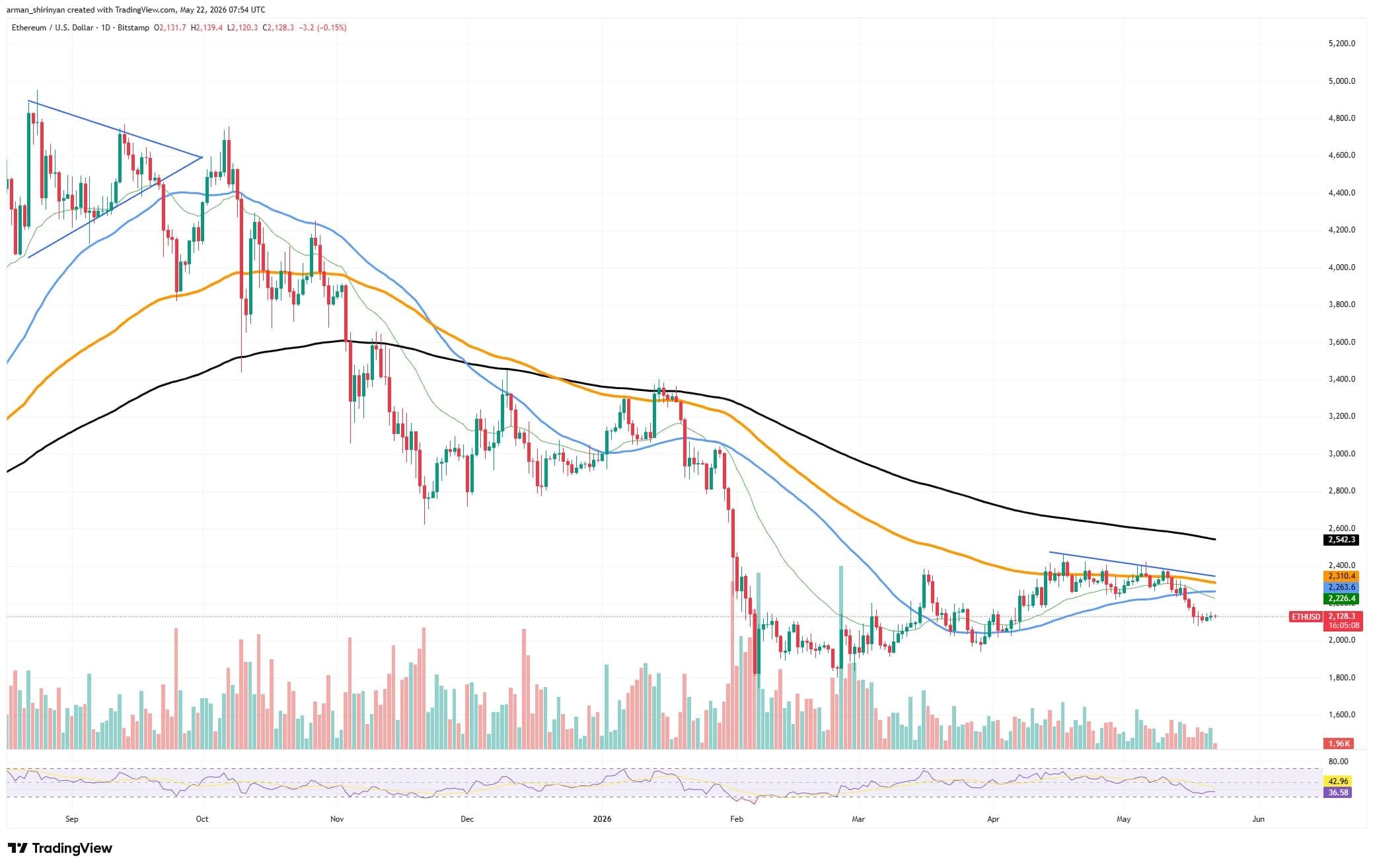
Retail traders, on the other hand, seem less and less inclined to wait for Ethereum's long-term strategy to materialize in terms of price performance. Higher-volatility industries, such as Solana-based assets, tokens connected to AI, and meme coins, have seen a quick rotation of capital. Ethereum benefited greatly from being the default destination following Bitcoin rallies in prior cycles. The rotation pattern appears to be weaker now than it has been since the bull market of 2021.
Fundamental issues arise
There are now more worries about Ethereum's internal organization. Critics contend that while the growth of Layer-2 networks like Arbitrum, Base, and Optimism aided in the ecosystem's scaling, they may also lessen direct value capture for ETH. Although base-layer fee generation has considerably slowed in comparison to peak-cycle expectations, network activity is still increasing throughout the larger Ethereum environment.
Q&A
Why is Ethereum's market position being questioned?
Ethereum's market position is in question due to declining investor sentiment, ETF withdrawals, and increased competition from faster-moving alternatives.
What impact have ETF withdrawals had on Ethereum?
ETF withdrawals have led to significant outflows from Ethereum-related funds, indicating that traditional investors may no longer see ETH as a strong growth opportunity.
How does Ethereum's growth compare to Bitcoin's?
Ethereum's growth is currently lagging behind Bitcoin's, as evidenced by the lack of momentum in ETH-related ETFs compared to Bitcoin products that attracted substantial institutional inflows.