
Solana Vs Ethereum: What’s Holding Growth Back? 3 Reasons SOL Is Still Lagging
Exploring the reasons Solana is struggling against Ethereum's growth.
NewsBTC1 min read
Former Treasury Secretary Henry Paulson warns of a potential collapse in demand for US Treasurys, urging authorities to prepare a contingency plan. He describes the fallout as likely to be 'vicious' and emphasizes the need for readiness.
Mentioned in this story
Former Treasury Secretary Henry Paulson has urged US authorities to prepare a contingency plan for a potential future collapse in demand for US Treasurys, warning that the fallout would be “vicious.”
“We need an emergency break-the-glass plan, which is targeted and short-term, on the shelf, so it’s ready to go when we hit the wall,” Paulson told Bloomberg in an interview on Thursday.
“People say, when are you going to hit the wall? I obviously don’t know, it’s impossible to know. When we hit it, it will be vicious, so we have to prepare for that eventuality.”
The US Treasury market acts as the bedrock of the global financial system, serving as a “risk-free” benchmark with other assets, such as corporate bonds, mortgages, and stocks, being priced relative to Treasurys. Instability could cause ripple effects in the global economy.
For years, economists have warned of a potential “doom loop” where investors start demanding higher yields on Treasurys due to risks tied to the government’s burgeoning debts, which are currently more than $39 trillion.
This could cause an increase in interest payments, currently 4.3% on 10-year notes, which would widen the deficit. But if the Treasury cannot raise what it needs to pay interest, many assume the Federal Reserve would become the principal buyer, Bloomberg reported.
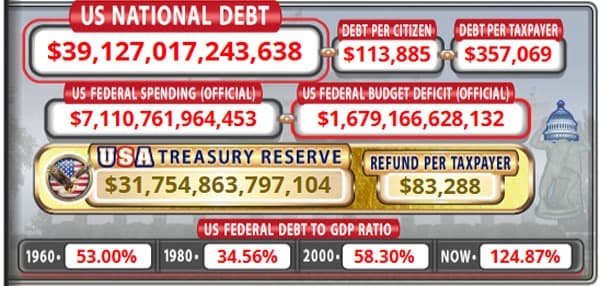
US national debt is almost $40 trillion. Source: USDebtClock
There could be several potential impacts on crypto markets if the $31 trillion US Treasury market were to melt down.
A Treasury market crisis could potentially trigger a flight to alternative stores of value such as Bitcoin () or gold. This may happen if the Fed is forced to monetize debt, stoking inflation fears and undermining confidence in the dollar.
Henry Paulson warned that the US Treasury market could face a collapse in demand, which would have severe consequences for the economy.
A contingency plan is necessary to mitigate the potential 'vicious' fallout from a collapse in demand for US Treasurys, which are critical to the global financial system.
The US government's debt levels, exceeding $39 trillion, could lead to a 'doom loop' where investors demand higher yields on Treasurys, increasing financial instability.
Exploring the reasons Solana is struggling against Ethereum's growth.

Shiba Inu's exchange outflow has plummeted by over 21% in 24 hours, signaling reduced trading activity.

Solana's price structure hints at a possible temporary recovery before a major market decision.

Bitcoin traders are coming back after an eight-month deleveraging phase, signaling renewed risk appetite.

Bitcoin Price Analysis for May 23: Bearish Sentiment Continues as Key Levels Hold

FET's exchange supply is vanishing; traders are on alert.
See every story in Crypto — including breaking news and analysis.
However, the world’s largest stablecoin issuer, Tether, is predominantly backed by Treasurys, with 63% of its total reserves comprising US Treasury bills and 10% overnight reverse repurchase agreements, according to the Tether transparency report.
Research lead at the Bitrue trading platform, Andri Fauzan Adziima, told Cointelegraph that this remains a “watch-list macro tail risk,” but if it happens, there could be short-term pain via “spiking yields, tighter global liquidity, and risk-off selling that hits BTC and altcoins hard while amplifying stablecoin risks.”
“Tether alone holds over $120 billion in Treasurys, making it vulnerable to redemption runs or depegs if confidence erodes and it faces fire-sale pressure.”
However, in the longer-term, it might “accelerate a flight to non-sovereign stores of value, positioning Bitcoin as ‘digital gold’ amid eroding trust in US debt/dollar dominance,”
It is potentially bullish if the crisis highlights fiat vulnerabilities without an immediate systemic meltdown, he said.
The US Treasury conducted its largest single debt buyback on Thursday, accepting $15 billion worth of older securities maturing from 2026 to 2028.
Such buybacks enhance Treasury market liquidity by retiring less-traded bonds and providing liquidity and cash to holders who may redeploy it elsewhere in the financial system.