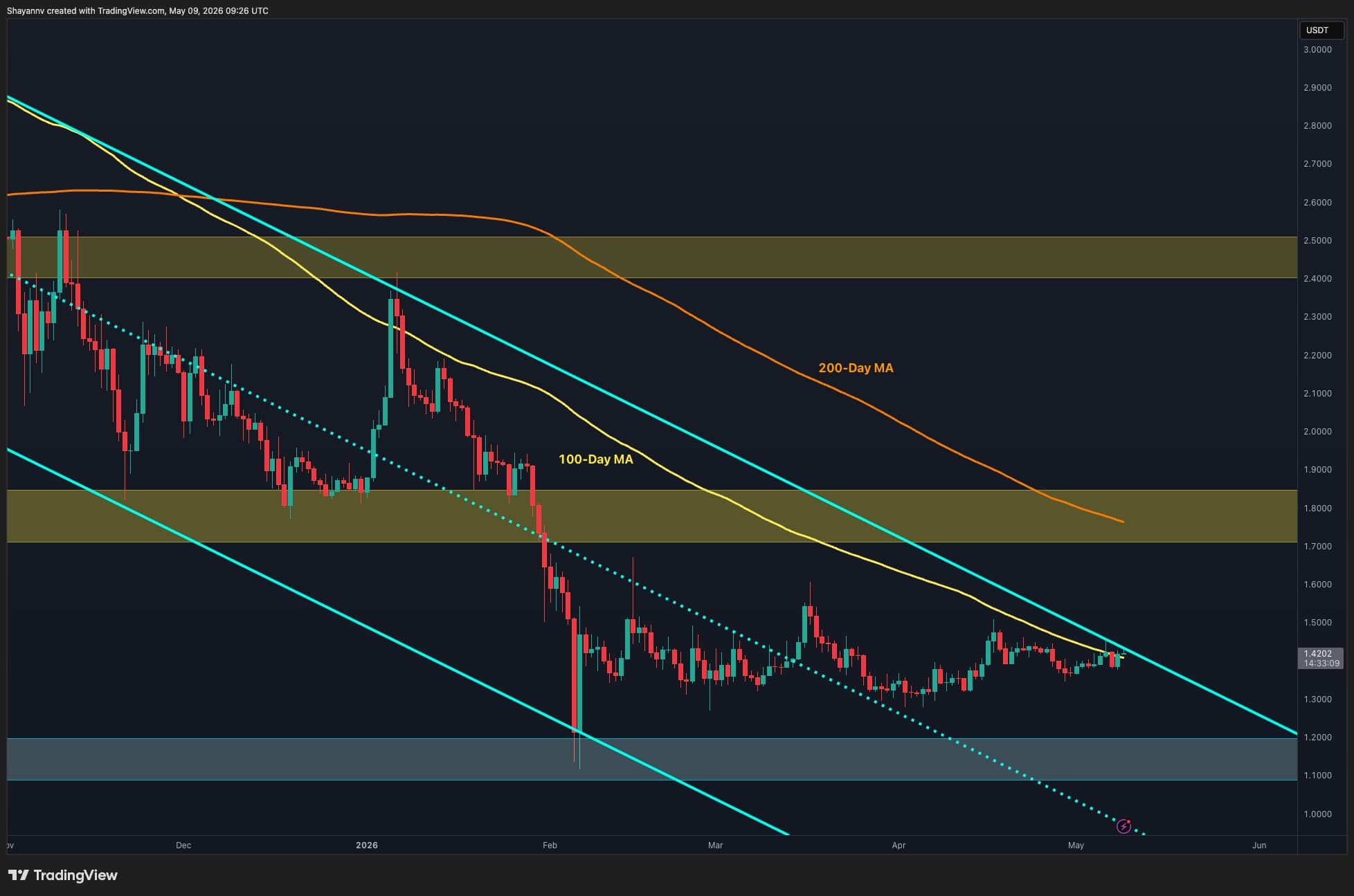
Ripple Price Analysis: XRP Reaches Decision Point After Weeks of Consolidation
Ripple's XRP is at a critical decision point after weeks of consolidation around $1.3.
CryptoPotato1 min read
Alibaba has discontinued the free tier of Qwen Code, reducing the daily free requests from 1,000 to 100. Users are now advised to explore third-party providers like OpenRouter for coding solutions.
Mentioned in this story
Alibaba's Qwen Code killed its free tier today. The message in the GitHub repo doesn't mince words: "Qwen OAuth free tier has been discontinued."
Alibaba also reduced the 1,000 free requests quota to 100 per day. Users wanting to run Qwen code on the cloud are now directed to check Alibaba Cloud Coding Plan, OpenRouter, Fireworks AI, or bring their own API key.
Qwen Code wasn't a hobby project. It was Alibaba's terminal coding agent—a direct Claude Code rival running Qwen3-Coder models, with multi-file repository support and SWE-Bench (a benchmark that measures how good a model is at coding) scores competitive with the best paid tools on the market.
If you're just finding out now, you missed the GitHub changelog. The Coding Plan Pro subscription runs $50 a month.
This landed 48 hours after fellow Chinese AI company MiniMax pulled almost the same move. The Chinese lab dropped M2.7—a 230 billion-parameter model that nearly matches Claude Opus 4.6 on coding benchmarks—then immediately rewrote the license to require written authorization for commercial use.
Parameters are what determine an AI's capacity to learn, reason, and store information. The more parameters, the wider the model's breadth of knowledge.
The model launched under what MiniMax called "MIT-style" terms. MIT licenses don't restrict commercial use. The developer community on Hacker News and Hugging Face noticed within hours.
MiniMax said it was protecting against bad-faith hosting providers who were shipping degraded versions under its name. "They walk away thinking MiniMax is mid," the company's Head of Developer Relations posted. The commercial restriction stayed anyway.
Neither move is accidental. The Financial Times reported that Alibaba's own Qwen team has been moving toward proprietary development after key leadership departures. Xiaomi, another Chinese company, shipped MiMo v2 last month under a closed-source license.
Chinese open-source models went from 1.2% of global open-model usage in late 2024 to roughly 30% by end of 2025. Qwen overtook Meta's Llama as the most deployed self-hosted model on the planet.
That adoption wasn't built on benchmarks. It was built on free services.
With U.S. chip export controls tightening and the Beijing-Washington AI race grinding on, "free" is harder to defend when investors want returns and the U.S. government is watching every deployment decision.
Alibaba discontinued the Qwen Code free tier to redirect users to third-party providers and adjust its service offerings.
Users can check third-party providers like OpenRouter, Fireworks AI, or utilize Alibaba Cloud's Coding Plan.
After the changes, users can make up to 100 free requests per day instead of the previous 1,000.
Ripple's XRP is at a critical decision point after weeks of consolidation around $1.3.

Bitcoin's Open Interest has skyrocketed past 2025's peak, signaling potential market volatility.

XRP Whale-Retail Spread Falls to 88% on Binance — Key Insights

Crypto Price Analysis for May 9th: SHIB, BTC, ETH Struggle with Bearish Trends

Analyst warns of a Bitcoin bull trap, predicting a drop to $42,000.

Bitcoin could drop to $60K by Q3 2026 before recovering above $85K.
See every story in Crypto — including breaking news and analysis.
Those wanting to play with Alibaba’s models locally, and free, are still able to do so. Their models remain open source, but the more powerful ones require pretty heavy hardware to run.