
Coinbase does not fear competition from Wall Street, says exchange executive
Coinbase's Katie Harries: We Welcome Wall Street Competition
CoinDesk1 min read

Bitcoin's recovery hit resistance at the 200-day moving average, falling to $77,500. Weakening demand factors, including reduced leveraged buying and ETF inflows, contributed to this pullback.
Mentioned in this story
Bitcoin's BTC$77,942.11 recovery from February lows, which had begun to look like a new bull run, hit a wall last week at the 200-day simple moving average (SMA) positioned just above $82,000. Since then, prices have pulled back to $77,500 in a move reminiscent of 2022 when a 43% relief rally failed at the same indicator before bitcoin resumed its decline.
Analytics firm CryptoQuant's latest report offers a compelling explanation for why the rally failed to break through the critical average, a long-term trend line traders often treat as the dividing line between a bear-market bounce and a real recovery.
The bigger issue is demand.
CryptoQuant says the April and early May rally had been supported by three things: leveraged futures buying, spot demand, and U.S. ETF inflows. All three have now weakened. The firm's Bull Score Index has fallen from 40 to 20, a level the firm calls “extremely bearish” and one that matched the February-March period when bitcoin traded between $60,000 and $66,000.
The clearest cross-check is the Coinbase bitcoin premium, which has remained negative through much of the May rally and the subsequent correction, CryptoQuant points out in the report.
The premium measures whether bitcoin is trading higher on Coinbase than on offshore venues; a positive reading is treated as a sign of relatively stronger U.S. demand, a negative reading as evidence that U.S. investors aren't paying up for exposure.
U.S. spot bitcoin ETFs have flipped into sellers to match. Weekly data from SoSoValue shows the products lost about $979.7 million in the week ended May 19, on top of roughly $1 billion of outflows the prior week. The reversal follows six straight weeks of inflows that helped fuel the rally.
Is there any demand at all?
Korea's kimchi premium, which measures demand for BTC on Korean exchanges, has dropped below zero, according to CryptoQuant data, meaning there's no above-normal demand on exchanges in the country.
Elsewhere in Asia, Hong Kong's three spot bitcoin ETFs, run by ChinaAMC, Bosera Hashkey, and Harvest, have rarely cleared a few million dollars in combined daily volume through May.
If the correction deepens, CryptoQuant identifies $70,000, the traders’ on-chain realized price, as the next major on-chain support. That level capped rallies in October and January. This time, it would have to hold them up.
Bitcoin's price dropped due to weakening demand factors, including reduced leveraged futures buying and U.S. ETF inflows.
The 200-day simple moving average is a critical trend line that traders use to differentiate between bear-market bounces and real recoveries.
CryptoQuant's Bull Score Index dropped from 40 to 20, indicating an extremely bearish market condition similar to earlier periods when Bitcoin traded between $60,000 and $66,000.
Coinbase's Katie Harries: We Welcome Wall Street Competition

SEC postpones plans for tokenized stock trading on crypto platforms amid concerns.

Bitcoin's price could fall to $72,500 before rebounding, according to analysis.

Vitalik Buterin states his influence over Ethereum Foundation is shrinking intentionally.

The Federal Reserve updated its proposal for a 'skinny' master account, enhancing crypto firms' access to payment systems. Concurrently, President Trump signed an executive order to integrate digital assets into existing payment networks.
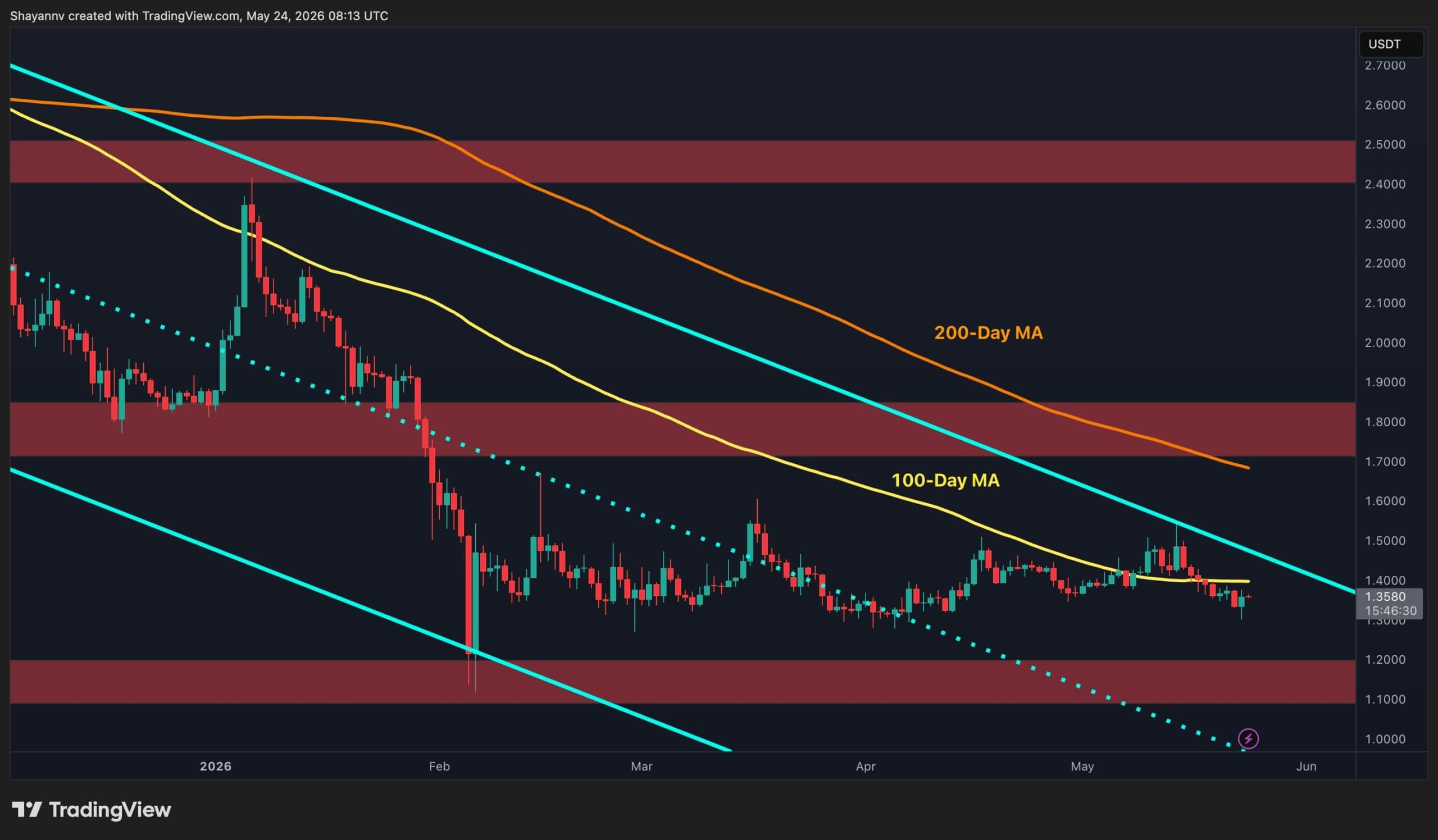
XRP's price shows indecision; key trading days ahead.
See every story in Crypto — including breaking news and analysis.