
Could Chainlink (LINK) Triple In 5 Years? Why A $20B Market Cap Is Possible
Is Chainlink (LINK) on track to triple in value and hit a $20B market cap in 5 years?
NewsBTC1 min read
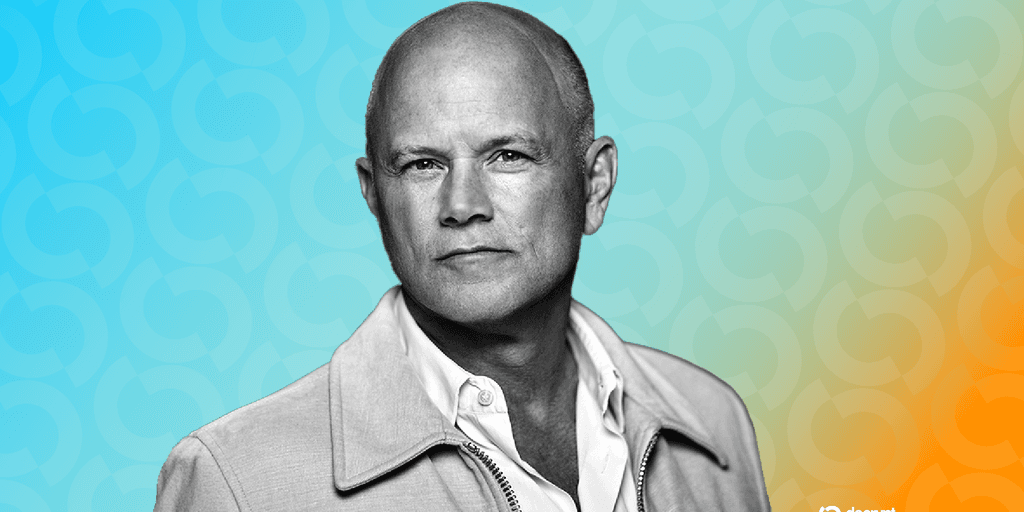
Galaxy Digital reported a Q1 net loss of $216 million, improving from a $295 million loss last year. The firm attributes this second consecutive loss to a sluggish crypto market, despite some cushioning from Hyperliquid exposure.
Mentioned in this story
Galaxy Digital reported its second consecutive quarterly loss on Tuesday, indicating that tepid crypto market conditions continued to pressure the financial services firm.
The company posted a first-quarter net loss of $216 million, or $0.49 per share, an improvement compared to a deficit of $295 million a year ago. For the period ended March 31, analysts had penciled in a loss per share of $0.93, according to Yahoo Finance.
Galaxy’s losses narrowed on a consecutive basis. Alongside Bitcoin’s plunge from all-time highs last year, the company reported a net loss of $482 million, or $1.08 per share. Still, Galaxy continued to cite a depreciation in digital asset prices as the main driver of losses.
The company’s stock was little changed on Tuesday, with shares changing hands around $25 following the opening bell. Although shares hit an 11-month low of $16.43 last month, the New York City-based firm’s stock price has increased 12% year-to-date.
Galaxy’s total assets declined 12% quarter-over-quarter to $9.99 billion from $11.3 billion, driven mostly by a $316 million decline in the value of its digital assets and related investments.
Novogratz acknowledged that the company’s balance sheet lost money because crypto prices are down; however, he said the firm’s first-quarter deficit was partially offset by reduced headcount and a major shift in exposure to Hyperliquid’s native token.
“We’ve been a supporter, mostly because it’s got an economic model, unlike many of the other tokens, which were association tokens,” he added. “I think Hyperliquid is a good way to look at what the future of crypto is going to look [like].”
As of March 31, Galaxy’s treasury had $134 million in “Other Token Exposure.” Meanwhile, the company’s exposure to Bitcoin, Ethereum, and Solana clocked in at $431 million, $61 million, and $42 million, respectively, amid $95 million in other investments.
Galaxy Digital reported a net loss of $216 million in Q1 2023.
The Q1 2023 loss of $216 million is an improvement from a $295 million loss in Q1 2022.
The losses were primarily driven by a tepid crypto market and depreciation in digital asset prices.
Mike Novogratz is the founder and CEO of Galaxy Digital.
Is Chainlink (LINK) on track to triple in value and hit a $20B market cap in 5 years?

Crypto expert warns Ethereum could plummet to $800 or $400.

Ethereum's social sentiment collapses as price retests $2,100

BitGo and Galaxy Digital are in court over a failed $1.2 billion merger, with BitGo seeking $100 million in damages.

Based Apparel, linked to Kash Patel, goes offline after malware warnings.

How Kevin Warsh's Fed Chairmanship Could Change Bitcoin Forever
See every story in Crypto — including breaking news and analysis.
As a decentralized exchange specializing in perpetual futures, Hyperliquid supports its native token through a buyback-and-burn mechanism that’s intended to boost the digital asset’s scarcity. Year-to-date, the token’s price has rallied 56% to $39.73, according to CoinGecko.
The company indicated that digital assets generated a first-quarter gross profit of $49 million, edging down sequentially from $51 million. In an announcement, Galaxy attributed the stability of its performance to scaling recurring fee revenue and transaction income.
Galaxy bills itself as a bridge between Wall Street and crypto markets, historically providing trading, lending, and derivative services to institutions. However, the company has recently debuted a retail-facing platform, GalaxyOne, while managing its own data center.
Profits from data centers are expected to ramp up this year, with the expected delivery of Galaxy’s first data hall to CoreWeave, an AI-native cloud provider. During the company’s earnings call, founder and CEO Mike Novogratz highlighted that diversification.
“We’re optimistic on both sides of the business,” he said. “The world is in an AI revolution, and we plan on riding that wave and paddling our canoe as fast as possible.”