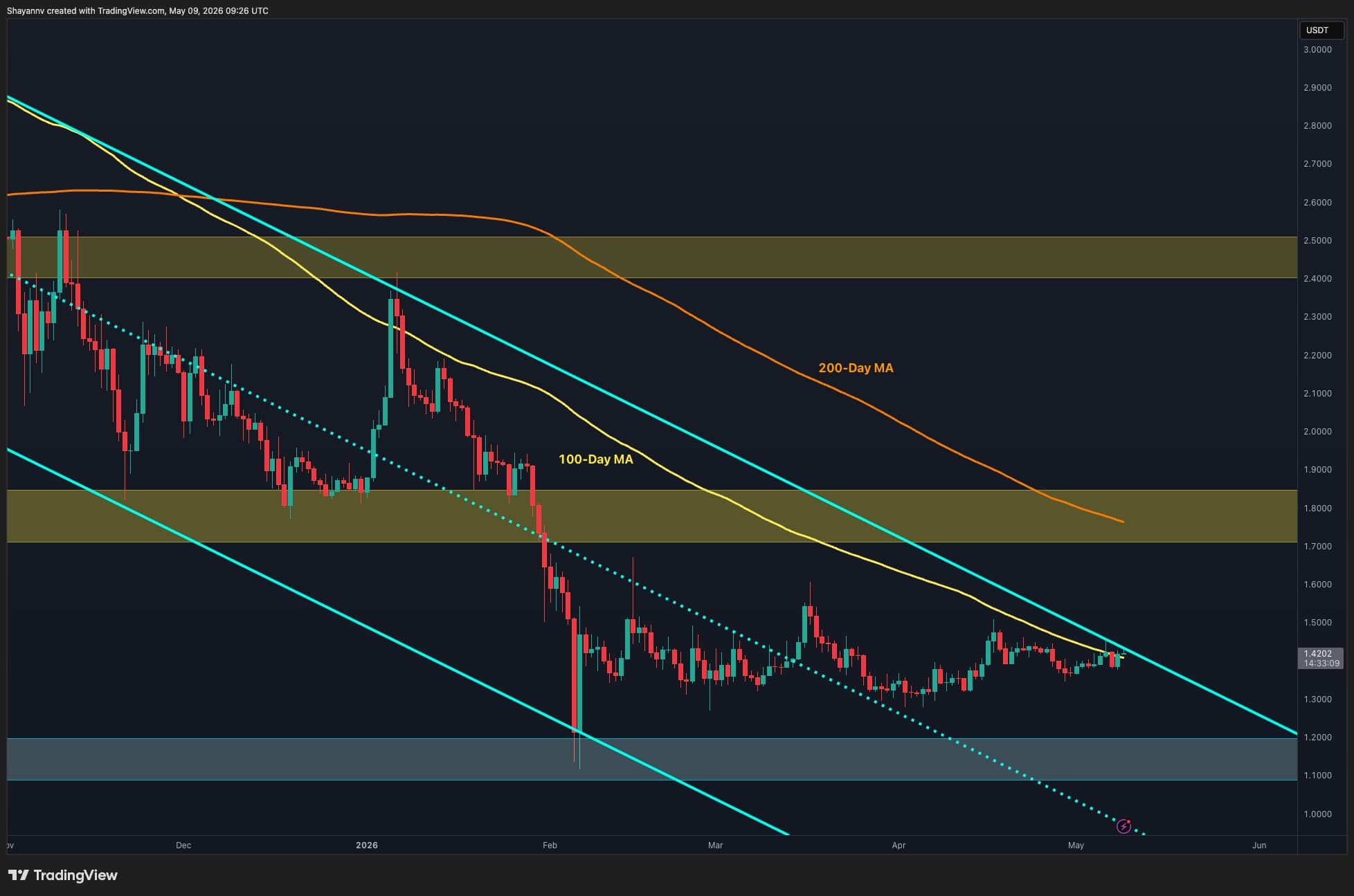
Ripple Price Analysis: XRP Reaches Decision Point After Weeks of Consolidation
Ripple's XRP is at a critical decision point after weeks of consolidation around $1.3.
CryptoPotato1 min read
The SEC has introduced a new policy allowing certain DeFi interfaces to bypass broker-dealer registration, signaling its commitment to regulating crypto without waiting for Congress. This decision has been celebrated by industry leaders as a significant win for decentralized finance.
The SEC unveiled a new policy Monday exempting certain decentralized finance interfaces from key registration requirements—a proactive move that indicates the regulator is moving full-steam ahead on its crypto agenda, with or without Congress.
The new policy, laid out today in an SEC staff statement, allows user interfaces for DeFi tools to forego registration as broker-dealers, so long as they meet certain requirements. User interfaces, as defined by the SEC, are services, created by crypto companies, that make it easier for self-custodial wallet holders to complete on-chain transactions.
Prior to President Donald Trump’s return to power, the SEC viewed such interfaces as squarely under the agency’s purview, given they technically involved a crypto company playing some role in connecting independent DeFi users to a marketplace. Crypto industry leaders have long argued such interfaces should not be considered akin to hands-on, traditional Wall Street brokers like Charles Schwab.
Now, crypto leaders have appeared to have gotten their wish. Should a user interface adhere to a list of requirements, the SEC has said it will not obligate the companies behind those interfaces to register with the agency—even when the interfaces engage with securities.
To qualify, an interface must not handle or hold user funds; arrange financing; solicit users to engage in any specific crypto transactions; or pressure users to choose one transaction path over another. It must also give users multiple options for executing transactions and list the options by objective criteria such as price, and charge users only flat rates or fixed rates for assisting with transactions, among other requirements.
"Crypto is forcing the Commission to confront its inner demons that have driven it toward ever more expansive readings of the securities laws," SEC commissioner Hester Peirce, a noted crypto advocate, said Monday of the staff statement. "Recent history is littered with a patchwork of no-action letters and enforcement actions that have contorted the term 'broker' beyond recognition."
Decentralized finance leaders hailed the announcement as a major step forward for the sector.
The SEC announced a policy that exempts certain decentralized finance interfaces from broker-dealer registration requirements.
Industry leaders view the policy as a major victory because it allows DeFi tools to operate without the burdens of broker-dealer registration.
The SEC's proactive move indicates it is advancing its crypto regulatory agenda despite the Senate's Clarity Act being stalled.
User interfaces, as defined by the SEC, are services created by crypto companies that facilitate on-chain transactions for self-custodial wallet holders.
Ripple's XRP is at a critical decision point after weeks of consolidation around $1.3.

Bitcoin's Open Interest has skyrocketed past 2025's peak, signaling potential market volatility.

XRP Whale-Retail Spread Falls to 88% on Binance — Key Insights

Crypto Price Analysis for May 9th: SHIB, BTC, ETH Struggle with Bearish Trends

Analyst warns of a Bitcoin bull trap, predicting a drop to $42,000.

Bitcoin could drop to $60K by Q3 2026 before recovering above $85K.
See every story in Crypto — including breaking news and analysis.
The SEC guidance is great not because of what it says, but because of what it means. For decades our system was built upon centralized intermediaries who for some time provided significant value. In the age of technology, specifically auditable smart contracts, the need for…
— Matt Corva (@MattCorva) April 13, 2026
“Tough day for the gatekeepers and the moat protectors,” Amanda Tuminelli, executive director of the DeFi Education Fund, said Monday. “Good day for builders.”
“This is an incredible moment,” Matt Corva, general counsel at Ethereum software giant Consensys, proclaimed. (Disclaimer: Consensys is one of many investors in an editorially independent Decrypt.)
“If decentralized applications meet their promise,” he continued, “you can pencil this down as the day centralized intermediaries were dealt a critical blow by allowing fair competition against them.”
Miles Jennings, the head of Andreessen Horowitz’s crypto arm, dubbed the SEC statement a “huge win for DeFi.”
The SEC guidance is great not because of what it says, but because of what it means. For decades our system was built upon centralized intermediaries who for some time provided significant value. In the age of technology, specifically auditable smart contracts, the need for…
— Matt Corva (@MattCorva) April 13, 2026
Other industry leaders noted the SEC’s statement shows the agency is moving ahead with the key pillars of its crypto agenda despite having not yet received specific guidance from Congress on the subject.
Though SEC Chair Paul Atkins has repeatedly voiced his support for the Senate’s pending crypto market structure bill, he has also said he does not need the legislation to pass in order to realize his aggressively pro-crypto agenda.