
Prominent Ethereum Dev Proposes $1 Billion ETH Organization With Leader Who 'Wants to Fight'
Ethereum Dev Dankrad Feist proposes a $1 billion ETH organization amid Foundation turmoil.
Decrypt1 min read
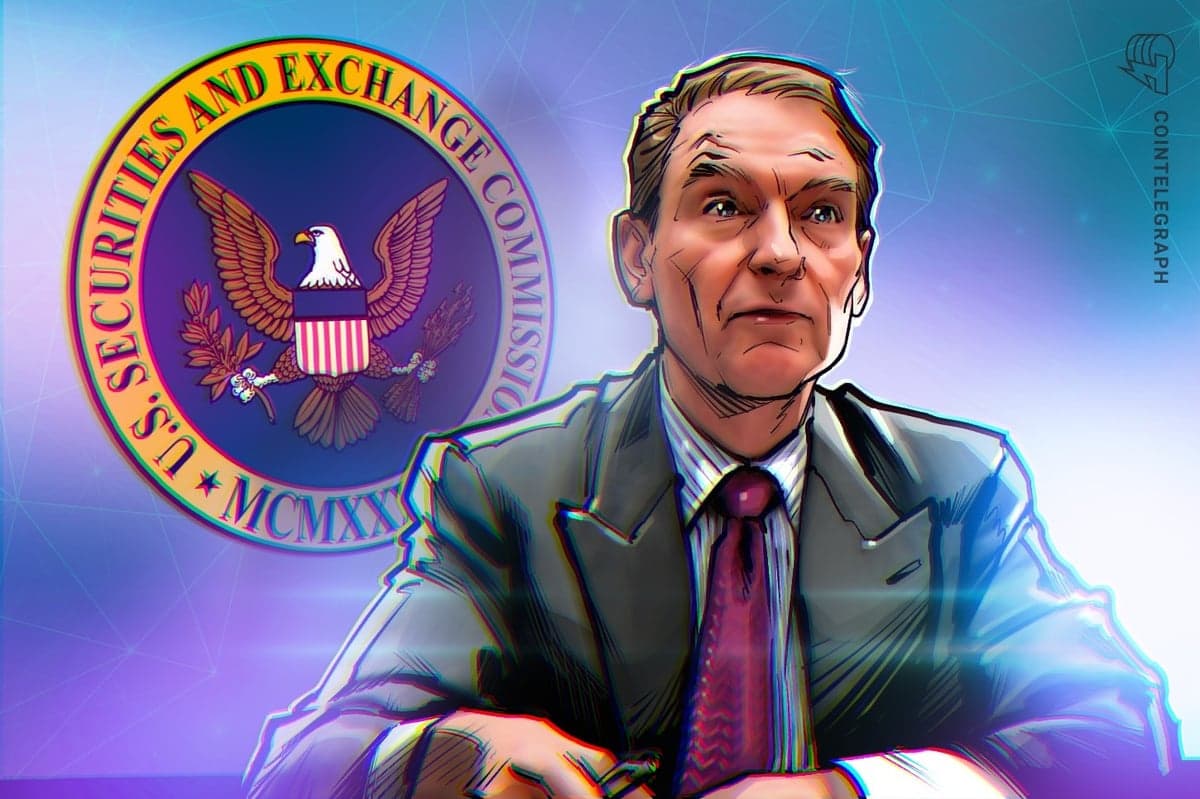
Since Paul Atkins became SEC chair on April 21, 2025, the agency has shifted its approach to digital asset regulation, moving away from the policies of former chair Gary Gensler. This change follows Donald Trump's election and promises to reform crypto oversight.
Mentioned in this story
Since Paul Atkins was sworn in as chair of the US Securities and Exchange Commission (SEC) on April 21, 2025, the agency has significantly changed its position on regulation and enforcement related to digital assets, marking a shift from the leadership of former chair Gary Gensler during the Biden administration.
During his 2024 presidential campaign, Donald Trump made removing Gensler one of his promises to the crypto industry, along with creating a national Bitcoin (BTC) stockpile and opposing the issuance of a US central bank digital currency.
His November 2024 election win led to Gensler’s resignation in January 2025 and the appointment of SEC commissioner Mark Uyeda as acting chair of the financial regulator until the Senate could confirm Atkins as Trump’s pick to lead the agency.
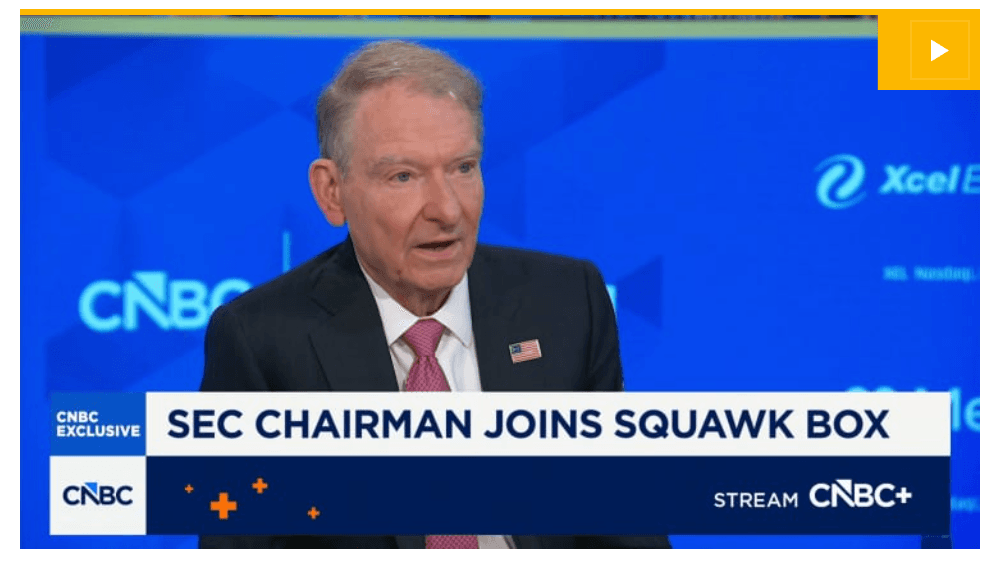
SEC Chair Paul Atkins on CNBC’s Squawk Box on April 20, 2026. Source CNBC
Even before the Senate voted to confirm Atkins, the SEC was already signaling a change in crypto regulation and enforcement under Trump. Uyeda oversaw the creation of an SEC crypto task force headed by Commissioner Hester Peirce and the agency began to drop civil enforcement actions and investigations into crypto companies, starting with Coinbase in February.
The first 12 months of Atkins’ chairmanship has seen the SEC push policies and approaches to regulation widely viewed as favorable to the crypto and blockchain industry.
In addition to wrapping up enforcement actions, the regulator has approved multiple exchange-traded funds tied to various crypto assets, signed a memorandum of understanding with the Commodity Futures Trading Commission (CFTC) over coordination on digital asset regulation and issued an interpretative notice on not treating most cryptocurrencies as securities under federal law.
Paul Atkins has significantly altered the SEC's stance on digital asset regulation, diverging from the previous policies under Gary Gensler.
Donald Trump's election led to the resignation of Gary Gensler and the appointment of Paul Atkins as SEC chair, reflecting a shift in regulatory focus.
During his campaign, Donald Trump promised to remove Gary Gensler, create a national Bitcoin stockpile, and oppose a US central bank digital currency.
Ethereum Dev Dankrad Feist proposes a $1 billion ETH organization amid Foundation turmoil.

XRP whale dominance returns to Binance while Coinbase shows a different trend.

Spotify and Universal Music Group introduce AI remix tool for fan-made covers.

DeepSeek is building its own coding tool to rival Claude Code and Codex.
Billionaire Mark Cuban sells most of his Bitcoin, citing its failure as a store of value.

Syndicate Labs, backed by a16z, is shutting down after five years due to significant changes in the rollup market. The company noted a decline in new rollups and a shift towards custom chains, impacting its infrastructure focus.
See every story in Crypto — including breaking news and analysis.
“A year goes by quickly, but we’ve made huge progress, I think,” said Atkins in a Monday CNBC interview. “I promised a new day at the SEC when I came aboard, and we have. We’ve pivoted from the old practice of regulation through enforcement and the opaqueness of the agency, as, for example, with crypto.”
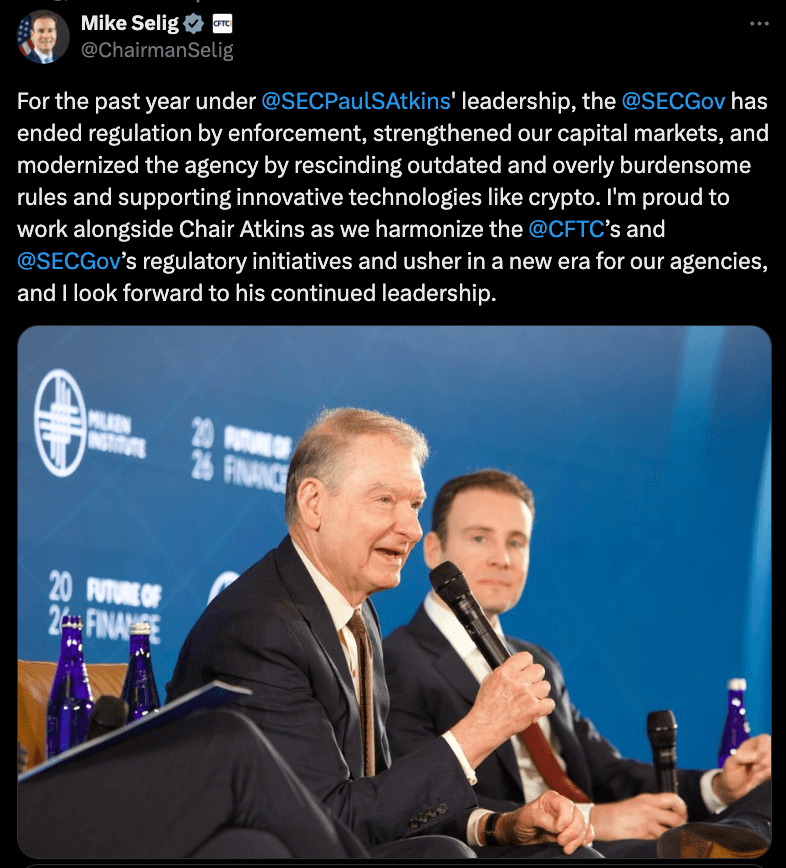
Source: CFTC Chair Michael Selig
While many in the crypto industry have lauded Atkins’ approach to digital assets since taking office, Congressional Democrats have criticized the SEC and chair for potential conflicts of interest following dropped investigations and enforcement actions against companies tied to Trump and his family.
Last week, Massachusetts Senator Elizabeth Warren accused the SEC chair of misleading Congress in his testimony before a House committee in February. Warren said in an April 15 letter that the SEC’s own data from the 2025 fiscal year showed the agency had fewer enforcement actions than at any point in the previous 10 years.