
Bitcoin Drops To 2 Cents! Revolut Users Report Massive BTC Price Glitch
Revolut's app showed Bitcoin at just 2 cents due to a pricing glitch. Issue now resolved.
NewsBTC1 min read
Apple's CEO Tim Cook announced that Mac mini and Mac Studio are in high demand due to AI, leading to potential shortages for several months. The OpenClaw platform has made Apple's hardware the go-to for running large AI models.
Mentioned in this story
Apple's Mac mini has always been the quiet, forgettable desktop at the back of the Apple Store. Practical, cheap by Apple standards, and largely ignored by the AI crowd. Then OpenClaw happened.
On Thursday, Tim Cook told analysts that the Mac mini and Mac Studio are sold out—and could stay that way for several months. "Both of these are amazing platforms for AI and agentic tools," he said on Apple's Q2 2026 earnings call, "and the customer recognition of that is happening faster than what we had predicted."
Translation: Apple miscalculated how badly developers would want these machines, especially in times when scarcity is messing with the markets.
Mac revenue came in at $8.4 billion for the quarter, up 6% year-over-year. Not exactly a blowout—but supply constraints, not demand, are the limiting factor. High-RAM Mac mini and Mac Studio configurations aren't just delayed; some have been pulled from the Apple Store entirely.
The $599 base Mac mini is sold out in the U.S. with no delivery or in-store pickup available. Upgraded configurations with 64GB of RAM are showing wait times of 16 to 18 weeks. Mac Studio models with 512GB of unified memory disappeared from the store completely. Scalpers on eBay caught on fast, listing base models at almost nearly double retail.
The catalyst for all of this? OpenClaw and the boom of memory-hungry Agentic AI.
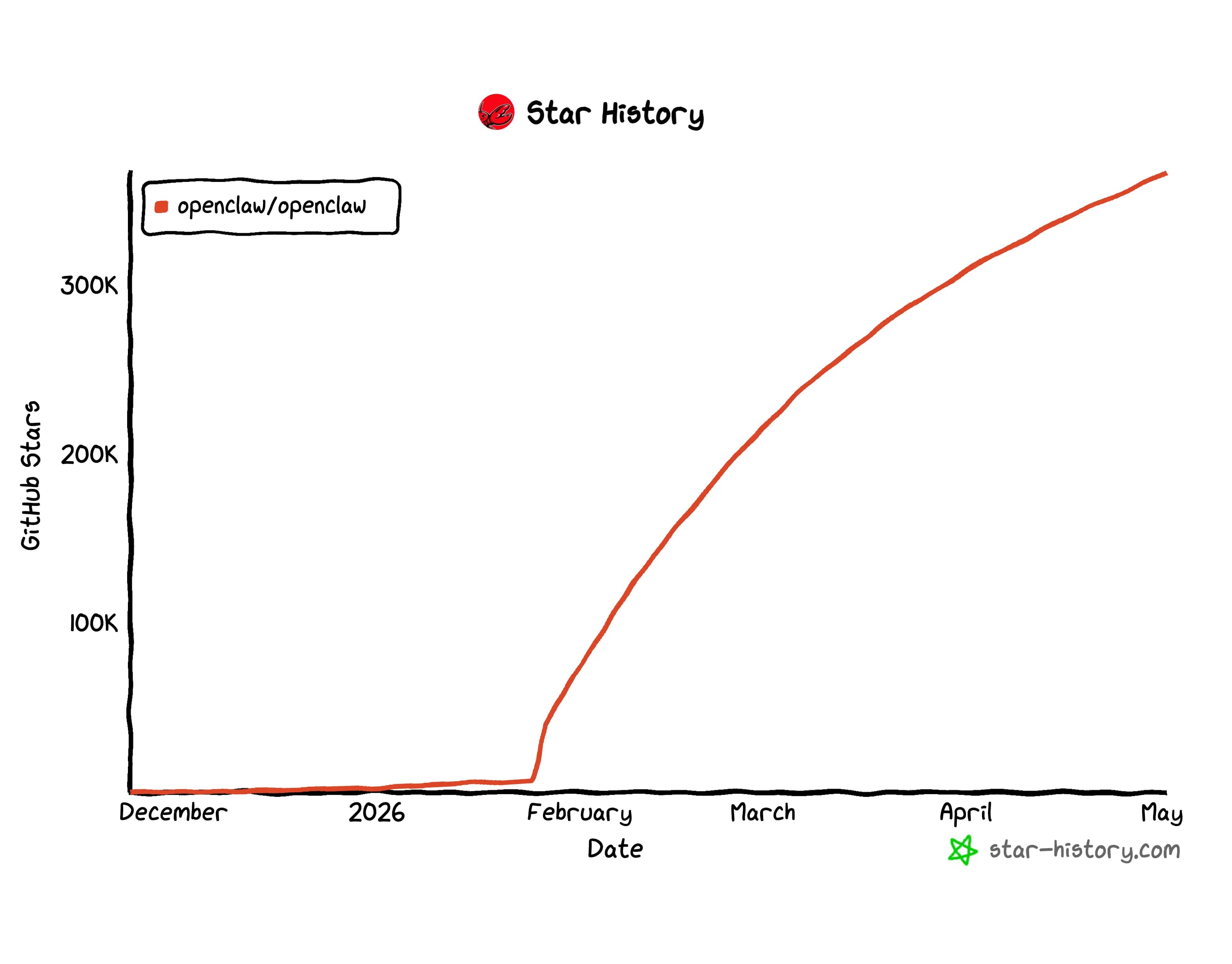
The open-source AI agent framework—built by Peter Steinberger and now backed by OpenAI after a bidding war with Meta—exploded to more than 323,000 GitHub stars and became the fastest way for individuals and small teams to run persistent AI agents locally. And the unofficial reference hardware for running it became, almost immediately, the Mac mini.
Mac mini and Mac Studio are in short supply due to unexpectedly high demand driven by AI applications.
OpenClaw is an open-source AI agent platform that has made Apple's unified memory architecture the default for running large local AI models.
Apple's M4 Ultra supports up to 192GB of unified memory, allowing developers to run larger AI models than typical consumer GPUs.
Tim Cook indicated that the Mac mini and Mac Studio could remain sold out for several months due to the surge in demand.
Revolut's app showed Bitcoin at just 2 cents due to a pricing glitch. Issue now resolved.

A hacker exploits TrustedVolumes, draining $5.9 million in crypto funds.

Trump Media's Q1 loss widens to $406 million, heavily impacted by crypto markdowns.

Australian police seize $4.2 million in Bitcoin during raids on darknet marketplace operators.

Bitcoin miners have withdrawn 3,400 BTC as prices rise; could this impact recovery?

Experts at Consensus Miami 2026 argue sports betting should be a financial product, not gambling.
See every story in Crypto — including breaking news and analysis.
It wasn't the result of a marketing push though.
The thing most people covering the Mac shortage miss is Apple was irrelevant to serious AI workloads for years. Before the miracle of AI Agents went mainstream, people complained that running LLMs, Stable Diffusion of any other type of home AI software was extremely slow and almost unusable. An M2 Mac had a performance comparable to a GPU from 2019. Apple refusing to adopt CUDA or use Nvidia, pushing for its MLX technology, made it as irrelevant for AI as it was for gaming.
Nvidia ruled because CUDA—its proprietary GPU programming framework—was the backbone of model training and inference. The entire AI stack was built around it. Apple had nothing comparable. Nobody wanted a Mac for local inference.
But CUDA has a dirty secret: VRAM limits.
Even the best consumer Nvidia GPU, the RTX 5090, tops out at 32GB of VRAM. That's a hard ceiling. A model larger than 32GB cannot run at full speed on that card—it spills into slower system RAM, crawls across the PCIe bus, and performance tanks. To run a serious 70 billion-parameter model on Nvidia hardware, you need multiple GPUs, a server rack, serious power draw, and thousands of dollars.
Apple's Unified Memory Architecture (UMA) solves this in a way CUDA cannot. On Apple Silicon, the CPU, GPU, and Neural Engine all share the same physical pool of RAM. There is no separate VRAM. There is no PCIe bus to cross. A Mac mini with 64GB can load a 70 billion parameter model that a $1,800 RTX 5090 simply refuses to touch.
The M4 Ultra—the chip powering high-end Mac Studio configurations—supports up to 192GB of unified memory. That's enough to run 100 billion parameter models locally on a single machine. No server. No monthly cloud bill.
OpenClaw made this trade-off obvious. Because it runs agents locally—connecting to your files, your apps, your messaging—users needed machines that could handle the reasoning load without renting compute from the cloud. A Mac mini with 32GB of unified memory runs 30B-parameter models comfortably. A Mac Studio with 128GB handles models that most developers couldn't touch without an enterprise GPU cluster a year ago.
A slow Mac capable of running a powerful AI model is much better than a powerful Nvidia card unable to even load that model at all.
The result: developers started buying Mac minis the way they used to buy Raspberry Pis—multiple units at a time, treated as infrastructure rather than personal computers. Apple's supply chain was never designed for that pattern.
There's also a broader memory shortage compounding the problem. IDC expects global PC shipments to decline 11.3% in 2026, partly driven by a memory chip shortage fueled by AI server demand. Apple is now competing for the same RAM supply as hyperscalers building data centers.
Cook said it may take "several months" to bring supply and demand back into balance on the Mac mini and Studio. An M5 chip refresh is expected later in 2026, which could ease the pressure—but current buyers are stuck waiting or paying scalper prices.
The Mac mini generated more urgency in 2026 than at any point in its 20-year history—and all it needed was some help from an open-source project Apple had absolutely nothing to do with to make it happen.