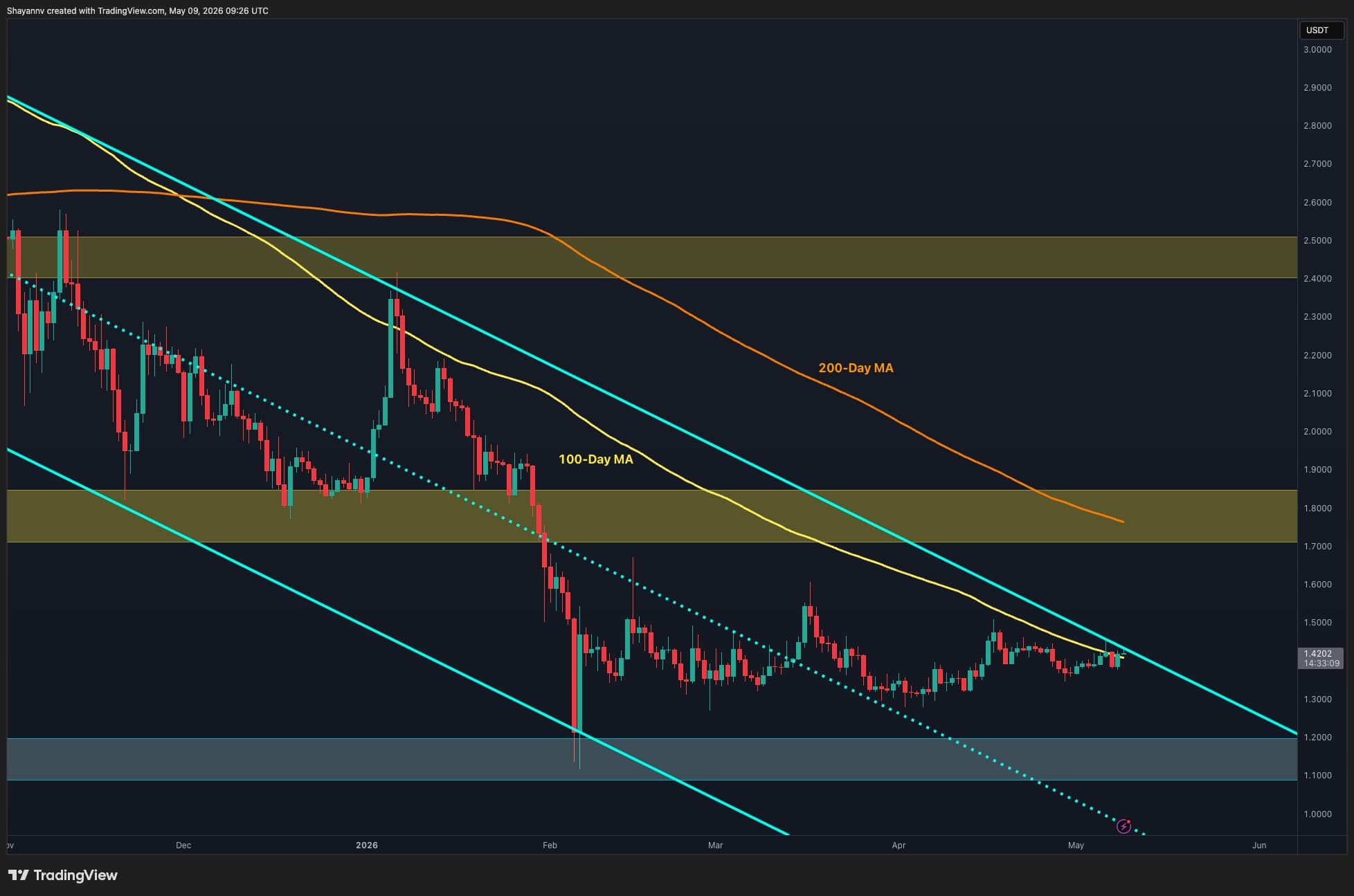
Ripple Price Analysis: XRP Reaches Decision Point After Weeks of Consolidation
Ripple's XRP is at a critical decision point after weeks of consolidation around $1.3.
CryptoPotato1 min read

The Academy has ruled that AI-generated performances and screenplays are ineligible for Oscars. The new rules emphasize the importance of human creativity in acting and writing categories.
The Academy of Motion Picture Arts and Sciences on Friday ruled that AI-generated performances and screenplays will not qualify for Oscars, according to a report by The Hollywood Reporter.
The update defines how the Academy will treat AI as studios use the technology to generate scripts, alter performances, and recreate actors, tying awards eligibility to human creativity and performance.
According to the new Academy rules, only performances carried out by human actors qualify for acting categories. Those performances must be credited in a film’s official billing and completed with the actor’s consent. Only screenplays written by humans qualify for writing awards.
The Academy’s current rules, approved in April, took a more neutral approach, allowing generative AI in filmmaking while emphasizing human creative control in determining eligibility for awards.
“With regard to Generative Artificial Intelligence and other digital tools used in the making of the film, the tools neither help nor harm the chances of achieving a nomination,” the rules said. “The Academy and each branch will judge the achievement, taking into account the degree to which a human was at the heart of the creative authorship when choosing which movie to award.”
The Academy can request details about how AI was used in a film, including the level of human involvement, giving it discretion to review edge cases.
The rules also address productions that use AI to modify or complete performances. By requiring that living actors carry out performances with consent, the Academy aims to limit the use of digital recreations in eligible work.
The news comes as artificial intelligence reshapes Hollywood. In February, an AI-generated video of Tom Cruise battling Brad Pitt took the internet by storm. More recently, AI was used to resurrect Val Kilmer, who passed away last summer, for a "role" in an upcoming film, "As Deep as the Grave."
The Academy has banned AI-generated performances and screenplays from Oscar eligibility, requiring that only human-created works qualify.
Yes, the new rules allow actors to receive multiple nominations in the same category.
The international category will now allow multiple entries from films that have won at festivals.
Ripple's XRP is at a critical decision point after weeks of consolidation around $1.3.

Bitcoin's Open Interest has skyrocketed past 2025's peak, signaling potential market volatility.

XRP Whale-Retail Spread Falls to 88% on Binance — Key Insights

Crypto Price Analysis for May 9th: SHIB, BTC, ETH Struggle with Bearish Trends

Analyst warns of a Bitcoin bull trap, predicting a drop to $42,000.

Bitcoin could drop to $60K by Q3 2026 before recovering above $85K.
See every story in Crypto — including breaking news and analysis.
Actors’ union SAG-AFTRA warned that AI-generated performers threaten jobs and rely on existing work without consent, while actors and musicians have moved to protect their likenesses through trademarks and legal action. At the same time, performers such as Matthew McConaughey and Michael Caine have embraced licensed uses of AI, working with companies like ElevenLabs to create digital voice replicas.
Meanwhile, in an interview with Decrypt, Silicon Valley star T.J. Miller said he isn’t too worried about losing his job to the AI uprising anytime soon.
“I’m not super scared that AI can take my job,” he said. “As far as hosting and being very funny and getting the energy up, I am not afraid of losing.”