
XRP gives back gains after Senate crypto bill sparks 5% rally
XRP retreats after a 5% rally as Senate's CLARITY Act discussions loom.
CoinDesk1 min read

Poland's parliament has stalled on a key crypto regulation bill, with President Karol Nawrocki vetoing it due to concerns over excessive regulation. This delay leaves Poland as the only EU country not to implement the MiCA framework, pushing local companies to consider relocating abroad.
Mentioned in this story
Poland’s parliament, the Sejm, has yet to pass a domestic enabling act for the EU’s regulations on cryptocurrencies.
The parliament has again failed to override a presidential veto on a key crypto regulation bill. President Karol Nawrocki defended his veto, citing concerns over excessive regulation that could harm small businesses. Opponents state that the lack of framework makes the Polish market vulnerable to fraud and free-for-all for illicit actors. The political path forward is unclear.
Outside the political arena, the reality is that Poland is the only EU member state left to implement the bloc’s Markets in Crypto-Assets (MiCA) regulatory framework. The deadline for the transitionary period ends on July 1.
This already makes it difficult for local firms to stay competitive in Europe. But after July 1, if a solution isn’t forthcoming, it will be impossible. Some are already taking their business elsewhere and moving abroad.
In November 2025, the Sejm passed the Crypto-Asset Market Act, which would update Polish law to comply with MiCA.
Local enterprise groups were not pleased with the result. In an October letter, the Warsaw Enterprise Institute, a business-focused think tank, outlined a few of the perceived problems with the law.
First was the length. Including draft secondary regulations, the total length was well over 300 pages. The Warsaw Enterprise Institute said that, while other EU member states were satisfied with just a few dozen pages, “the Polish law has several hundred articles and provides for additional regulations.”
It said the act introduces “a ban on marketing activities related to basic cryptocurrencies and the possibility of blocking websites by administrative decision, without the right to appeal to a court.”
“Such solutions are not justified by MiCA and put Polish companies in a worse competitive position compared to entities operating in other EU countries.”.
Of further concern was the role the Polish Financial Supervision Authority (KNF) would play under the new regime. Under the law, the KNF would be the sole regulator of the entire crypto market. It would have the power to levy heavy fines as well as maintain and enforce a blacklist of “unreliable” crypto domains that Polish ISPs would have to block.
Not only would the KNF be incredibly powerful, but it is already notoriously slow. According to a payment institution peer review by the European Banking Authority, the KNF’s authorization times were the slowest in Europe. In an October letter, the Warsaw Enterprise Institute that the KNF has only issued two licenses for brokerage houses in the last 10 years. In the same time period, it has only issued one electronic money institution license, while Lithuania has registered over 100.
The MiCA framework is the EU's regulatory approach to cryptocurrencies, and its implementation is crucial for Poland to ensure market stability and competitiveness.
If Poland fails to pass the crypto law by July 1, local firms may struggle to compete in Europe and could be forced to relocate their businesses abroad.
President Karol Nawrocki vetoed the bill due to concerns that it imposed excessive regulations that could negatively impact small businesses.
The absence of a regulatory framework makes the Polish crypto market vulnerable to fraud and may lead to a lack of investor confidence, prompting companies to move abroad.
XRP retreats after a 5% rally as Senate's CLARITY Act discussions loom.

Dogecoin and Bitcoin face resistance at their 200-day moving averages, indicating a technical deadlock.

Bitcoin Struggles Above $80K Amid Institutional Sell-Offs and Rising Yields

XRP surges as the most traded crypto on Upbit, signaling a major shift in the market.

Learn how to swap Monero (XMR) securely using StealthEX.

Dune Analytics lays off 25% of staff to focus on AI and institutional crypto.
See every story in Crypto — including breaking news and analysis.
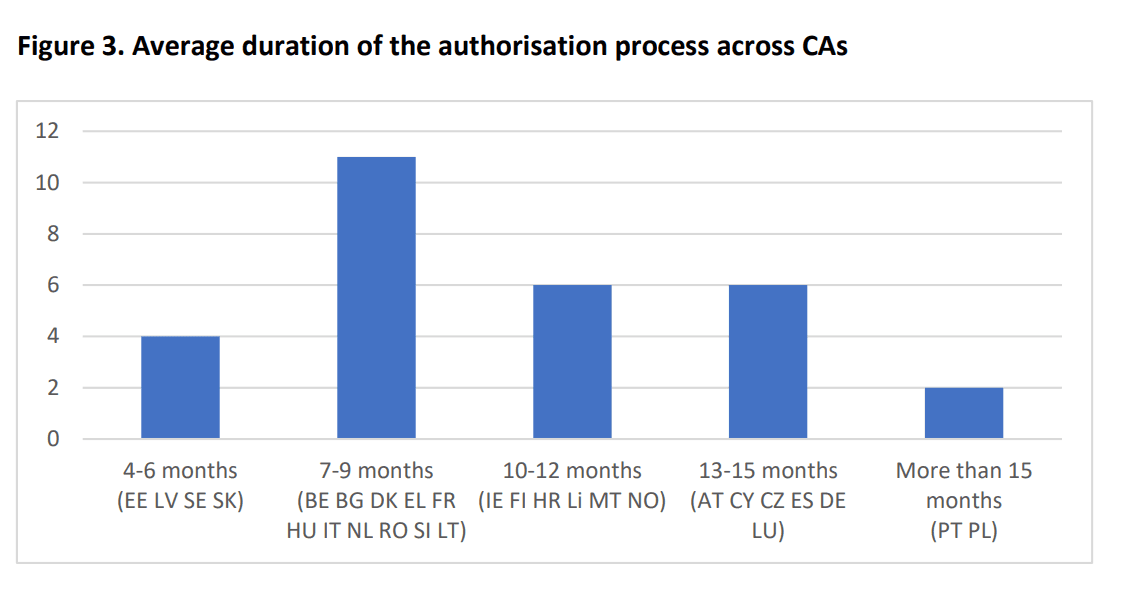
Source: European Banking Authority
On Dec. 1, 2025, Nawrocki vetoed the law, citing bloated regulation. The government failed to override the veto, and then reintroduced the exact same bill. Nawrocki vetoed the bill for a second time in February, and on April 17, the Sejm repeated itself in failing to overrule the veto.
The battle over the crypto bill shows no signs of stopping.
Firstly, for Nawrocki, passing the bill after being reintroduced in the same form would have presented a political problem.
Piech told Cointelegraph, “Once the president had already argued that the bill breached constitutional principles and contained excessive, disproportionate and vague provisions [...] signing a near-identical version would have meant contradicting his own stated reasoning.”
“In that sense, the second push looked less like compromise and more like an attempt to pressure the president into a constitutional U-turn.”
Some in the crypto industry hailed the veto as Nawrocki sticking to his pro-crypto, sound regulatory principles.
“The veto is not anti-regulatory, it brings common sense back into the law-making process. [...] The industry did not ask for privileges. It asked for proportionality,” said Sławomir Zawadzki, co-CEO of Kanga Exchange.
Different coalitions and groups have attempted to introduce their own versions. According to Piech, Finance Minister Andrzej Domański said that the government started work yesterday on solutions for a new crypto-asset bill.
In December, after the first veto, the Polska 2050 political party announced “an improved draft that is a step forward from the President's arguments, which, although far-fetched, are perhaps worth considering.”
Nawrocki himself has said he would submit a draft but the speaker in the Sejm has blocked the introduction of presidential proposals.
The Confederation of Liberty and Independence and the Law and Justice have filed versions, while another political coalition, the Center Club, announced it would prepare another draft.
Overall, Poland’s political class is “still deeply split on crypto.”
“This is no longer just a technical argument about implementing MiCA. It has become a broader fight over whether crypto should be brought into a normal legal framework, or treated as a politically suspicious sector that can be overregulated, stigmatised or used as a proxy battlefield after the Zonda Crypto controversy,” he said.
Polish Prime Minister Donald Tusk, himself a member of the Civic Coalition, has accused local exchange Zonda Crypto of illicit funding and ties to Russian criminal networks. It has undergone a funding crisis, pausing withdrawals, and has reportedly lobbied against the bill.

The founder of BitBay (now Zonda Crypto), Sylwester Suszek, went missing in 2022. After his disappearance, the exchange entered a funding crisis. Source: Yaguar
Tusk also claimed that it “sponsors political and social events in Poland and promotes very specific political forces,” including the opposition far-right Law and Justice party, of which Nawrocki is a member.
Zonda Crypto did not respond to Cointelegraph’s request for comment.
For companies in Poland, passing a new law by the end of the MiCA transitional period on July 1 may be a case of shutting the barn doors after the horses have bolted.
Said Piech, “A new law may still matter institutionally, especially for banks and larger financial institutions that may want to enter crypto once there is a clear legal path. But for all existing Polish crypto firms, it is already very late.”
Some domestic crypto firms are already looking abroad. Crypto exchange Kanga is considering a move to Latvia, “a country whose representatives have openly used conferences in Poland to attract crypto firms, offering a MiCA-friendly regime, faster procedures and relatively low supervisory fees,” per Piech.
Robert Wojciechowski, president of the Polish Chamber of Commerce for Blockchain and New Technologies, said, “Since we founded the chamber, about 70-80 percent of companies have sailed abroad. Now my colleagues say they are talking to the Czech Republic to move their business there.”
The Chancellery of the President has itself raised the alarm, stating that, “Overregulation is a guaranteed way to push companies abroad — to the Czech Republic, Lithuania or Malta — instead of creating conditions for them to operate and pay taxes in Poland.”
Zonda Crypto CEO Przemysław Kral has previously told Cointelegraph, “Although we are a company with Polish roots and the largest player in the crypto industry on the Polish market, we have been operating outside Poland for years.”
“We are confident that we will remain a key player on the market. However, many small Polish crypto companies will lose the opportunity to operate on the market,” he said.
Now it’s a race against the clock, as July 1 draws closer. Piech doesn’t see a “realistic chance” for a bill to pass, and if it doesn’t, “domestic firms without a functioning Polish route are left at a structural disadvantage.”