
Ripple CEO Reveals What It Would Mean For XRP Holders If The Company Went Public
Ripple CEO discusses potential IPO benefits for XRP holders.

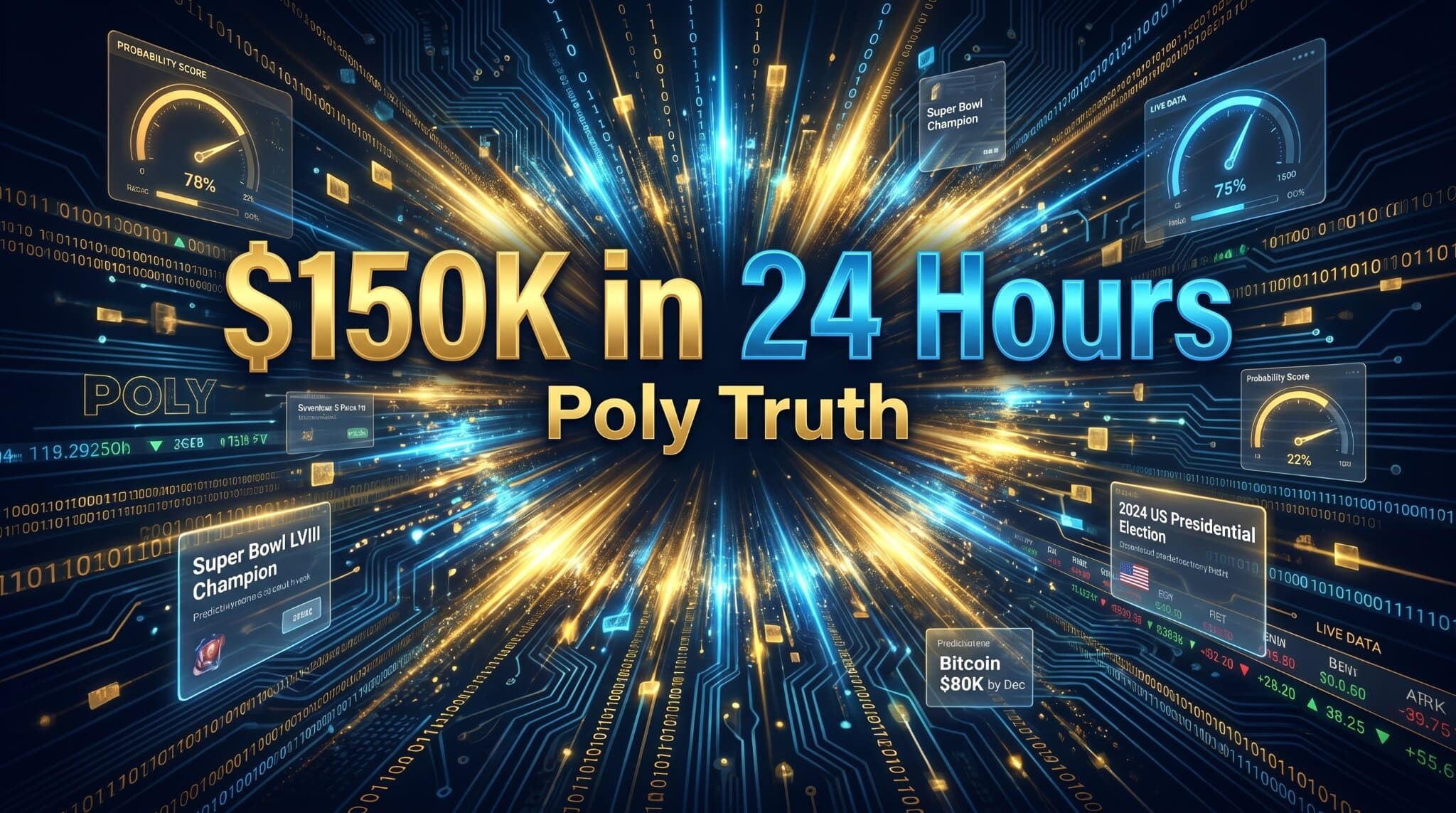
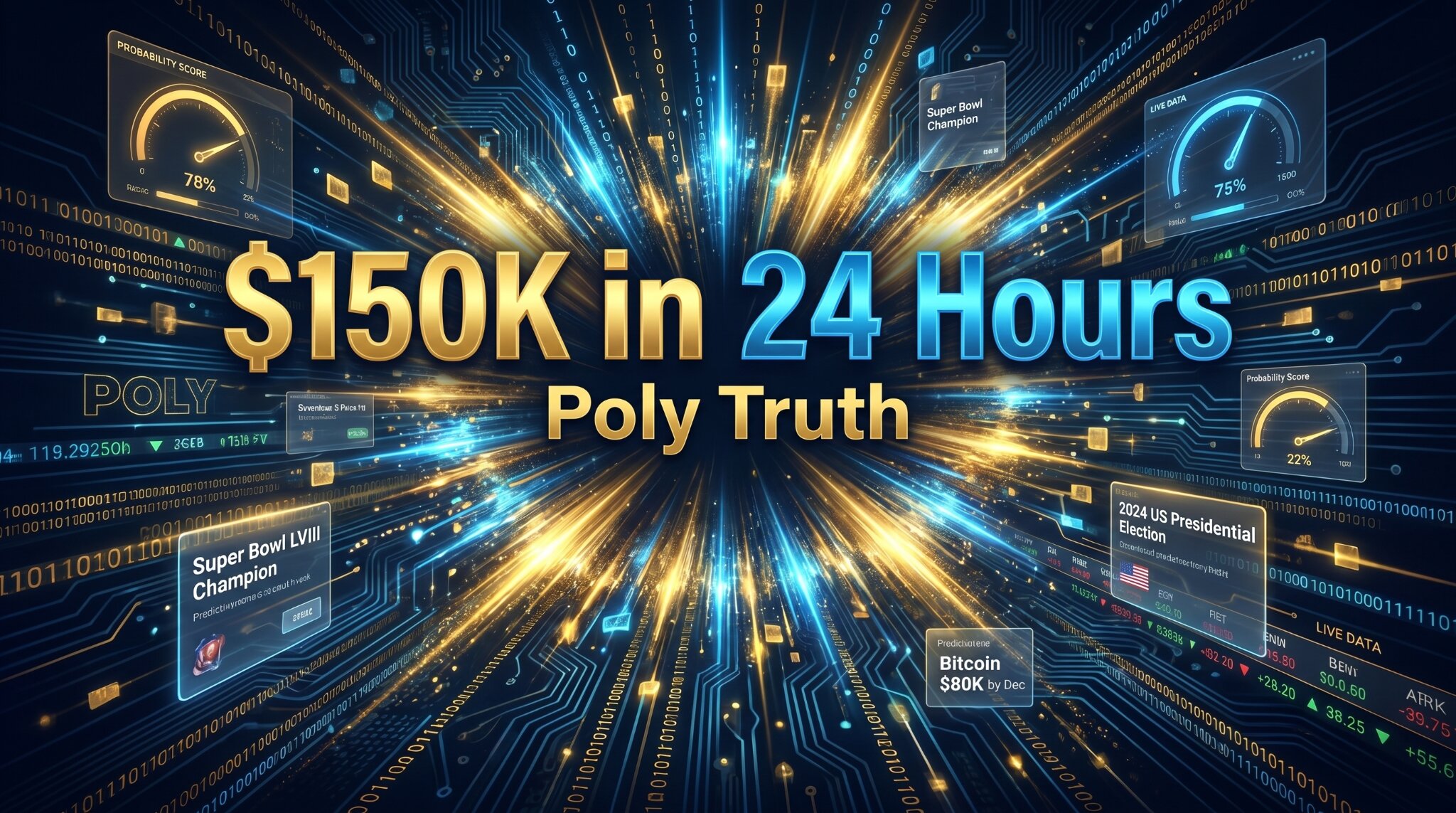
Poly Truth raised $170,000 in its first 24 hours of presale, aiming to enhance prediction markets with AI analysis. The tool scores outcomes by probability and explains its reasoning.
Mentioned in this story

Prediction market platforms such as Polymarket regularly observe millions in volume on most of their events, ranging from election outcomes to crypto price targets. That said, one persistent problem remains: most participants are essentially just guessing. They pick a side based on brief research, gut instinct, social media noise, or whatever narrative may feel more convincing that specific week.
Poly Truth is positioning itself as a platform that wants to fix that. Rather than being just another prediction platform, it’s an intelligence layer, which is built on top of prediction markets. Think of it as an AI-powered tool designed to analyze active events, score outcomes by probability, and explain the reasoning behind each call. The project’s website lays out the pitch in full, along with details of its live presale for the native token PTRUE.
The project has raised $170,000 in the first 24 hours of the presale, suggesting a real audience for this kind of tool and an understanding of what it helps with and why.
Poly Truth frames its architecture around three main functions, each one of which is represented by a character. This can serve more like a useful mental model, so let’s walk through each one of them.
The Runners are automated bots that are designed to continuously scrape information from across the internet. Whenever there is an active prediction event (an election, a crypto market call, a sports match, etc.), the Runners are pulling relevant information from multiple different sources in real time.
The Starlet, on the other hand, is the AI analyst at the heart of the system. It’s designed to take the raw data from the Runners, cross-reference sources, identify patterns, and generate a probability score for each possible outcome. This is where the actual intelligence is nested.
The Presenter is how the users interact with the results. It surfaces the findings in plain language – which events have strong data-based support, and what the probability breakdown looks like, as well as why the model made the decisions it did.
Poly Truth is an AI-powered tool designed to analyze prediction markets, score outcomes by probability, and explain the reasoning behind each prediction.
Poly Truth raised $170,000 in the first 24 hours of its presale for the native token PTRUE.
Poly Truth aims to address the issue of participants guessing outcomes based on limited information by providing AI-driven insights and probabilities.
More information about Poly Truth can be found on its official website at polytruth.io.

Ripple CEO discusses potential IPO benefits for XRP holders.

Altcoins are showing signs of strength as the market prepares for a pivotal week influenced by the CLARITY Act vote. Despite ongoing global tensions and a challenging macro environment, analysts note a potential shift in altcoin behavior.

Myriad adopts Chainlink as its oracle platform for crypto prediction markets, starting with BTC, ETH, BNB, and SOL.

Last-minute amendments to the Clarity Act focus on DeFi, stablecoins, and more before Senate vote.

The CLARITY Act is under fire with over 100 amendments proposed ahead of its markup.

Coinbase CEO Brian Armstrong highlights the CLARITY Act as a key to improving the US financial system.
See every story in Crypto — including breaking news and analysis.
When these are put together, the system is designed in a way that turns noisy and scattered information into a structured view of a prediction event, giving the user more context on whether to take a position or not.
It’s important to note that this is not a trading bot, and it’s not a financial advisor. The platform doesn’t manage funds, guarantee outcomes, or execute trades. The value proposition here is strictly informational. It’s designed to give users a more grounded basis for their own decisions when it comes to prediction markets.
This is a critical distinction. Many projects in this space are blurring the lines between an automated trading system and a signal tool. Poly Truth’s framing is analytical, and that’s explicit. Whether that’s how it ultimately gets used in practice is a question that’s completely separate. However, the design intent is not automation – it’s education and data.
The native token of the platform carries the ticker PTRUE. It’s live in presale with a current price of $0.001190. Here is the supply breakdown:
At the time of this writing, there is a listed staking APY of 4,452%, which is definitely an impressive number. However, keep in mind that these yields are fairly common in early-stage presale projects and tend to compress significantly as more tokens enter circulation. This is a mechanism that is designed to incentivize early holders to lock their tokens rather than sell them right off the bat – it’s not a figure that reflects long-term sustainable yield.
The token is built on Ethereum, with the contract address listed on the site. Payment options are flexible: ETH, BNB, SOL, USDT, USDC, card, and SEPA – all of these are accepted. This should remove most of the friction for buyers who come from different chains or even traditional finance.
The primary audience for the project is undoubtedly active participants in prediction markets – people who are interested and are already using platforms like Polymarket or similar services and are looking for a smarter and more data-informed approach to the way they evaluate probabilities.
However, it could also appeal to:
The interface is designed to be beginner-friendly, at least that’s how it’s described, and it matters. Prediction markets do have a reputation for being a bit overwhelming. If Poly Truth can make probability reasoning a bit more accessible to a broader audience, then the product might become really interesting.
Raising $170,000 in the first 24 hours of the presale doesn’t validate the project on its own. However, it’s an indication that there is genuine early demand. The more meaningful metrics will, of course, come after launch: how accurate the AI’s probability scores are over time, whether the platform will be able to sustain a user base that’s engaged beyond the initial presale excitement, and so forth.
The prediction market space is undoubtedly becoming much more competitive. Tools that add analytical value rather than just another token tend to have more staying power.
For anyone researching the project in detail, the full tokenomics, contract address, and presale mechanics are available on the Poly Truth website.