
Pope Leo Releases First AI Encyclical, Calls Data a Common Good and Rejects Moral Neutrality of Tech
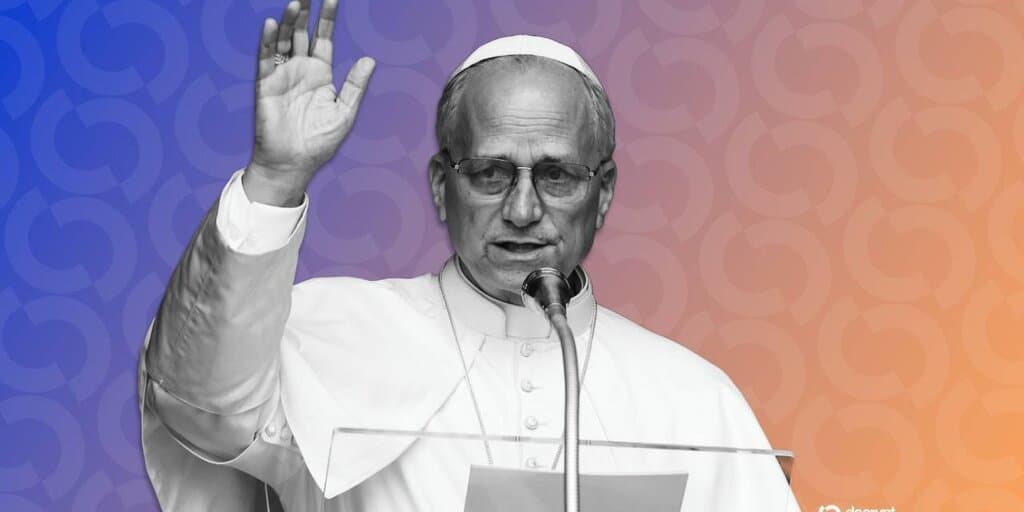
TL;DR
Pope Leo XIV released 'Magnifica Humanitas', the first AI-focused papal encyclical, on May 25. The document classifies data as a common good and emphasizes the need for oversight of Big Tech.
Key points
- Pope Leo XIV released 'Magnifica Humanitas' on May 25
- The encyclical classifies data as a common good
- It calls for tighter oversight of Big Tech
- Technology is described as not neutral
- Christopher Olah warned about AI labor displacement
Mentioned in this story
Pope Leo XIVAnthropicChristopher Olah
In brief
- Pope Leo XIV released "Magnifica Humanitas" on May 25, the first papal encyclical dedicated entirely to AI.
- The encyclical classifies algorithms, data, and digital platforms as common goods that cannot remain under private monopoly control.
- Anthropic co-founder Christopher Olah spoke at the Vatican launch and warned that AI labor displacement at scale would become "a moral imperative of historic proportions" to address.
Pope Leo XIV published his first encyclical on Monday, a 245-paragraph document dedicated entirely to artificial intelligence that demands tighter oversight of Big Tech, classifies data as a shared human resource, and argues that "technology is never neutral" because it absorbs the values, blind spots, and economic incentives of whoever builds it.
The document, Magnifica Humanitas ("Magnificent Humanity"), was released at the Vatican's Synod Hall on May 25. Pope Leo signed it 10 days earlier, on May 15, the 135th anniversary of Rerum Novarum—the 1891 encyclical by Pope Leo XIII on labor rights that became the foundation of modern Catholic social teaching.
Pope Leo has consistently framed AI as the defining moral challenge of his papacy, and compared the coming social upheaval to that of the Industrial Revolution.
The encyclical covers a lot of ground: AI in warfare, dehumanization, technocracy, data colonialism, child safety online, mass unemployment, disinformation, autonomous weapons, and even transhumanism. But the argument tying it together is simple. Every algorithm reflects the priorities of the people who designed, funded, and deployed it. Building systems that pretend otherwise doesn't eliminate that bias—it just hides it.
Data belongs to everyone. Including yours.
Catholic social teaching has long held that the earth's natural resources are intended for all of humanity, not private owners. Leo extends that principle directly to the digital economy. Algorithms, platforms, and data, the encyclical argues, must be governed as common goods, not locked behind commercial walls by a few companies.
"Data is the product of many contributors and should not be treated as something to be sold off or entrusted to a select few," the pope writes.
The text also applies subsidiarity—the principle that decisions should be made at the most local level possible—to tech platforms specifically. The encyclical doesn't just call for top-down regulation; advocating instead for transparent algorithms, independent community audits, and real legal power for people to challenge automated systems that affect their credit scores, job applications, or criminal risk assessments. Without that distributed oversight, Leo argues, governance of AI becomes a form of digital authoritarianism that silences the populations it claims to serve.
Q&A
What is the significance of Pope Leo XIV's encyclical on AI?
The encyclical emphasizes that data and algorithms are common goods and calls for tighter regulation of technology to prevent monopolization.
When was 'Magnifica Humanitas' released and what does it address?
'Magnifica Humanitas' was released on May 25 and addresses the moral implications of AI, asserting that technology is not neutral.
Who spoke at the launch of the encyclical and what was their warning?
Christopher Olah, co-founder of Anthropic, warned that AI labor displacement could become a significant moral issue that needs addressing.
How does Pope Leo XIV compare the challenges of AI to historical events?
Pope Leo XIV compares the social upheaval caused by AI to the Industrial Revolution, framing it as a defining moral challenge of his papacy.