Nearly $500B in Bitcoin Is Exposed to Future Quantum Computing Attacks: Glassnode
Over $469 billion in Bitcoin is vulnerable to quantum attacks, with 30% exposed.
Decrypt1 min read

Ramp Network has launched a multichain self-custodial wallet that allows users to buy, sell, trade, and cash out digital assets within a single application. The wallet supports Ether and several other networks, aiming to simplify self-custody in the crypto space.
Mentioned in this story
Fintech company Ramp Network said Friday it launched a multichain self-custodial wallet designed to tackle a common friction point in crypto of needing to rely on outside providers for core actions such as buying, swapping and cashing out.
The company said the wallet allows users to buy, sell, trade and cash out digital assets inside a single application, using Ramp’s own on-ramp, off-ramp and cross-chain infrastructure rather than handing users off to external services, according to an announcement shared with Cointelegraph.
Ramp said the wallet launches with support for Ether (ETH) across eight networks: Ethereum, Arbitrum, Base, Linea, MegaETH, Optimism, Polygon zkEVM and zkSync Era. It will also offer support for additional networks, including Bitcoin, Solana, Binance Smart Chain, Polygon, Apechain, Avalanche, Celo and Gnosis.
Simplifying self-custody remains one of crypto’s biggest product problems. Ramp is betting that bringing payments, swaps and cash access into one app can make non-custodial wallets feel less fragmented without taking control of user assets. Ramp said it uses USDC (USDC) on Base as a core balance for transfers, payments and in-app activity, while assets remain secured through a self-custodial setup using passkeys and optional key export.
Other crypto wallets that offer integrated decentralized exchange (DEX) features for asset purchases and swaps include Metamask, Phantom, Best Wallet and Exodus.
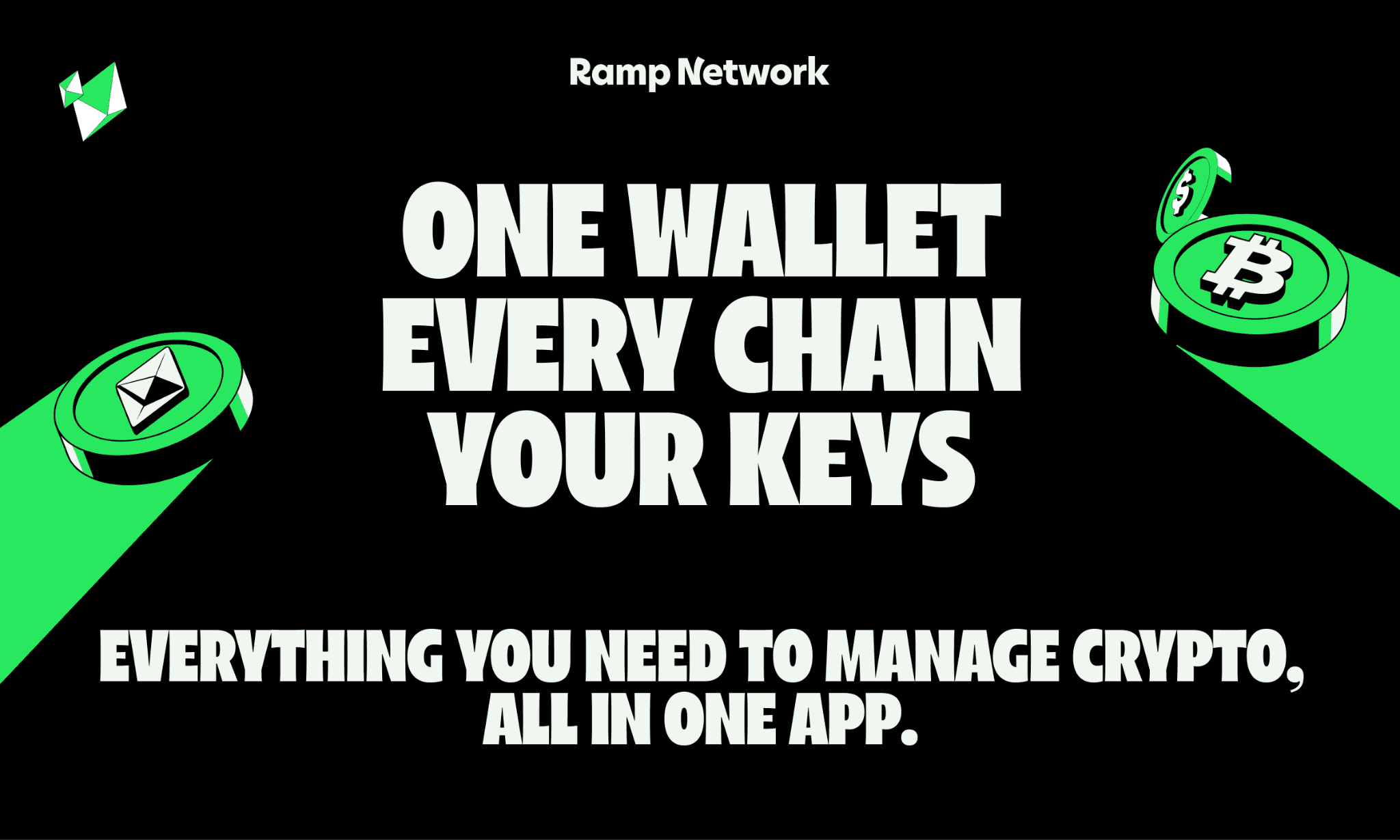
Ramp Network launches non-custodial wallet. Source: Ramp Network
Ramp said the wallet will be available globally, excluding the European Union, due to regulatory requirements.
Ramp Network is authorized as a Crypto Asset Service Provider under the EU’s Markets in Crypto Assets Regulation (MiCA) since December 2025, according to the European Securities and Markets Authority’s MiCA register.
However, launching a product such as a wallet requires “additional regulatory steps,” which are expected to be finalized in the coming months, Przemek Kowalczyk, co-founder and CEO at Ramp Network, told Cointelegraph.
The wallet allows users to buy, sell, trade, and cash out digital assets all within one application, utilizing Ramp's infrastructure.
The wallet supports Ether across eight networks, including Ethereum, Arbitrum, Base, and others, with plans to add support for Bitcoin, Solana, and more.
It simplifies the self-custody experience by integrating payments, swaps, and cash access into one app without taking control of user assets.
Over $469 billion in Bitcoin is vulnerable to quantum attacks, with 30% exposed.
Ethereum Dev Dankrad Feist proposes a $1 billion ETH organization amid Foundation turmoil.

XRP whale dominance returns to Binance while Coinbase shows a different trend.

Spotify and Universal Music Group introduce AI remix tool for fan-made covers.

DeepSeek is building its own coding tool to rival Claude Code and Codex.

Billionaire Mark Cuban sells most of his Bitcoin, citing its failure as a store of value.
See every story in Crypto — including breaking news and analysis.
Ramp said it previously operated mainly as the infrastructure layer behind crypto purchases in partner apps, including MetaMask and Trust Wallet, serving more than 10 million users globally.
Kowalczyk said Ramp built the infrastructure itself so users would not have to leave the app to buy, swap or cash out, while still keeping control of their assets.
“We would not frame this as becoming a new intermediary, but rather as reducing the number of intermediaries involved in a transaction,” Kowalczyk said. “By bringing these flows into a single system, we reduce those handoffs and make the experience more consistent and predictable,” he added.
Kowalczyk argued that this unified wallet infrastructure will enable better execution control and simplify the fragmented wallet experience while users still maintain asset ownership.