
Quantum Computing Threat 'Mostly a Coordination Issue' for Bitcoin: Fireblocks CEO
Fireblocks CEO: Bitcoin's quantum threat is a coordination issue, not technical.
Decrypt1 min read

Reid Hoffman predicts a resurgence of NFTs as AI agents create new challenges for online identity and trust. He emphasizes the need for trustworthy digital identity systems to facilitate transactions between these agents.
Mentioned in this story
NFTs are due for a “rebirth” as AI agents force the internet to solve new identity and trust problems, Reid Hoffman told CoinDesk’s Consensus Miami conference on Wednesday.
The Greylock partner and LinkedIn co-founder said agents transacting with other agents will require trustworthy digital identity systems that resemble what NFTs originally tried to solve. Hoffman said he began revisiting NFTs as he considered a future in which AI agents outnumber humans online."When you begin to think we're going to have more agents than people, what does the identity layer look like? What is the notion of, hey, when your agent's talking to my agent, and we book this talk here, is it a trustable transaction?" Hoffman said. "And that got me back into thinking about NFTs."
Hoffman said identity systems will exist inside companies, but the harder problem will be identity for agents operating across the open internet.
“It’s going to be kind of free range on the internet, and how does that work? And crypto is the obvious answer,” he said.
This argument carries a throughline from Hoffman’s earlier work at LinkedIn, where real-world professional identity was central to the network’s design. Hoffman said actual identity can create “more responsibility, more reliability,” while also acknowledging that pseudonyms have legitimate uses in some contexts.
Hoffman, who said he bought his first Bitcoin over a decade ago and has never sold any, framed crypto as the natural answer to the deepfake-era trust problem. He cited his own AI clone, Reid AI, which he has sent to speak at conferences, as an example of why provenance will matter more as generative media improves.
"When I bought my first Bitcoin in 2014, it was like, actually, in fact, this is part of a design feature, that this is how DNS should work. This is how identity should be working, generally when you get to the internet," he said.
That identity problem, Hoffman explained, extends beyond agent-to-agent commerce. He pointed to AI-generated content, bot farms, manipulated polls and paid political influence campaigns as examples of why proof-of-humanity is becoming harder to ignore online.
In a politically calibrated stretch, Hoffman urged the crypto industry not to overcommit to Republicans on policy.
"If the industry goes, oh, we're overly reacting against Gensler, et cetera, and then being kind of, as it were, anti-Democratic Party on this, the problem is that the pendulum swings," he said. "It's good to be bipartisan from a viewpoint of what we care about is the ecosystem. We care about how it plays a good role in society.”
Hoffman also disputed the prevailing narrative that AI is driving Big Tech layoffs.
"What I've seen so far in every company that says, 'I'm doing layoffs because of AI,' maybe other than Meta, is not out of productivity, but is just out of reshifting," he said. "We've overhired because of the pandemic. We need to change. We're going to call it AI for a position of strength."
Hoffman believes NFTs will resurface due to the need for trustworthy digital identity systems as AI agents outnumber humans online.
AI agents are creating challenges related to trust and identity, necessitating reliable systems for transactions between agents.
NFTs were originally designed to address identity and trust problems, which are becoming more relevant as AI agents interact online.
Hoffman suggests that crypto could provide solutions for identity systems needed for AI agents operating across the open internet.
Fireblocks CEO: Bitcoin's quantum threat is a coordination issue, not technical.

Americans urge Congress to lead in digital finance with the Clarity Act.

Ethereum Open Interest rises as price pulls back, hinting at volatility.

Metaplanet faces $736 million loss due to Bitcoin price decline
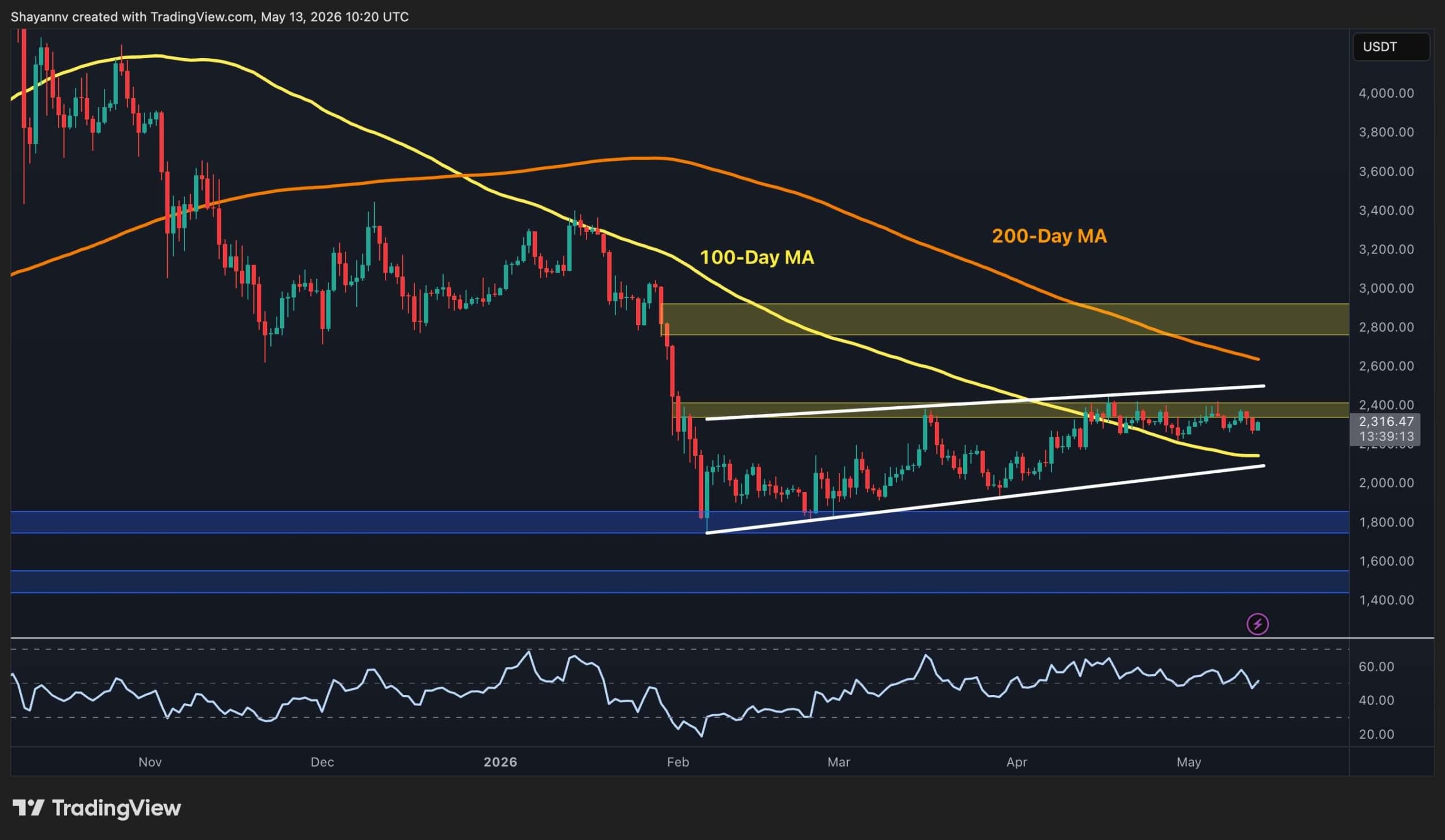
Ethereum struggles below $2.4k resistance; traders optimistic about recovery.

Metaplanet announces Japan's first Bitcoin-based perpetual preferred shares
See every story in Crypto — including breaking news and analysis.
As an investor, Hoffman said he is looking for crypto ideas that may have been tried too early during prior market cycles but could return as AI changes the internet. NFTs are one such area, he said, while “DAOs and other areas” could also see renewed relevance.
Asked at the close what his Bitcoin exit price was, Hoffman didn't name a number. "Is there such a thing as an exit price?" he asked.