
Bitcoin Firm Strive Unveils Daily Dividend Payments for SATA Preferred Shares
Strive announces daily cash dividends for SATA preferred shares starting June 16.
Decrypt1 min read

Ripple CEO Brad Garlinghouse warns that the chances of the CLARITY Act passing could drop significantly if the Senate Banking Committee hearing does not proceed as planned in the next two weeks.
Mentioned in this story
Days after the Senate Banking Committee released its draft language for the CLARITY Act, Ripple CEO Brad Garlinghouse delivered a blunt message about the road ahead for the delayed crypto market-structure bill.
Speaking Tuesday at CoinDesk’s Consensus Miami event, Garlinghouse said the next two weeks could prove decisive—not just for the momentum of the legislation, but for whether it ultimately clears one of the last key procedural hurdle.
Garlinghouse emphasized that the CLARITY Act passage is still not guaranteed. He pointed to the Senate Banking Committee’s long-awaited hearing as the immediate turning point.
Without that progression, he warned, the odds for the broader package would deteriorate quickly. “If it doesn’t happen then, I think the likelihood is going to drop precipitously,” he said. Even so, he added that he still believes the bill is likely to advance.
The CLARITY Act draft, as previously reported by Bitcoinist and echoed across coverage through the weekend, is designed to curb certain yield practices in the crypto sector—particularly by restricting how crypto firms handle stablecoins used for payments.
Under the draft, crypto companies would be barred from paying customers “any form of interest or yield” simply for holding payment stablecoins. The intent, according to the framing around the bill, is to align the treatment of stablecoin holdings with how traditional banks handle deposits.
At the same time, the bill includes an important carve-out. Companies would be allowed to offer incentives or rewards, but only if those benefits are not functionally or economically comparable to the interest a customer would receive on a bank deposit.
That distinction—between permissible promotional incentives and incentives that could be viewed as effectively equivalent to deposit yield—has been one of the most contested negotiation points in the process since the CLARITY Act began taking shape.
Garlinghouse acknowledged that the outcome does not fully satisfy every concern. “Do I think it’s perfect? Hell, no,” he said. He described the bill as a product of tradeoffs and compromises, but argued that the goal of regulatory “clarity” is still better than leaving the sector to operate in uncertainty.
The CLARITY Act is a proposed legislation aimed at establishing a clear regulatory framework for the cryptocurrency market, which is crucial for its growth and stability.
Garlinghouse stated that if the Senate Banking Committee hearing does not occur soon, the likelihood of the CLARITY Act passing will decrease significantly.
The exact date for the Senate Banking Committee hearing has not been specified, but it is expected to take place within the next two weeks.
If the CLARITY Act fails to pass, it could lead to regulatory uncertainty in the crypto market, hindering its growth and innovation.
Strive announces daily cash dividends for SATA preferred shares starting June 16.

Kimi WebBridge lets AI agents interact with your browser while keeping your data local and secure.
The CLARITY Act has advanced out of the Senate Banking Committee with a 15-9 vote.
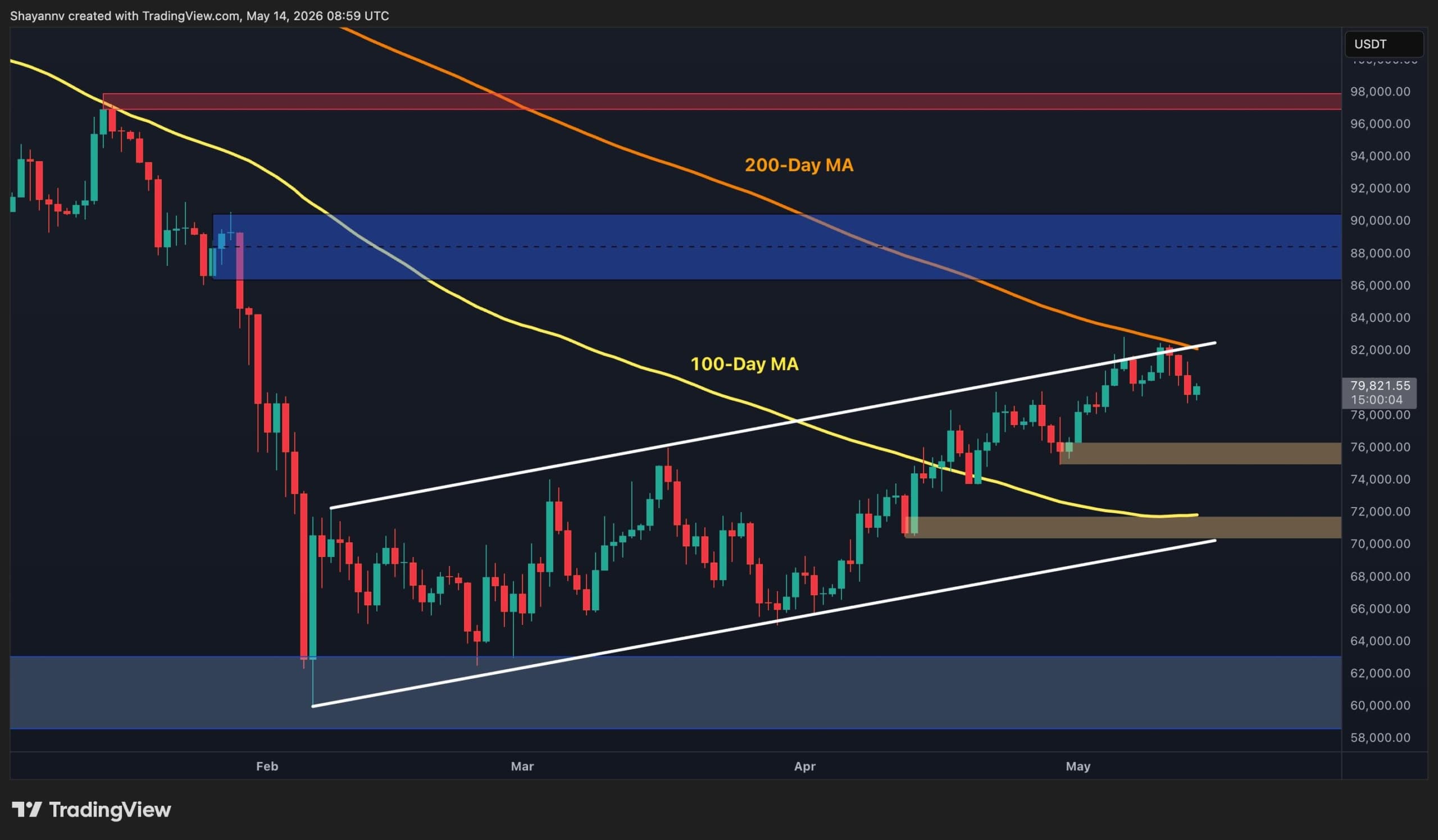
Bitcoin struggles at $80K resistance, risks falling to $75K as sellers dominate.

BNB Chain's new report examines post-quantum cryptography migration for BSC.

Ethereum saw its highest profit-taking in three weeks with $74.58M booked, despite a 5.5% price drop. This surge in realized profits comes from traders who bought ETH below $2,000 earlier this year.
See every story in Crypto — including breaking news and analysis.
Eleanor Terrett of Crypto In America reported on Monday that some in crypto were interpreting the CLARITY Act draft as a win for banks, arguing that a broad “no yield” approach would give traditional institutions an advantage.
However, banks appear to be looking at the language differently—some are reportedly worried that the compromise may not go far enough to prevent crypto firms from finding ways around it.
By Tuesday, Terrett said a split is forming in bank circles over the yield compromise itself. Some institutions—especially larger banks with consumer-facing operations—are said to be taking issue with parts of the final wording.
Meanwhile, those without similar consumer arms reportedly appear more comfortable with the direction of the CLARITY Act compromise. Community banks are also signaling interest, though the industry group ICBA has voiced concerns over how the approach may affect their perspective and interests.
Terrett also relayed the concerns of at least one major bank that shares the view held by some negotiators: the core problem is that the CLARITY Act language could be drafted too narrowly, leaving room for crypto companies to repackage or restructure “yield-like” rewards in ways that still resemble bank deposit interest.
The daily chart shows XRP’s recovery on Tuesday. Source: XRPUSDT on TradingView.com
At the time of writing, the price of Ripple’s associated cryptocurrency, XRP, was $1.41, marking a 2.5% increase over the past week.
Featured image from OpenArt, chart from TradingView.com