
Shiba Inu Whales Remove 229 Billion in 24 Hours: Are They Shoveling at the Bottom?

TL;DR
Shiba Inu has seen 229 billion tokens withdrawn from exchanges in just 24 hours, indicating a significant downtrend compression. This trend of large-scale withdrawals suggests that holders are removing supply from the market.
Key points
- 229 billion SHIB withdrawn from exchanges in 24 hours
- Ongoing pattern of large-scale withdrawals observed
- Fewer tokens available for sale temporarily
Shiba Inu is experiencing a traditional late-stage downtrend compression, which is made even more interesting considering increasing exchange outflows. In a single day, about 229 billion SHIB were removed from exchanges, which is consistent with a larger pattern of ongoing withdrawals in recent weeks.
Large scale withdrawals are in
To put it simply, there are fewer tokens available for sale, at least temporarily, as evidenced by data showing frequent large-scale withdrawals of 30 billion, 133 billion and even deeper negative netflows, indicating that holders are regularly removing supply from exchanges rather than pushing it in.
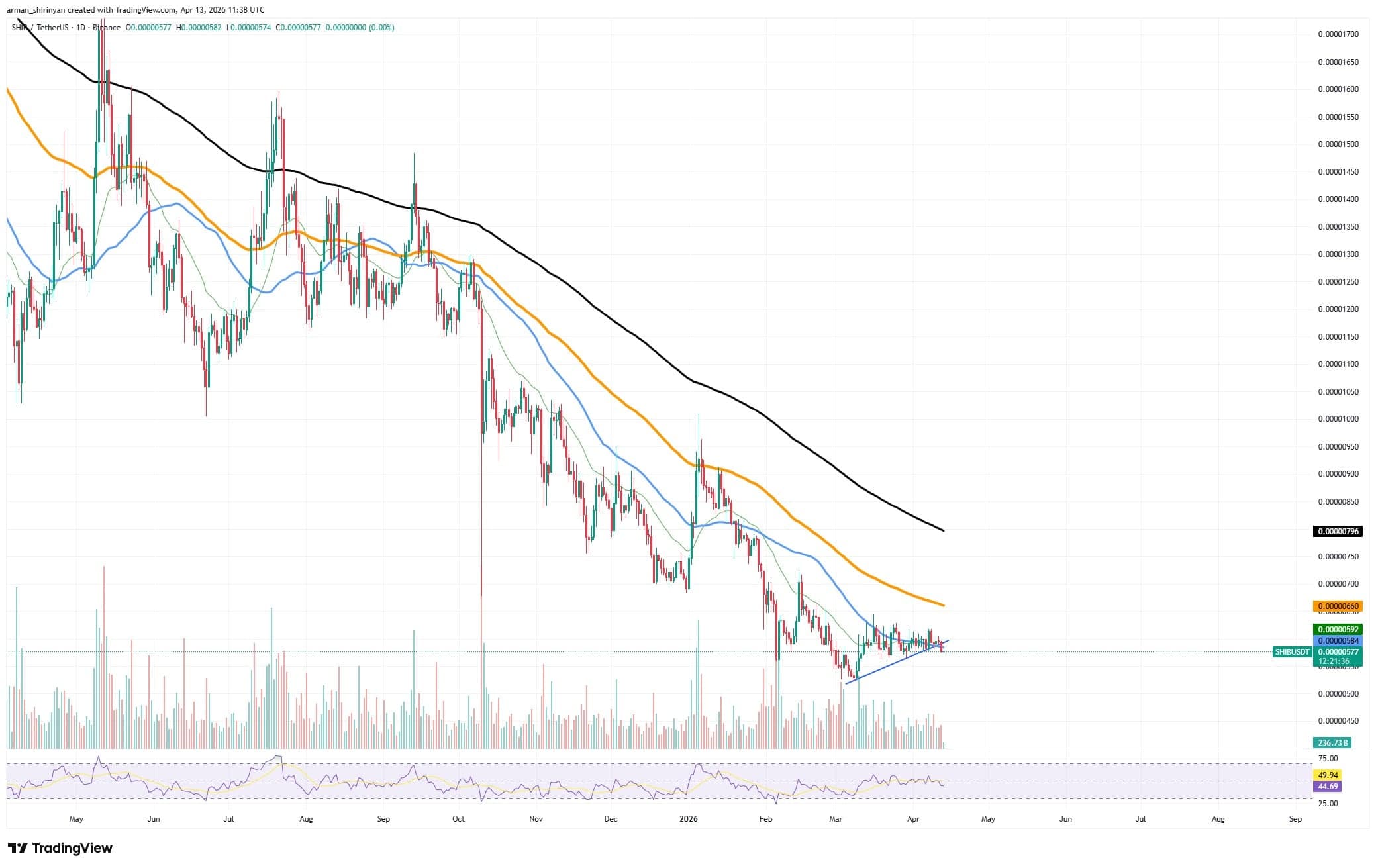
SHIB/USDT Chart by TradingView
SHIB is still inadequate in terms of cost. The long-term trend is still downward, and it is currently trading between $0.0000057 and $0.0000060, stuck below important moving averages. A tight ascending support is forming on the chart, but there is significant resistance to it. This is stabilization following selling fatigue, not strength.
On-chain picture not translating
This is the main contradiction at the moment: accumulation on-chain, price structure still negative. Negative exchange netflows usually indicate less sell pressure and possible accumulation. The fact that whales are removing hundreds of billions of tokens suggests positioning rather than panic. However, the lack of a significant price response indicates that demand is still weak or inactive.
Do whales then buy the bottom? Not really. This appears to be a gradual accumulation rather than a reversal motivated by convictions. SHIB has historically exhibited low volume, quiet wallet accumulation and a dearth of retail traders before making significant changes.
Q&A
What does the 229 billion SHIB withdrawal mean for the market?
The withdrawal indicates a decrease in available tokens for sale, which could impact supply and demand dynamics in the Shiba Inu market.
Are Shiba Inu whales influencing the price with these withdrawals?
Yes, the large-scale withdrawals by whales suggest they may be anticipating a price increase, as they are removing significant amounts of SHIB from exchanges.
What is downtrend compression in cryptocurrency?
Downtrend compression refers to a market condition where prices are declining but with decreasing volatility, often leading to a potential reversal or stabilization.