
Bitcoin, Ethereum ETFs Bleed as Crypto Funds Shed $1.07 Billion, Ending 6-Week Win Streak
Crypto investment products see $1.07 billion outflows, ending a six-week win streak due to Iran tensions.
Decrypt1 min read
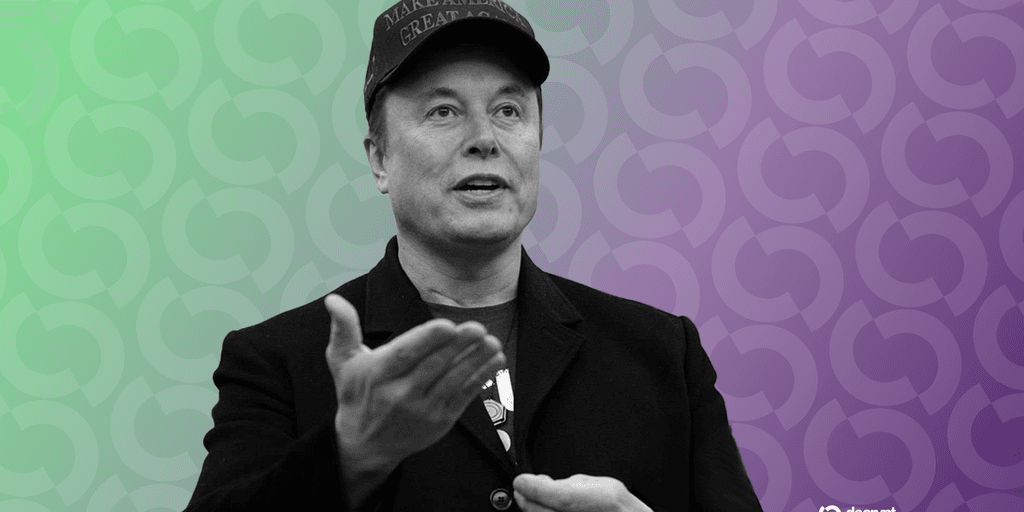
The DOJ intervened in xAI's lawsuit against Colorado's AI discrimination law, arguing it violates the Constitution. This move reflects the Trump administration's stance on limiting state regulation of AI.
Mentioned in this story
The U.S. Department of Justice moved Friday to intervene in xAI’s lawsuit against Colorado, escalating a legal fight over how states can regulate artificial intelligence and whether companies can be held liable for “algorithmic discrimination.”
In a press release, the DOJ said Colorado’s law, SB24-205, violates the Equal Protection Clause of the Fourteenth Amendment because it requires AI companies to prevent unintentional “disparate impact” based on protected characteristics such as race and sex while exempting certain uses intended to advance diversity or address historic discrimination.
“Laws that require AI companies to infect their products with woke DEI ideology are illegal,” Assistant Attorney General Harmeet K. Dhillon said in a statement. “The Justice Department will not stand on the sidelines while states such as Colorado coerce our nation’s technological innovators into producing harmful products that advance a radical, far-left worldview at odds with the Constitution.”
Colorado passed SB24-205 in 2024, and after a delay, the law is set to take effect on June 30. It requires companies that build or use high-risk AI systems in decisions such as hiring, student admissions, and mortgage lending to assess and reduce discrimination risks, disclose how those systems work, and notify consumers when AI plays a role in consequential decisions.
Earlier this month, Elon Musk’s xAI sued Colorado, arguing that the law forces AI systems to produce ideologically biased or inaccurate results. The DOJ’s intervention aligns the federal government with Musk’s AI company in challenging the law.
Cody Barela, a partner at Colorado-based law firm Armstrong Teasdale, said the DOJ’s argument that Colorado’s law slows AI development may be stronger than its constitutional claim.
“I think that particular argument will be less likely to win, but I do think they have a valid argument in terms of the burdens that the Colorado policy would place on these companies,” Barela told Decrypt, adding that courts may be more receptive to arguments that Colorado’s law emburdens AI startups and could slow U.S. competitiveness.
The DOJ argues that Colorado's AI discrimination law violates the Equal Protection Clause by requiring companies to prevent disparate impact.
The DOJ's intervention escalates the legal fight over state regulation of AI and supports xAI's challenge against Colorado's law.
The DOJ's stance may limit state-level regulations on AI, impacting how companies address algorithmic discrimination.
Harmeet K. Dhillon is the Assistant Attorney General who stated that laws requiring AI companies to adopt DEI ideology are illegal.
Crypto investment products see $1.07 billion outflows, ending a six-week win streak due to Iran tensions.

HIVE Digital Technologies invests $58M in Toronto for AI facility, shares jump 40%

Cross River Bank, linked to Ripple, is now part of X Money's payment initiative.

XRP investment products record a 70% surge in inflows to $67.6 million as investors shift from Bitcoin and Ethereum.

BitMine adds $151 million in Ethereum as prices dip below $2,200.

Bitmine's Ethereum holdings surge past 5.28 million ETH, nearing 5% supply target.
See every story in Crypto — including breaking news and analysis.
“The burden on them, in comparison to the delay that it causes in the AI race, might actually be a better argument, and maybe a winning argument based on administration policy—that they basically don’t want any burdens limiting tech companies in the AI race,” he said.
The DOJ’s intervention comes as states move ahead with their own AI rules while the Trump administration pushes to limit state-level regulation, and shift AI policymaking to Washington. Colorado was among the first states to pass a broad AI bias law. At the same time, lawmakers in New York and California have proposed or advanced measures targeting risks tied to generative AI tools.
While lawmakers on both sides of the aisle, including U.S. Representatives Don Beyer (D-VA), Sara Jacobs (D-CA), Mike Lawler (R-NY), and U.S. Senators. Gary Peters (D-MI) and Thom Tillis (R-NC), have pushed for safeguards against bias in AI, Justice Department officials called Colorado’s law a threat to innovation and U.S. competitiveness.
If xAI and the DOJ succeed, then Barela said the case could influence how other states approach AI regulation.
“I think there are states that are a lot more willing to avoid placing any restrictions on tech companies, both to promote themselves as tech‑friendly and to bring more companies there,” he said. “Others may just sit back and wait for the federal government to come up with a nationwide policy, rather than start a piecemeal, state‑by‑state process that’s harder to comply with.”