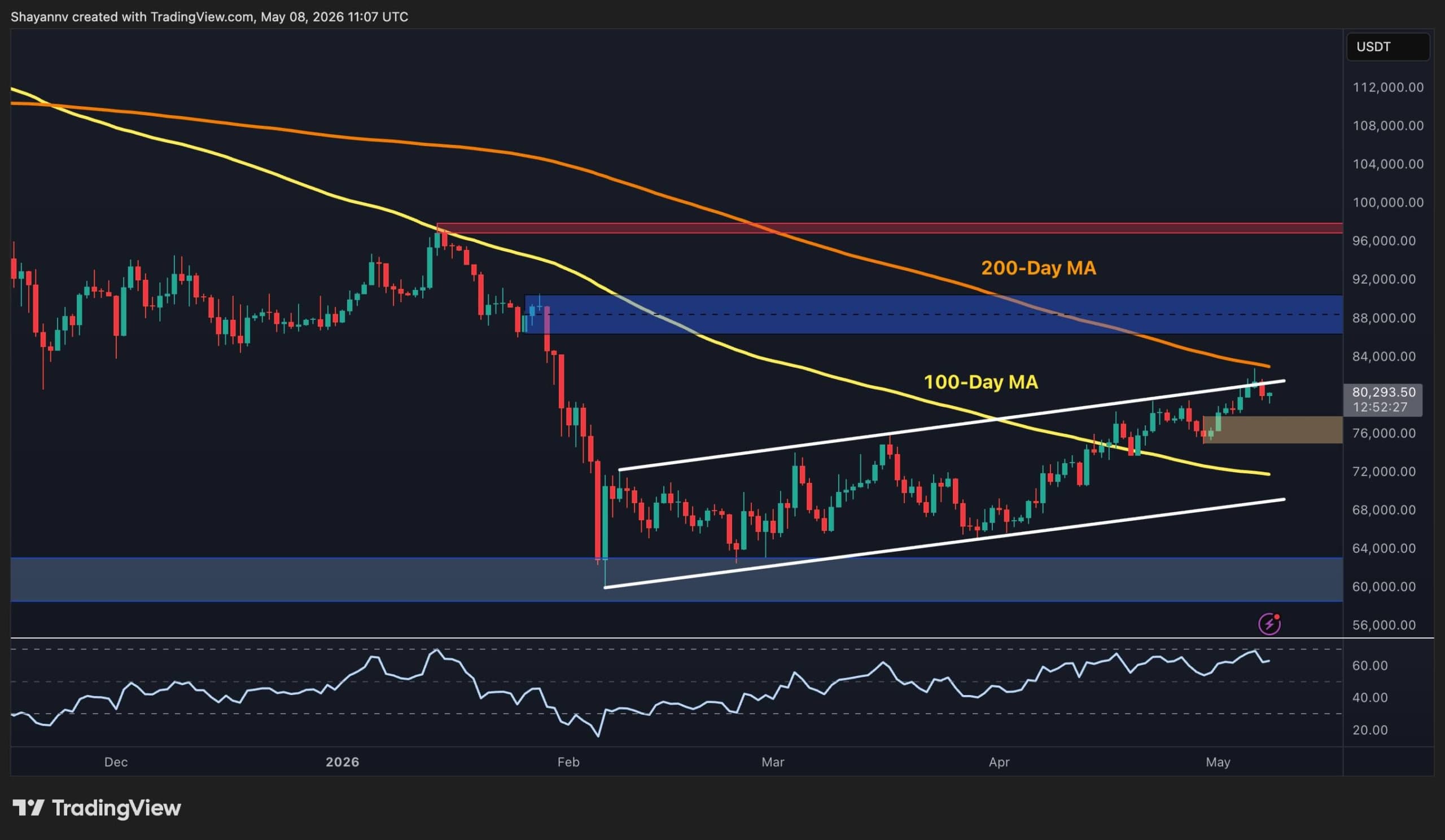
Bitcoin Price Analysis: Rejection at $83K Shows Major Weaknesses in BTC’s Structure
Bitcoin struggles at $83K resistance, indicating market weaknesses.
CryptoPotato1 min read
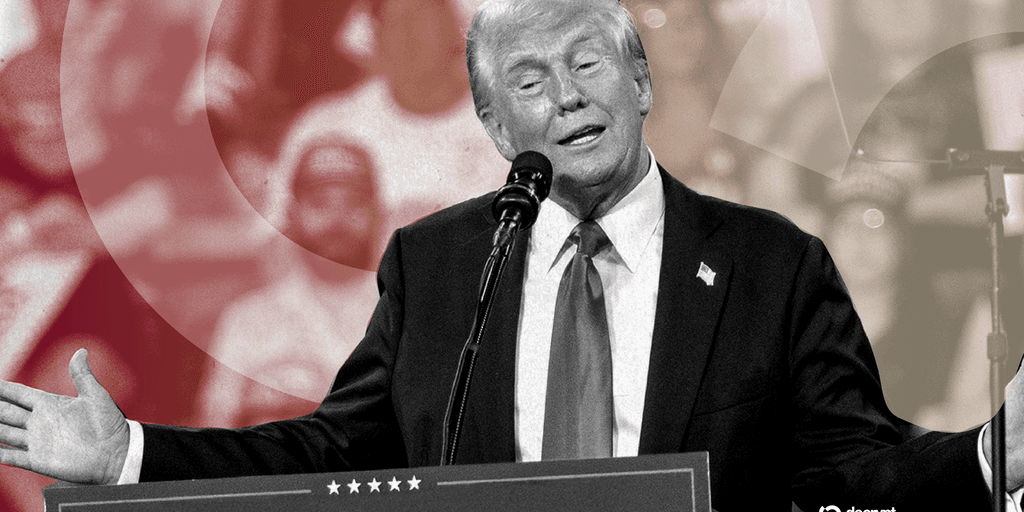
Trump softened his criticism of prediction markets, acknowledging support from 'very smart' people. This comes after he previously described the industry as turning the world into 'a casino.'
Mentioned in this story
President Donald Trump appeared to walk back criticism of prediction markets over the weekend, suggesting he wasn’t yet sure where he stood on the matter or whether he’d prefer if the emerging sector were regulated differently.
On Thursday, the president told reporters he was “never much in favor” of prediction markets—a booming industry that now accounts for over $7 billion in weekly trading volume—which he said have played a part in turning “the whole world, unfortunately [into] somewhat of a casino.”
The comments came hours after federal law enforcement arrested a U.S. soldier for allegedly using classified intelligence to net over $400,000 from a Polymarket wager on the timing of a high-profile military operation.
But on Saturday, Trump seemed to retract his critique, saying he wasn’t sure where he stood on the subject—and arguing some “very smart” people believe the novel sector is worth supporting.
“Well, I don’t know,” Trump said when asked by Decrypt about his prior statements critical of prediction markets. “I know some people that are very smart. They like it, they disagree.”
When asked if he would consider directing his administration to change its aggressively pro-prediction market policies, the president demurred.
“A lot of other countries are doing it, and when the other countries do it, we get left out in the cold if we don’t do it,” Trump said.
“I know people that are in the prediction market business, and they’re pretty happy with it,” he added.
Decrypt's White House correspondent @sander_lutz asked President Trump about his comments on prediction markets from earlier this week:
“A lot of other countries are doing it, and when the other countries do it, we get left out in the cold if we don’t.” pic.twitter.com/IWPwxXDP7c
— Decrypt (@DecryptMedia) April 25, 2026
Trump recently softened his criticism of prediction markets, stating that he knows 'very smart' people who support the industry.
Prediction markets account for over $7 billion in weekly trading volume.
Trump initially stated he was 'never much in favor' of prediction markets and criticized them for making the world feel like a 'casino.'
A U.S. soldier was arrested for allegedly using classified intelligence to profit over $400,000 from a wager on Polymarket regarding a military operation.
Bitcoin struggles at $83K resistance, indicating market weaknesses.

Bitcoin's price briefly crashed to $0.019 on Revolut due to a glitch, causing user confusion.

Ripple eyes a $5 trillion Fed master account, potentially boosting XRP's value significantly.

Bitcoin briefly hits $80K before falling; analysts warn of volatility.

Dogecoin's market cap is over 8 times that of the entire NFT market!

XRP sees 85% drop in new addresses as institutional use rises.
See every story in Crypto — including breaking news and analysis.
Prediction markets allow their users to wager on the outcome of virtually anything—from crypto and traditional markets to sports, cultural events, and political elections. The industry has experienced massive growth in the last two years, leading to ballooning billion-dollar valuations for the top players in the space.
The president’s son, Donald Trump Jr., is an advisor to both of America’s top prediction market platforms, Polymarket and Kalshi. He is also an investor in Polymarket.
The president's own media company, meanwhile, has also embraced the novel sector, launching a Trump Predict tie-in to Truth Social, his social media platform.
Because prediction markets trade in what are known as event contracts, a type of derivative contract legally defined as a commodity, they are regulated by the CFTC at the federal level. The regulator, chaired by Trump-appointee Mike Selig, has recently rushed to the legal defense of prediction market platforms, which are facing a flurry of lawsuits from states across the political spectrum.
The states insist new types of prediction market wagers—related to sports and, in some cases, politics and entertainment—violate state gambling laws. The platforms, on the other hand, claim none of their wagers should be regulated at the state level—and all should be treated as event contracts under the exclusive federal purview of the CFTC.