
XRP Payment Activity Collapses 80% Before Weekend: Why Traders Should Pay Attention
TL;DR
XRP payment activity has plummeted by nearly 80% as the weekend approaches, despite stable price action. This drop highlights the unique behavior of XRP's network compared to more retail-driven cryptocurrencies.
Key points
- XRP payment activity dropped by almost 80%
- Transaction activity contrasts with stable price action
- XRP's network behavior differs from retail-driven ecosystems
The market is receiving conflicting signals from XRP once more. On-chain activity reveals a far more nuanced picture than price action, which has been comparatively steady over the last few days. As the weekend approached, the number of XRP payments on the ledger drastically decreased, with transaction activity dropping by almost 80% from previous highs.
An important network signal
In contrast to more retail-driven ecosystems like Ethereum or Solana, XRP's network activity has historically behaved differently. Rather than continuous retail speculation, institutional flows, payment corridors, liquidity providers, and structured transactional activity account for a significant amount of XRP ledger usage. As a result, on weekends, or during times of low participation, activity frequently slows considerably.
An 80% contraction, however, still merits consideration. After spending weeks close to high levels, the most recent payment activity chart reveals a sharp decline in XRP transactions. Prior to abruptly plummeting toward the lower end of the spectrum, the payment count frequently hovered around the 1.5 million range earlier in the month. Such a decrease typically indicates lower settlement demand and lower short-term network utilization.
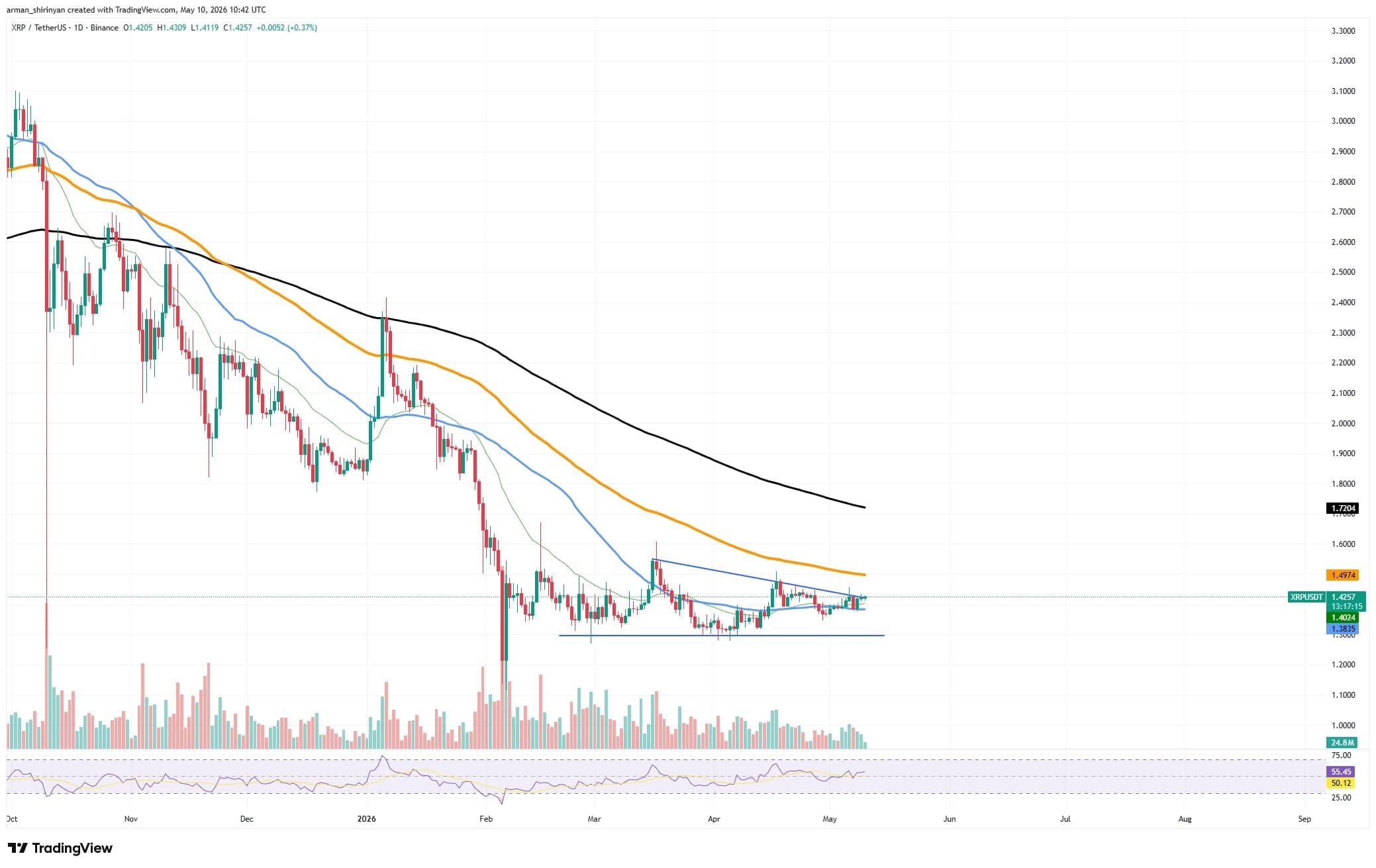
For the time being, the price itself is still fairly stable. While trying to keep support above local moving averages, XRP is still consolidating in the $1.40 range. A compressed formation with diminishing volatility is depicted in the chart structure, which frequently precedes a later, more significant directional move. The issue is that there is no longer a complete alignment between price momentum and network activity.
Payment activity declines
Q&A
Why did XRP payment activity drop by 80%?
XRP payment activity decreased due to lower participation during the weekend, which is typical for its network behavior.
How does XRP's network activity differ from Ethereum and Solana?
Unlike Ethereum and Solana, XRP's activity is driven more by institutional flows and structured transactions rather than continuous retail speculation.
What does the drop in XRP transactions indicate for traders?
The significant drop in XRP transactions may signal reduced liquidity and participation, which traders should monitor for potential market implications.