
Bitcoin Uptrend Remains Alive Despite Bearish Pressure Below $78,800
Bitcoin shows resilience despite bearish pressure below $78,800, with $77,000 as a key support level.
NewsBTC1 min read

The 2024 Bitcoin cycle is significantly weaker than previous halvings, according to analyst Alex Thorn. Price volatility and potential upside are notably dampened compared to cycles in 2012, 2016, and 2020.
Mentioned in this story
The current Bitcoin (BTC) market cycle is “dramatically” weaker than the three previous cycles, according to Alex Thorn, the head of firmwide research at investment firm Galaxy.
Thorn compared price action since the April 2024 Bitcoin halving to cycles triggered in 2012, 2016 and 2020; the current cycle shows significantly dampened volatility and lower upside. The all-time high above $125,000 on Oct. 5, 2025 was only 97% above the 2024 halving price around $63,000.
BTC’s price increased by about 9,294% during the 2012 halving cycle, reaching a high of about $1,163, and climbed by about 2,950% during the 2016 halving cycle, reaching a high of about $19,891. The 2020 halving saw a price increase of about 761%.
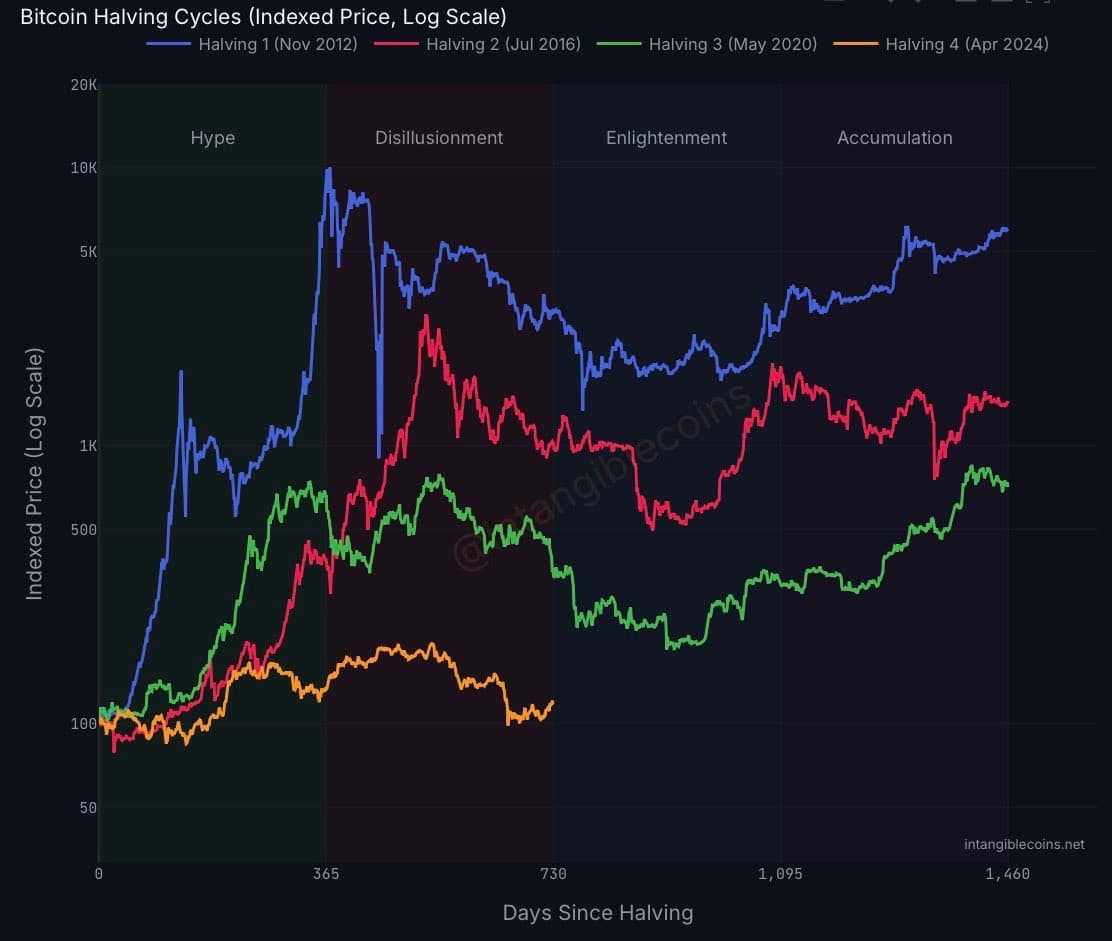
A comparison of Bitcoin’s price action in previous halving cycles. Source: Alex Thorn
“Cycle four is dramatically underperforming prior cycles,” Thorn said in an X post, asking, “Is this the new normal, or is it the new normal until it isn’t?”
The decreasing volatility in each successive BTC halving cycle suggests that traditional market dynamics are changing and that BTC’s price may start to be influenced more by other factors, rather than the halving or the four-year cycle market theory.
The 30-day Bitcoin Volatility Index, which spiked to 9.64% on April 2, 2020, has not been above 3.11% in the current cycle, a reading last tipped on Aug. 24, 2024. At last look, the latest 30-day estimate for that volatility gauge is 1.75%, according to Bitbo data.
The 2024 Bitcoin cycle is underperforming, showing less volatility and lower price increases compared to the cycles in 2012, 2016, and 2020.
During the 2012 halving cycle, Bitcoin's price increased by about 9,294%, reaching a high of approximately $1,163.
Bitcoin's all-time high after the 2024 halving was above $125,000, which was 97% higher than the halving price of around $63,000.
Bitcoin shows resilience despite bearish pressure below $78,800, with $77,000 as a key support level.

Over $469 billion in Bitcoin is vulnerable to quantum attacks, with 30% exposed.

Ethereum Dev Dankrad Feist proposes a $1 billion ETH organization amid Foundation turmoil.

XRP whale dominance returns to Binance while Coinbase shows a different trend.

Spotify and Universal Music Group introduce AI remix tool for fan-made covers.

DeepSeek is building its own coding tool to rival Claude Code and Codex.
See every story in Crypto — including breaking news and analysis.
BTC reached what was then the all-time high above the $70,000 level in March 2024 — one month before the April 2024 halving.
The approval of spot Bitcoin exchange-traded funds (ETFs) in the United States in January 2024 was the primary catalyst for the price pump.
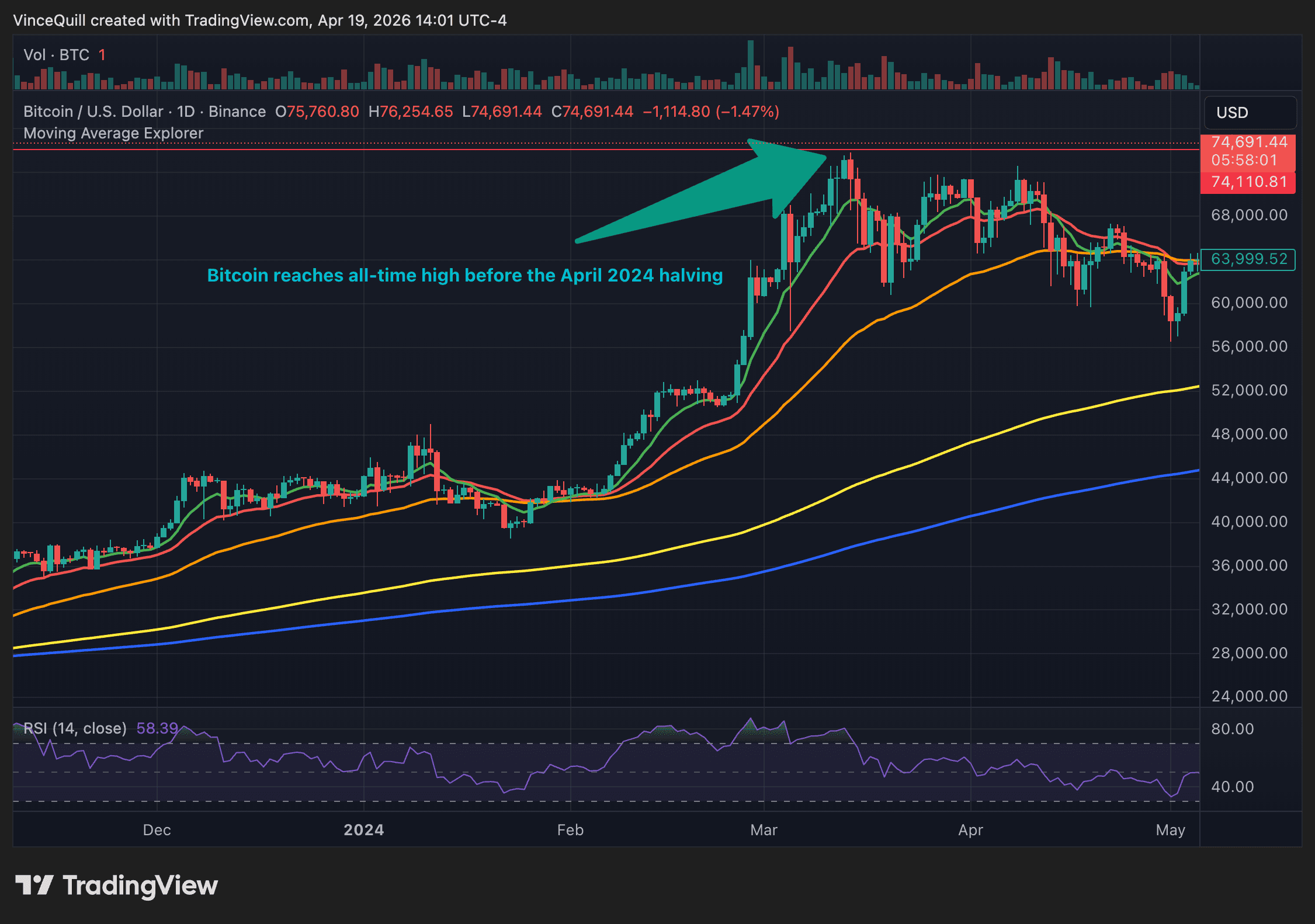
The price of BTC hit an all-time high before the April 2024 halving. Source: TradingView
This historic anomaly of BTC hitting a new all-time high before the halving skewed the current cycle’s price performance, critics of Thorn’s analysis said.
Bitcoin drawdowns have also become less severe, as volatility has declined, according to Fidelity Digital Assets.
Previous Bitcoin bear markets have seen declines between 80% and 90%, according to Zack Wainwright, a Fidelity Digital Assets research analyst.
However, Bitcoin’s crash to $60,000 from the all-time high above $125,000 represents a decline just north of 50%, Fidelity’s analysis noted.
In March, Jan van Eck, CEO of asset management company VanEck, said that BTC is close to bottoming out and that he expects the price to begin gradually rising again in 2026.
At last look, the biggest crypto was trading at about $74,703, up almost 5% in the last seven days, according to TradingView data.