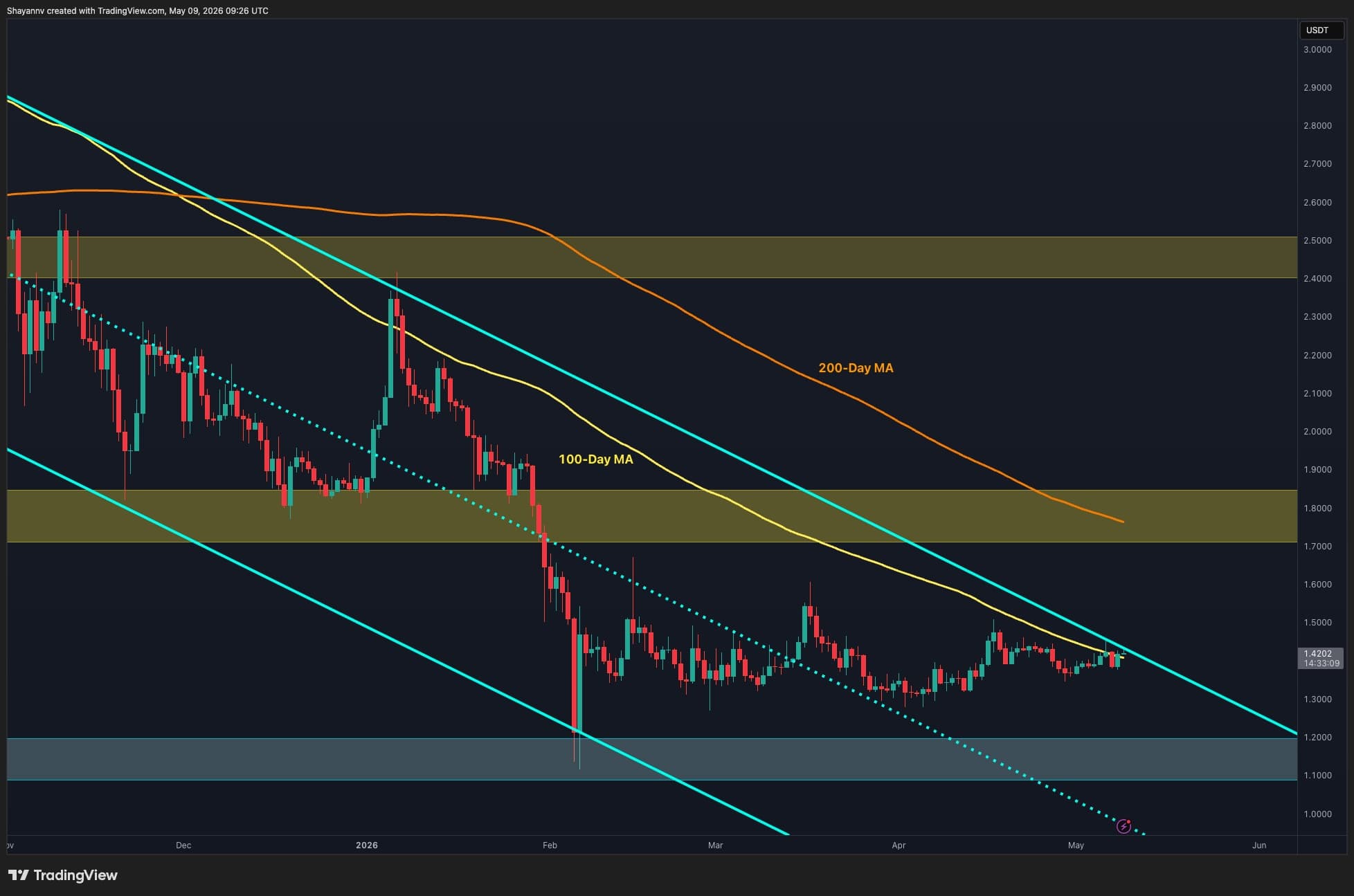
Ripple Price Analysis: XRP Reaches Decision Point After Weeks of Consolidation
Ripple's XRP is at a critical decision point after weeks of consolidation around $1.3.
CryptoPotato1 min read

Bitcoin's rally towards $75,000 faces resistance as supply increases, with a key level at $76,800 acting as a potential barrier. Institutional demand remains steady, driven by macroeconomic factors rather than speculative trading.
Mentioned in this story
Bitcoin’s rally toward $75,000 is running into a wall of supply just as institutional demand is holding steady.
The move higher has been driven largely by macro flows rather than a broad surge in speculative activity. U.S.-listed spot bitcoin ETFs have continued to draw consistent inflows this month, including roughly $240 million in a single session following geopolitical tensions in the Middle East, according to market maker Enflux.
That bid helped lift BTC from around $71,000 to the mid-$70,000s, even as traditional markets absorbed rising oil prices and shifting rate expectations. The pattern, Enflux noted, reflects allocation behavior rather than momentum chasing.
But as bitcoin pushes higher, the character of the market is starting to change.
On-chain data suggests supply is beginning to emerge more aggressively as prices approach a key cost-basis level for short-term holders. Around $76,800 sits the so-called realized price for recent buyers, effectively the average entry point for traders who accumulated during the last phase of the drawdown, according to CryptoQuant. In weaker market regimes, that level has often acted as resistance, as investors who were previously underwater use rallies to exit at breakeven.
It should be noted that the same band capped January's bounce almost to the dollar before prices reversed toward $60,000.
CryptoQuant said bitcoin exchange inflows spiked to roughly 11,000 BTC per hour, the highest since late December, as prices tested the $75,000 to $76,000 range.
At the same time, the average deposit size rose to about 2.25 BTC, the highest daily reading since mid-2024, suggesting that larger holders are driving the move. The share of large transfers jumped from below 10% to above 40% of total inflows within days, a shift the firm said has historically coincided with increased distribution pressure.
That sets up a two-sided market.
On one side, ETF flows and macro tailwinds continue to provide a steady source of demand. On the other, large holders appear to be using the rally to reduce exposure, feeding liquidity into the market as prices approach a widely watched breakeven zone.
What emerges is less a standoff than a handoff. Long-term holders appear to be distributing coins directly into ETF demand — the exchange inflows CryptoQuant flags and the ETF inflows Enflux tracks are, in effect, two sides of the same transaction, visible in different datasets.
Whether that handoff clears depends on whether the new holders prove stickier than the ones exiting. That is a late-cycle pattern, and it resolves in one of two ways.
The result is a market that can move higher quickly on inflows, but struggles to sustain those gains once supply builds. A sustained break above the mid-$70,000s would likely require demand to absorb a growing wave of sell pressure. Failing that, the balance could tilt the other way, CryptoQuant writes, leaving bitcoin vulnerable to a pullback toward the low-$70,000s, where the latest leg of the rally began.
The key resistance level for Bitcoin's price is around $76,800, which is the realized price for recent buyers.
U.S.-listed spot bitcoin ETFs received approximately $240 million in inflows in a single session.
Bitcoin's price movement is primarily driven by macro flows and institutional demand, rather than a surge in speculative activity.
Ripple's XRP is at a critical decision point after weeks of consolidation around $1.3.

Bitcoin's Open Interest has skyrocketed past 2025's peak, signaling potential market volatility.

XRP Whale-Retail Spread Falls to 88% on Binance — Key Insights

Crypto Price Analysis for May 9th: SHIB, BTC, ETH Struggle with Bearish Trends

Analyst warns of a Bitcoin bull trap, predicting a drop to $42,000.

Bitcoin could drop to $60K by Q3 2026 before recovering above $85K.
See every story in Crypto — including breaking news and analysis.