News
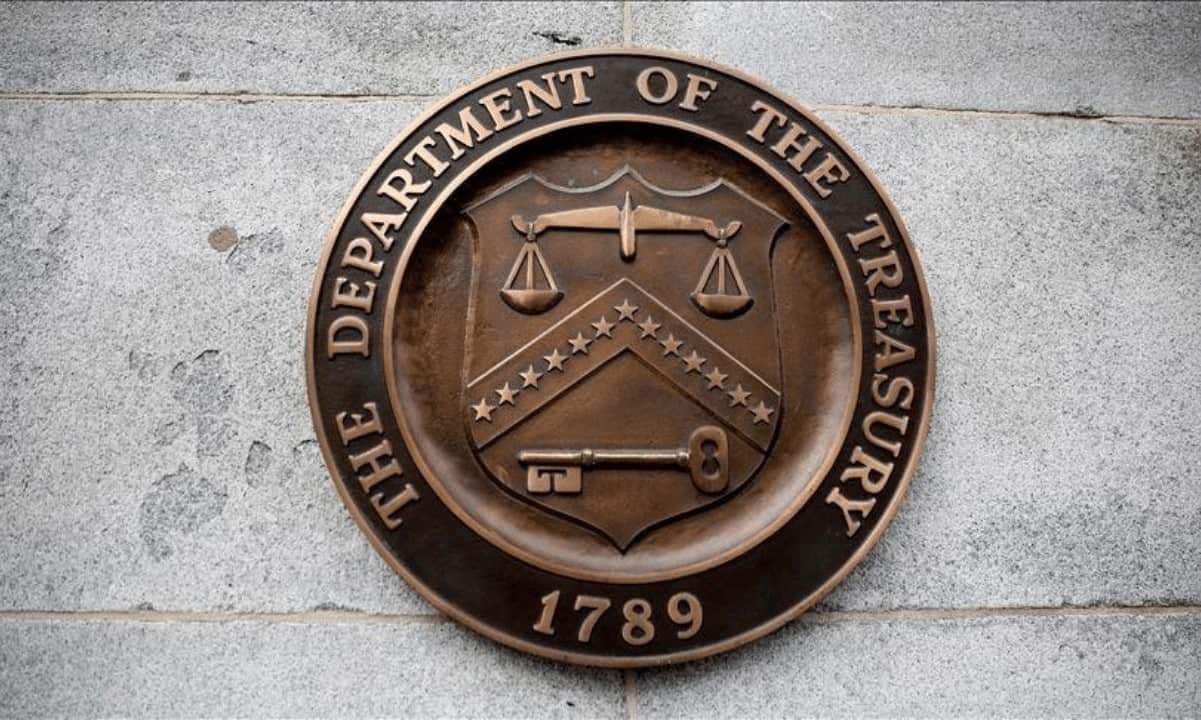
US Treasury Sanctions Sinaloa Cartel Associates Over Crypto Money Laundering
US Treasury imposes sanctions on Sinaloa Cartel associates for crypto money laundering.
CryptoPotato1 min read

Coinbase is cutting its workforce by 14% to adapt to market conditions and leverage AI advancements. CEO Brian Armstrong cited market volatility and AI's impact on productivity as key reasons for this decision.
Mentioned in this story
Coinbase will reduce its workforce by about 14% as the company adjusts to current market conditions and changes driven by artificial intelligence.
In a post on X, the exchange’s CEO Brian Armstrong explained that two major factors influenced the move.
First, he cited the ongoing volatility in the crypto market. Although the exchange remains well-capitalized, its business continues to fluctuate from quarter to quarter. With the market currently in a downturn, the company is cutting costs to become leaner, faster, and more efficient ahead of its next growth phase.
The second factor is the rapid impact of AI on how work is done. Armstrong stated that engineers are now able to complete tasks in days that previously took weeks, while non-technical teams are increasingly capable of producing code and automating workflows. He said these changes have significantly increased the output of smaller teams and are accelerating across the company.
According to Armstrong, this represents an “inflection point” not only for Coinbase but for businesses more broadly, and failing to act quickly poses a greater risk than making early adjustments.
As part of the restructuring, Coinbase plans to overhaul its operating model. The company will reduce organizational layers to a maximum of five levels below the CEO and COO to speed up decision-making and reduce coordination overhead. Leaders will be expected to manage larger teams and take on more direct responsibility.
Additionally, Coinbase will eliminate roles focused purely on management. The company will also move toward smaller, AI-focused teams, including experiments with minimal team structures where a single individual may handle multiple roles such as engineering, design, and product management.
Meanwhile, the affected staff will receive details via personal email along with invitations to meet with HR and senior leadership. Access to company systems has already been revoked as a security measure. Impacted employees will receive severance packages, including at least 16 weeks of base pay in the United States, additional compensation based on tenure, equity vesting, and healthcare coverage for a limited period. Support will also be provided to employees on work visas and to those outside the US, based on local requirements.
Several crypto firms have cut jobs this year as they pivot toward AI-focused operations. For instance, Gemini reduced about 30% of its workforce in March, in the same week as Crypto.com cut 12%, citing the need to adapt to AI-driven changes.
Coinbase is reducing its workforce due to ongoing volatility in the crypto market and the need to become more efficient as it prepares for future growth.
AI is enabling engineers to complete tasks much faster and allowing non-technical teams to automate workflows, significantly increasing productivity across the company.
The job cuts may indicate broader challenges in the crypto market, reflecting the need for companies to adapt to changing conditions and technological advancements.
US Treasury imposes sanctions on Sinaloa Cartel associates for crypto money laundering.

Analyst Highlights Ethereum 'Kill Zone' for Optimal Buying

Bitcoin may enter a critical pullback phase if it falls below $74,929.

XRP sees whale accumulation amid market uncertainty, down 5% this week.

Bitcoin may be poised for outperformance against stocks and bonds as inflation persists and bond markets weaken, according to Mark Connors. After a historic 142-day underperformance against the S&P 500, bitcoin is now in a consolidation phase shifting towards outperformance.

Crypto CEO security spending spikes to $7.6M as attacks rise 75%
See every story in Crypto — including breaking news and analysis.
Meanwhile, Jack Dorsey’s Block also eliminated over 4,000 roles. Some affected employees were later rehired by the company.