News
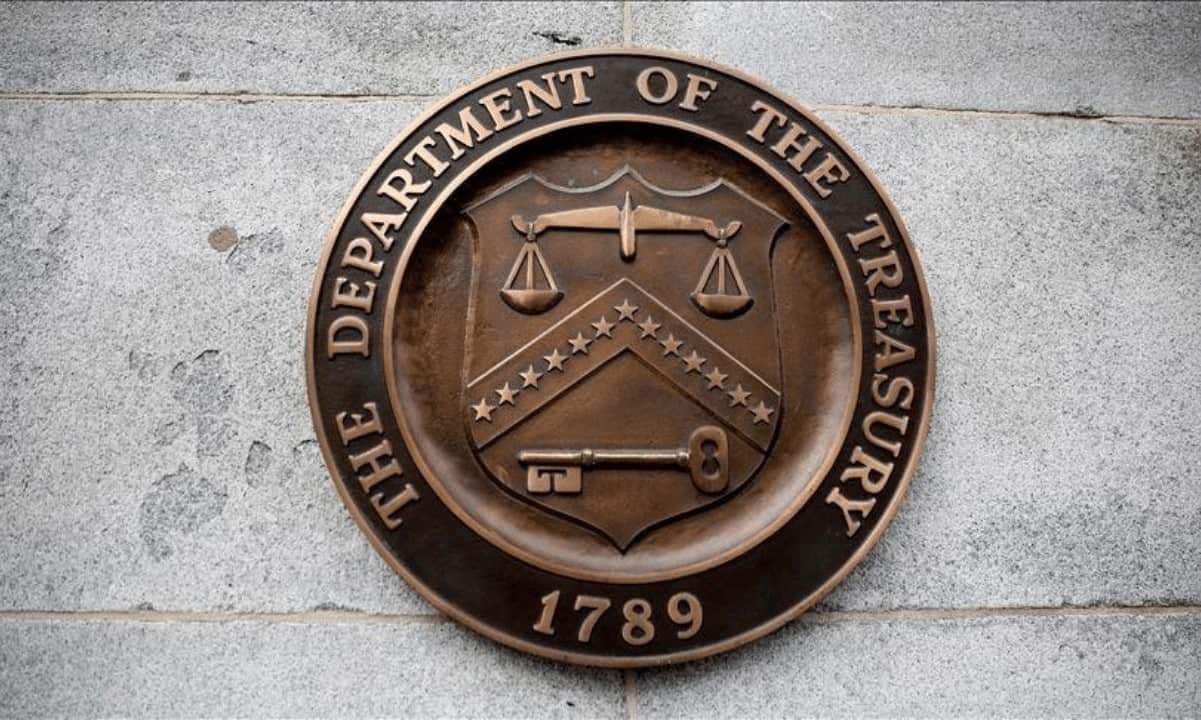
US Treasury Sanctions Sinaloa Cartel Associates Over Crypto Money Laundering
US Treasury imposes sanctions on Sinaloa Cartel associates for crypto money laundering.
CryptoPotato1 min read

Tether and Circle dominate the stablecoin market, limiting competition and hindering growth, according to Bridge executive Ben O'Neill. He argues that their design choices do not cater to all use cases in the evolving crypto landscape.
Mentioned in this story
Miami Beach — The stablecoin universe, dominated by Tether and Circle, hampers competition that could lead to better product-market fit for some important use cases, according to Ben O'Neill, Bridge’s head of money movement.
“I think it's a net bad for the growth of stablecoins as a whole, because you have two counterparties that have pros and cons to what they've built, and the design choices they've made. But they don't work for every use case,” O'Neill said on a panel about stablecoin growth at Consensus Miami.
Tether’s USDT, with its gargantuan market capitalization of approximately $189.5 billion, and Circle’s USDC, which has grown to around $71 billion, each emerged at different generational eras in the crypto evolution.
Tether, launched in 2014 as Realcoin, won the Chinese export trade, O'Neill said, and built this shadow economy of dollars that people can use without the U.S. financial system. Circle, launched in association with Coinbase in 2018, sought to do the exact opposite: a U.S.-regulated stablecoin, which later leaned hard into decentralized finance (DeFi).
For O'Neill, the perspective of a large payments firm, such as Bridge-owner Stripe, illustrates the shortcomings of the two dollar-pegged token giants.
“As a payments company, I need certainty on how things are going to work,” he said. “So with Tether, they say we'll burn for 10 bips, which is crazy expensive for a payments company, or you can trade on the open market, which means I have no certainty.”
“For Circle, their whole business is AUM, and they keep kind of notching up those burn fees. So again, if I'm someone like Visa, and I want to do trillions of dollars of card settlement and stablecoins, I'm burning a bunch of USDC, and that's gonna be a net bad,” O'Neill said.
The solution, “which needs to come pretty quickly over the next couple of years,” is more stablecoins built for specific use cases, so they can be optimized for those use cases. The other part is the rise of the clearing house, “a sexy topic for founders and VCs” to make it “as efficient as possible swapping between stablecoins,” he added.
Closing out his argument, O'Neill said, “You need more competition, otherwise [Tether and Circle] are going to just keep upping the fees. They're not gonna share the yield. They're gonna disincentivize you from burning it. They're gonna make it harder and harder to make it feel like money at each turn.”
Tether and Circle's dominance restricts competition, which could lead to better product-market fit for various stablecoin use cases.
Tether's USDT has a market capitalization of approximately $189.5 billion, while Circle's USDC is around $71 billion.
Tether focuses on creating a shadow economy outside the U.S. financial system, while Circle aims for a U.S.-regulated stablecoin that supports decentralized finance.
US Treasury imposes sanctions on Sinaloa Cartel associates for crypto money laundering.

Analyst Highlights Ethereum 'Kill Zone' for Optimal Buying

Bitcoin may enter a critical pullback phase if it falls below $74,929.

XRP sees whale accumulation amid market uncertainty, down 5% this week.

Bitcoin may be poised for outperformance against stocks and bonds as inflation persists and bond markets weaken, according to Mark Connors. After a historic 142-day underperformance against the S&P 500, bitcoin is now in a consolidation phase shifting towards outperformance.

Crypto CEO security spending spikes to $7.6M as attacks rise 75%
See every story in Crypto — including breaking news and analysis.