SpaceX's S-1 filing for a $2 trillion IPO reveals it holds 18,712 BTC worth $1.45 billion, making it one of the top seven corporate Bitcoin holders. XRP remains stagnant until June due to market volatility, while Dogecoin's co-creator mocks unrealistic $20 trillion valuation predictions.
Key points
SpaceX filed for a $2 trillion IPO with the SEC
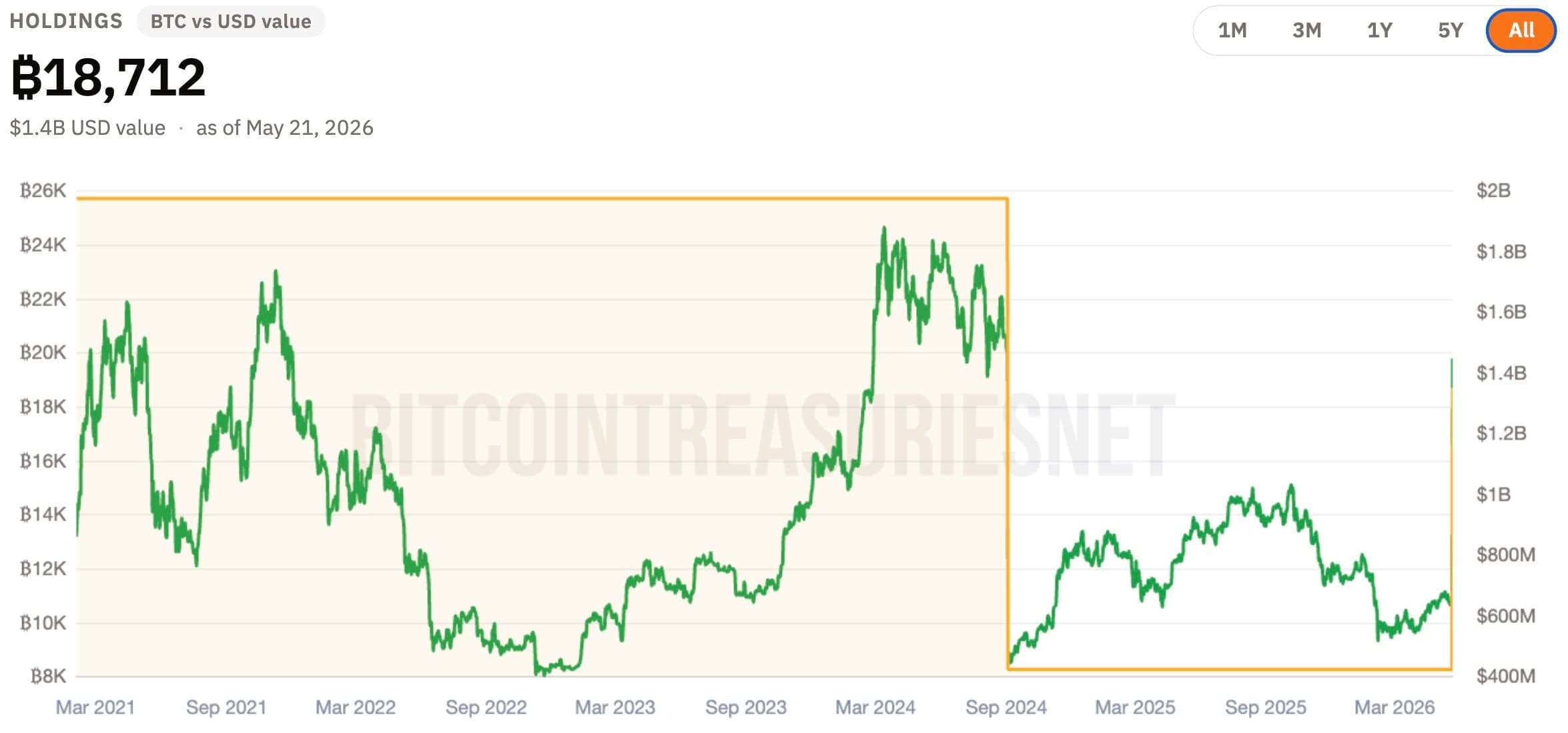
The filing revealed 18,712 BTC worth $1.45 billion
SpaceX is now among the top seven corporate Bitcoin holders
XRP is expected to remain stagnant until June
Dogecoin co-creator criticized the $20 trillion market cap prediction
SpaceX $2T IPO Reveals Secret Bitcoin Stash: Elon Musk's company has filed an S-1 for a Nasdaq IPO at a valuation of up to $2 trillion. The filing revealed 18,712 BTC ($1.45 billion) hidden through custodians, instantly pushing SpaceX into the top seven largest corporate Bitcoin holders in the world.
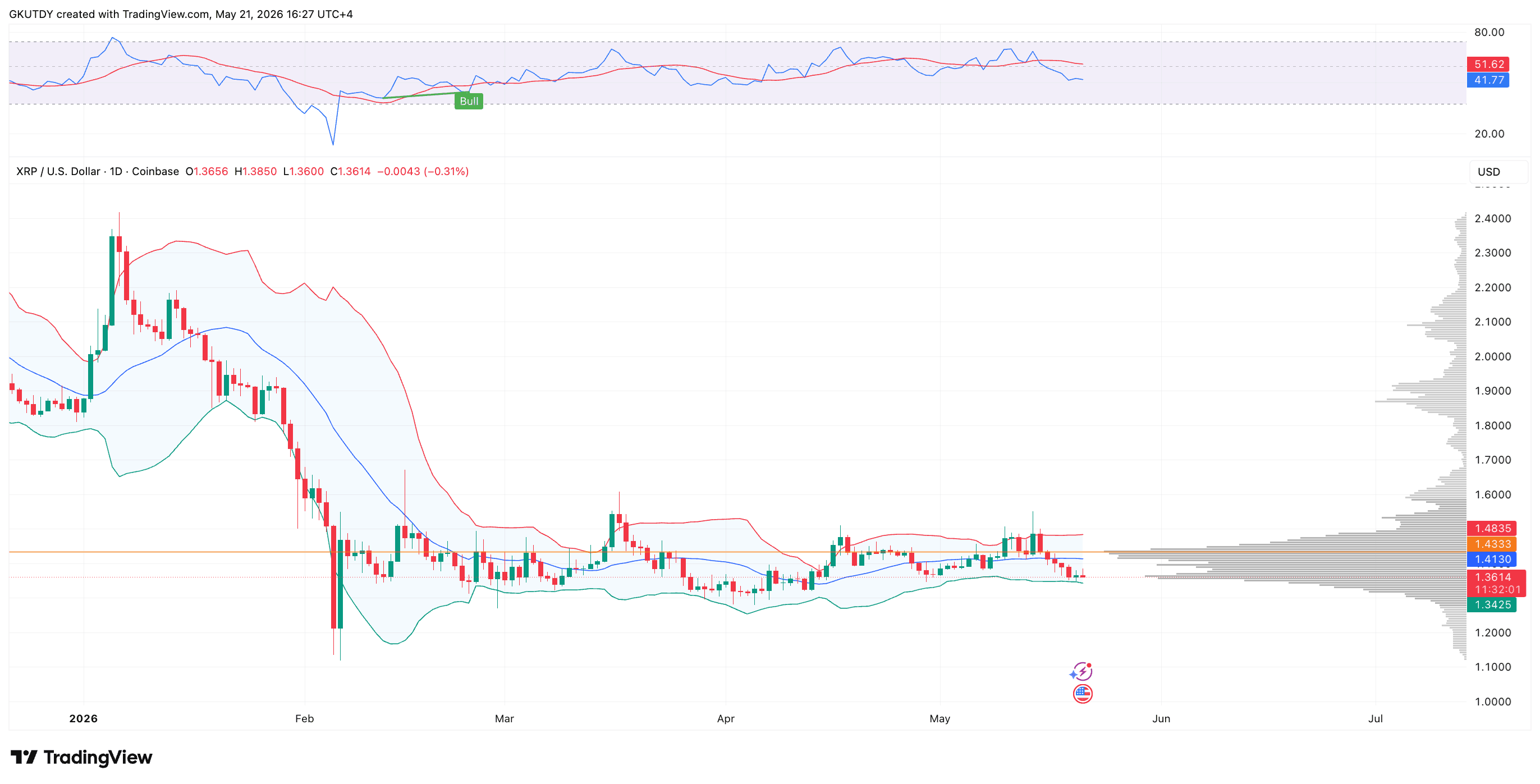
XRP Trapped in Volatility Freeze Until June: The daily XRP/USD chart has formed an extreme Bollinger Band compression inside a narrow $1.36–$1.37 corridor. A technical breakout from this "price dam" remains unlikely before June, when the U.S. Senate is expected to vote on the Clarity Act.
Dogecoin Creator Mocks Unrealistic $20T Valuation: DOGE co-creator Billy Markus sarcastically responded to X users predicting a $20 trillion market cap, reminding the community how absurd such a valuation would be since it exceeds the value of all the world's gold.
Crypto Market Outlook: BTC continues trading inside the $76,000–$81,000 corridor under pressure from rising exchange reserves and whale profit-taking. A localized altcoin short squeeze provided temporary market support, but the broader trend will be determined by Friday's U.S. macroeconomic data.
SpaceX is charging into the top-7 Bitcoin holders ahead of mega IPO
Elon Musk's aerospace company SpaceX has officially filed an S-1 form with the SEC for a Nasdaq IPO under the ticker SPCX at a valuation of up to $2 trillion. The biggest surprise in the filing was the discovery of 18,712 BTC on the company's balance sheet worth around $1.45 billion, nearly double earlier estimates because the assets had been hidden through custodial services.
The move instantly places SpaceX among the seven largest corporate Bitcoin holders in the world, ahead of both Coinbase and its sister company Tesla. SpaceX entered Bitcoin in 2021 and, despite rumors of aggressive accumulation, has not made transactions since late 2024.
Article image
Q&A
How much Bitcoin does SpaceX currently hold?
SpaceX holds 18,712 BTC, valued at approximately $1.45 billion.
What is the significance of SpaceX's IPO filing?
The IPO filing at a valuation of up to $2 trillion positions SpaceX among the largest corporate Bitcoin holders globally.
Why is XRP's price expected to remain stagnant until June?
XRP is experiencing volatility freeze due to Bollinger Band compression, with a breakout unlikely before the U.S. Senate votes on the Clarity Act in June.
What did the Dogecoin co-creator say about the $20 trillion market cap prediction?
Dogecoin co-creator Billy Markus mocked the $20 trillion valuation prediction, highlighting its absurdity as it exceeds the total value of all the world's gold.
The S-1 filing highlighted three less obvious trends that Wall Street is discussing right now:
Hard free-float shortage: Musk is taking only 4-5% of the company public. Of that amount, a record 30% will reportedly go to retail investors through Robinhood, Fidelity, and Schwab.
Crypto market front-running: On Hyperliquid, the synthetic SPCX contract jumped from $150 to $216 after the S-1 headlines, implying a valuation above $2.5 trillion.
Liquidity drain risk: Institutions see SPCX as a unique hybrid bet combining space exposure (Starship S39), AI infrastructure (xAI), and Bitcoin. Analysts fear that the expected 2026 IPO wave involving SpaceX, OpenAI, and Anthropic could divert liquidity away from traditional spot Bitcoin ETFs.
Bollinger Bands "froze" XRP ahead of a summer breakout
An extreme Bollinger Band compression has formed on the daily XRP/USD chart by TradingView. The asset is trapped inside a narrow $1.36–$1.37 corridor, effectively turning the broader $1.29-$1.50 range into a dead no-trade zone.
While technical indicators point to a complete volatility freeze, large market participants are quietly restructuring positions behind the scenes, signaling that explosive upside before summer remains unlikely.
The ETF paradox is becoming more visible as capital exits the giants while selectively rotating into altcoins. Last week, crypto ETFs recorded their largest outflow since February at -$1.1 billion, ending a seven-week inflow streak.
Bitcoin lost $982 million while Ethereum saw $249 million in outflows. Against that backdrop, XRP showed localized strength with $68 million in fresh inflows against the broader trend.
Article image
XRP/USD dailt price chart with Bollinger Bands, Source:TradingView
Total capital inside spot XRP ETFs has now reached $1.134 billion.
The price slowdown coincided with major portfolio rebalancing. Goldman Sachs fully exited its XRP ETF exposure worth $154 million in favor of other projects. However, the selling pressure continues to be absorbed by other funds amid expectations surrounding the upcoming U.S. Senate vote on the Clarity Act in June.
The XRP chart is now frozen while waiting for a fundamental trigger, as the current Bollinger Band compression effectively rules out a random rally over the coming weeks. A breakout from this "price dam" is unlikely before June, when broader market volatility collides with a political decision from the U.S. Congress.
Dogecoin creator responds to a $20 trillion market cap prediction
Dogecoin co-creator Billy Markus once again reminded the crypto industry that calculator numbers should occasionally be compared with reality. On X, one user claimed the market "needs DOGE at a $20 trillion valuation". Markus responded in his usual style, joking that such an outcome would at least make things less boring.
While the creator openly mocks unrealistic math, the industry is still trying to push his 2013 joke into the financial major leagues through real institutional gateways.
A hypothetical $20 trillion valuation would exceed the total value of all the world's gold. For Dogecoin to absorb the global financial system, it would require not tweets, but full-scale infrastructure that still remains stuck in experimental stages.
The main hope for DOGE holders today is integration into Elon Musk's X Payments ecosystem. If the meme coin is added there, it could become a localized payment asset inside one social network, not a global currency.
Bridges into the real world, such as Revolut's recently launched Dogecoin-themed debit card with an LED display, are largely marketing plays. For banks, this is an attractive retail acquisition strategy rather than recognition of DOGE as a legitimate alternative to the dollar.
Billy Markus created DOGE as a parody of Bitcoin, left the project in 2015 to buy a used car, and no longer contributes to development. Technology giants like X and Revolut continue building business models around the meme's recognition, while the coin's own creator still openly laughs at investors expecting trillions out of thin air.
Crypto market outlook: Bitcoin traps shorts while U.S. macro looms
At the time of writing, Bitcoin is stuck inside a range due to pressure from monthly-high exchange reserves and whale profit distribution, though it is receiving short-term support from easing geopolitical tensions in the Middle East.
Medium-term direction across risk assets is now almost entirely tied to Friday's U.S. macro data block, which will shape expectations around Federal Reserve policy.
Key checkpoints:
Bitcoin price and on-chain: BTC continues trading inside a range with major support at $76,000. According to CryptoQuant, whales are distributing positions between $77,000 and $81,000 after accumulating near $78,000. Against the backdrop of exchange reserves reaching a monthly high, around $266 million in positions were liquidated over the past 24 hours, triggering a localized short squeeze across altcoins.
Nvidia earnings impact: NVDA beat expectations with revenue at $81.6 billion, EPS at $1.85, data center revenue at $75.2 billion, and an additional $80 billion buyback authorization. Markets were already fully positioned ahead of earnings, resulting in a largely neutral reaction.
Main risk: The Strait of Hormuz—any escalation would rapidly push oil higher and pressure all risk assets.
Macro shock on May 22: Markets are focused on the U.S. Leading Economic Index, Michigan Consumer Sentiment, and inflation expectations. Strong data would increase pressure on the Federal Reserve, while weak data would support a broader risk-on environment.