
Bitcoin Cannot Clear $82K – Analyst Explains How Traders Are Using Every Rally to Exit
Bitcoin struggles to clear $82K as traders exit on rallies, analyst explains.
NewsBTC1 min read

Mastercard is integrating stablecoins into its payment system to modernize transaction settlements, partnering with SoFi Technologies to use SoFiUSD. This allows banks to settle card transactions using regulated digital dollars while maintaining traditional card usage for consumers.
Mentioned in this story
Stablecoins are increasingly moving beyond the crypto niche and into mainstream financial discussions. A prime example is Mastercard’s move to integrate stablecoins into its card payment settlement process. Rather than abandoning the traditional card model, Mastercard is simply upgrading the back-end infrastructure by introducing regulated digital dollars into the mix.
By teaming up with SoFi Technologies, the payments giant is testing how these digital assets can streamline transaction settlements across its massive network. This initiative signals that the world’s largest payment rails are preparing for a future in which traditional banking and digital assets exist side by side.
Mastercard’s recent initiative involves a partnership with SoFi Technologies, which has introduced a dollar-backed stablecoin called SoFiUSD.
Under this arrangement, SoFi Bank, N.A. intends to use SoFiUSD to settle its Mastercard credit and debit card transactions. Meanwhile, SoFi’s payments infrastructure platform, Galileo Financial Technologies, will enable banks and fintech issuers on its network to opt for stablecoin settlement through Mastercard’s system.
SoFiUSD is issued by a nationally chartered US bank and is reported to maintain a 1:1 cash reserve structure, positioning it closer to bank-issued digital money than to a typical crypto-native asset.
Did you know? The first credit card to gain wide acceptance across multiple merchants was
Mastercard is integrating stablecoins like SoFiUSD into its payment infrastructure to modernize the settlement process for card transactions.
SoFi Technologies partners with Mastercard to enable SoFi Bank to settle transactions using SoFiUSD, facilitating stablecoin adoption.
Using stablecoins allows for faster and more efficient transaction settlements while consumers can continue using their cards as usual.
Mastercard leverages its Multi-Token Network (MTN) to support various forms of tokenized money, including stablecoins and digital representations of fiat currencies.
Bitcoin struggles to clear $82K as traders exit on rallies, analyst explains.

House lawmakers are pushing Trump to appoint full CFTC commissioners for better crypto regulation.

ZachXBT's explosive claims lead to over 30% drop in LAB token value.

Drake's new album features a call for Sam Bankman-Fried's release, despite critical reviews.

Could XRP's multi-year Cup and Handle pattern lead to a price rally?

Lombard Finance switches to Chainlink, managing over $1B in Bitcoin assets after security concerns.
See every story in Crypto — including breaking news and analysis.
Mastercard’s approach makes more sense once you understand how card payments usually work. When a consumer taps or swipes their card, the following steps take place:
This final settlement phase traditionally occurs through conventional banking channels during designated clearing windows.
Mastercard’s stablecoin strategy targets this back-end settlement process specifically. It does not change how users experience or initiate payments. From the shopper’s perspective, the payment process would remain unchanged.
Through stablecoin settlement, Mastercard’s network would enable participating banks and issuers to meet transaction obligations using a digital dollar rather than relying solely on traditional fiat transfers.
In practice, the process could unfold as follows:
Because stablecoins operate on blockchain infrastructure, they offer the potential for 24/7 settlement independent of traditional banking hours.
This method could reduce delays in cross-border payments and streamline liquidity management for financial institutions.
Did you know? The term “stablecoin” became popular around 2014, but the concept of digital dollars backed by real-world assets had been explored even earlier through experimental crypto projects that attempted to maintain price stability using collateral and algorithmic mechanisms.
The foundation of this initiative is Mastercard’s Multi-Token Network (MTN). It is designed to support multiple forms of tokenized money, including:
By bridging conventional banking systems with blockchain-based tokens, Mastercard seeks to create a versatile settlement ecosystem in which regulated digital assets can operate alongside traditional financial infrastructure.
The network would enable financial institutions to transfer value more efficiently while continuing to comply with established regulatory standards.
Stablecoins have become one of the fastest-growing parts of the digital asset market in recent years. They combine the price stability of fiat currency with the speed and efficiency of blockchain technology. As a result, they can support fast transfers, programmable payments and near-instant settlement across global networks.
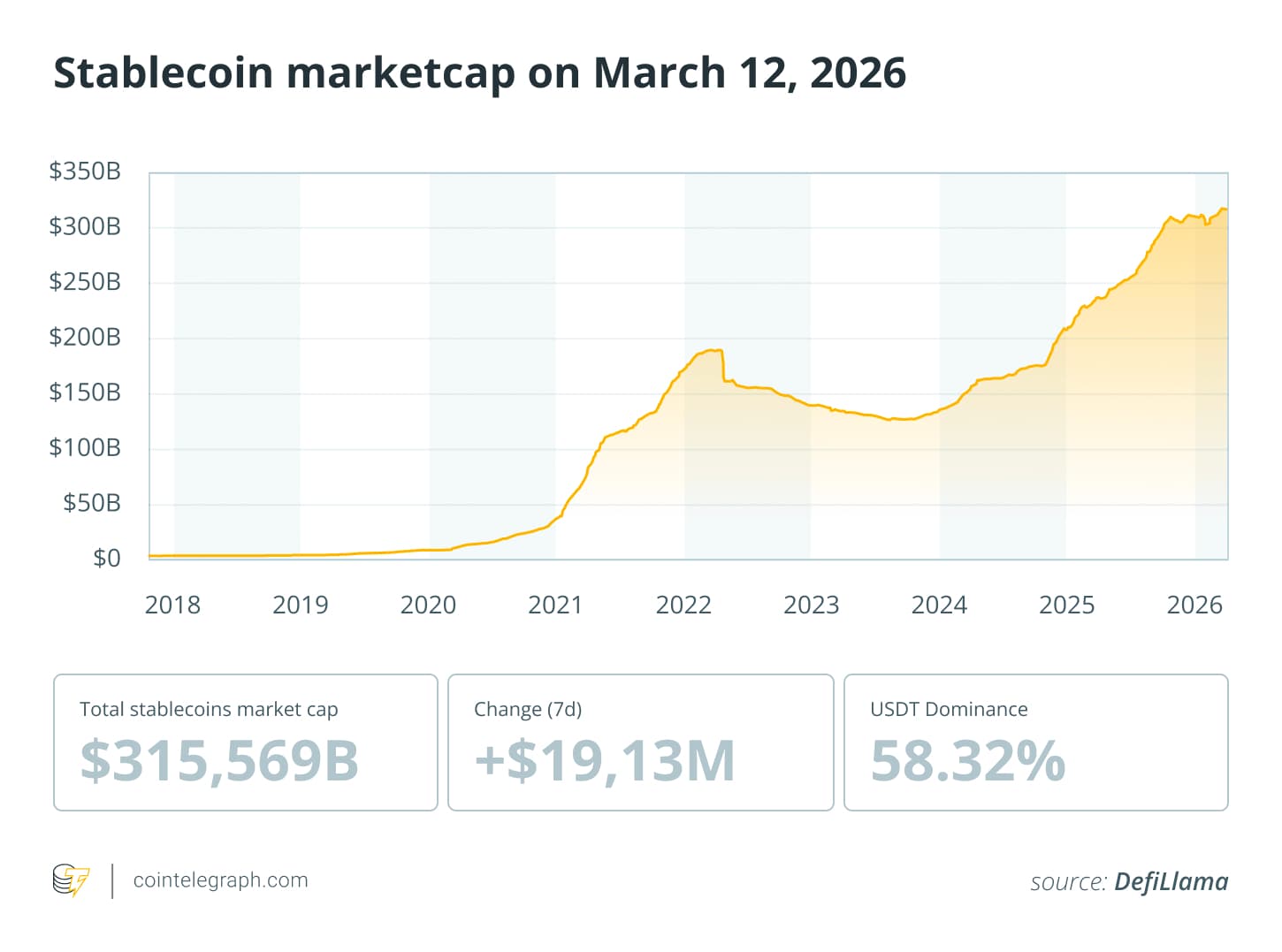
As of March 2026, the stablecoin market had reached a significant milestone, with its total valuation climbing to approximately $314 billion, according to DefiLlama data. This growth followed a breakout year in 2025, during which transaction volumes reached a record $969.9 billion in a single month. Experts now project that monthly volumes are on track to surpass the $1 trillion mark by the end of 2026.
For Mastercard, incorporating stablecoins into its settlement infrastructure helps ensure the company remains central to the changing digital payments ecosystem.
Rather than competing with blockchain systems, Mastercard is positioning itself as a connector between traditional finance and digital asset networks.
The partnership between SoFi and Mastercard also seeks to explore additional financial applications for stablecoins.
Potential uses include:
Stablecoins could allow companies to automate complex financial workflows through programmable transactions.
For example, businesses could automatically release payments when contractual conditions are met, reducing manual intervention and operational costs.
Mastercard is not alone among global card networks in exploring stablecoin integration. Its main competitor, Visa, has also expanded its use of digital currencies for payment settlement.
Visa has tested cross-border settlement using stablecoins such as USD Coin (USDC), allowing financial institutions to pre-fund international transfers with tokenized dollars. The company has also explored enabling businesses to send payouts directly to stablecoin wallets.
These efforts suggest that stablecoins are becoming a key part of the broader infrastructure competition among leading payment networks.
Adoption of stablecoins within mainstream financial systems depends heavily on regulation.
Financial institutions need clear regulatory frameworks that address key concerns, including:
Because SoFiUSD is issued by a regulated US bank, it is likely to inspire greater confidence among regulators and financial institutions than stablecoins that originate in the crypto space.
Payment networks such as Mastercard are therefore prioritizing regulated stablecoins issued by licensed institutions.
Did you know? Global card payment systems process tens of billions of transactions each year, with card networks handling thousands of payments per second during peak shopping periods such as Black Friday and major online retail events.
Despite growing interest, several challenges could limit the wider adoption of stablecoin settlement.
These challenges include:
Moreover, consumers are unlikely to notice major changes because the technology mainly affects back-end infrastructure rather than the front-end payment experience.
Mastercard’s stablecoin initiative is part of a broader transformation taking place in global finance. Stablecoins were initially used mainly for cryptocurrency trading. Today, they are increasingly viewed as potential tools for payments, remittances and broader financial infrastructure.
If stablecoin settlement proves efficient and reliable, card networks could eventually operate within a hybrid system that combines traditional banking rails with blockchain-based digital assets.
Mastercard is not looking to replace traditional payments. Rather, it is upgrading the under-the-hood infrastructure of global card networks. By integrating regulated stablecoins like SoFiUSD into its Multi-Token Network, the company is preparing its infrastructure for a more digital economy.
The goal is to create a system that is faster, more flexible and available 24/7, while ensuring the average shopper notices no difference at the checkout counter.