
KuCoin Australia’s ‘Evolution’ Showcases Regulatory Focus, Mastercard Launch
KuCoin expands in Australia with KuCard launch for crypto payments!
Decrypt1 min read

The Kelp liquid restaking protocol was exploited, resulting in a loss of approximately $293 million. Crypto executives warn that non-isolated lending in DeFi can lead to widespread ecosystem risks.
Mentioned in this story
The exploit of the Kelp liquid restaking protocol shows how non-isolated lending and integrations in decentralized finance (DeFi) can cause broader ecosystem contagion, according to crypto industry executives and blockchain security firms.
Non-isolated lending on DeFi platforms, including earlier versions of the Aave lending protocol, exposes users to risks from all the various tokens used as collateral on the platforms, according to Michael Egorov, founder of the Curve Finance DeFi protocol.
Kelp was the target of a cyber attack on Saturday, causing the platform to pause smart contracts for its restaking token (rsETH) while it moved to investigate the attack that left the platform drained of about $293 million.
DeFi teams should also vet prospective digital assets to ensure that tokens do not feature single points of failure or attack surfaces before approving tokens as lending collateral on their platforms, Egorov said in an email.
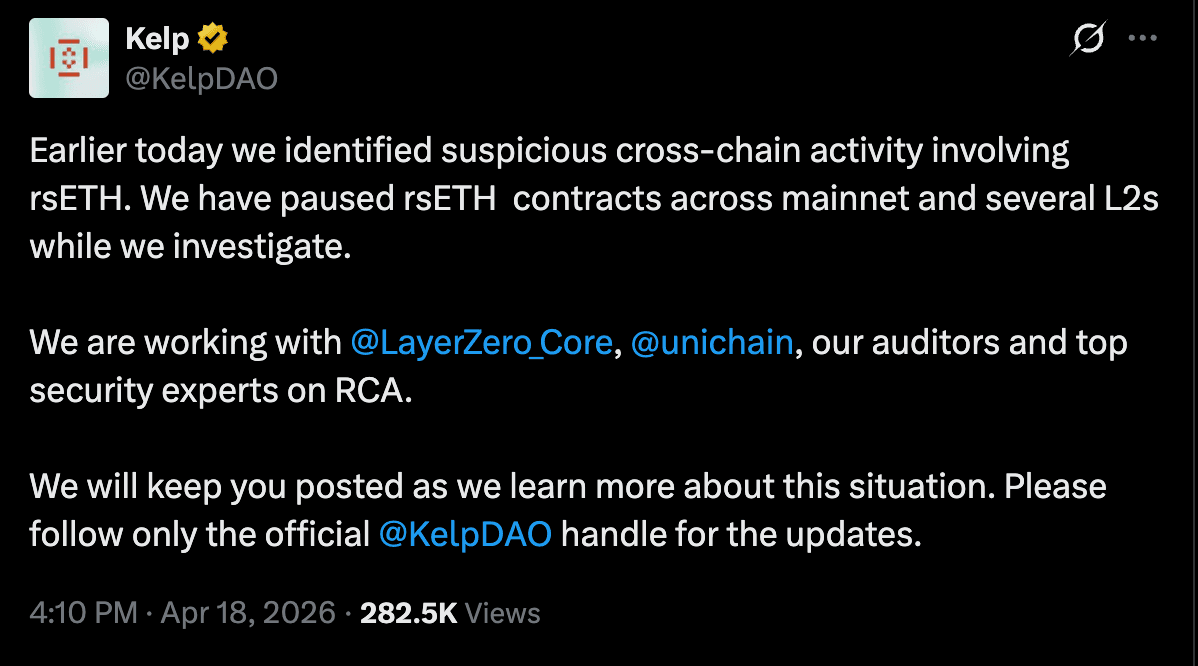
Source: Kelp
He also warned against using cross-chain bridging architecture to transfer assets from one blockchain protocol to another, which was the root cause of this weekend’s Kelp exploit.
“Cross-chain is hard and potentially risky. Only use cross-chain infrastructure when absolutely necessary, and do it really carefully,” Egorov said.
He said the incident is a learning experience for DeFi, which the sector can use to grow and implement better cybersecurity protections as losses from crypto hacks, code exploits and scams reached $482 million in Q1 2026.
Related: DAO behind CoW Swap urges users to stay off platform after ‘hijacking’
The Kelp protocol was targeted in a cyber attack that drained about $293 million, prompting the platform to pause its smart contracts.
Non-isolated lending exposes users to risks from various collateral tokens, potentially leading to broader contagion in the DeFi ecosystem.
DeFi teams should vet digital assets to avoid single points of failure or attack surfaces before approving them as collateral.
KuCoin expands in Australia with KuCard launch for crypto payments!

XRP's volatility risks rise as it enters a compression zone; Dogecoin uptrend persists.

Bitcoin Whale vs Retail Delta drops to ETF-era lows as smart money turns cautious.

CoinGecko's analysis shows US holidays yield better Bitcoin returns.

Circle introduces Arc, a blockchain tailored for stablecoin applications, set to launch in 2026.

BitMine buys $197M in Ethereum as Tom Lee's strategy continues amidst price drop.
See every story in Crypto — including breaking news and analysis.
“This was not just a protocol exploit. It immediately became a cross-protocol contagion event,” blockchain security firm Cyvers told Cointelegraph.
At least nine DeFi protocols and platforms, including Aave, Fluid, Compound Finance, SparkLend and Euler, were affected in the incident and took action to freeze rsETH markets or mitigate the fallout from the Kelp exploit, Cyvers said.
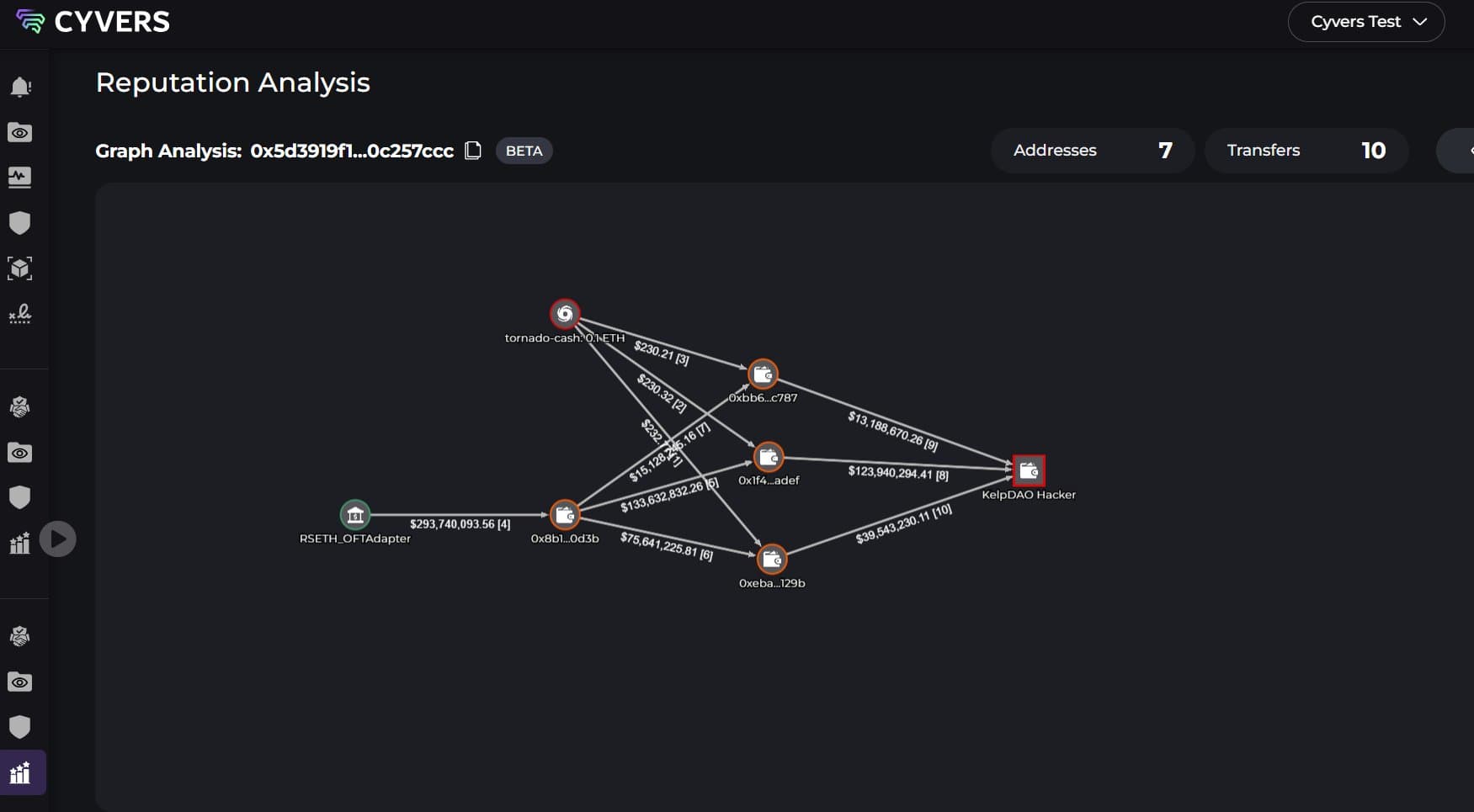
A map of the transfer of funds in the Kelp exploit. Source: Cyvers
“The challenge is no longer just preventing exploits at the contract level, but understanding how fast they can cascade across integrated protocols,” Cyvers CEO Deddy Lavid told Cointelegraph.
The exploit on Kelp followed the $280 million Drift Protocol decentralized exchange hack last week and at least 12 other crypto platforms and DeFi hacks earlier this month.