New York targets Coinbase, Gemini in fresh crackdown on prediction markets

TL;DR
New York's attorney general has sued Coinbase and Gemini for allegedly operating illegal prediction markets without state licenses. The lawsuits aim to recover profits and prevent these exchanges from offering such products to individuals under 21.
Key points
- New York attorney general files lawsuits against Coinbase and Gemini
- Allegations include operating without state gaming licenses
- Lawsuits aim to recover illegal profits and prevent access for underage users
Mentioned in this story
Coinbase Financial MarketsGemini TitanNew York State Gaming CommissionLetitia James
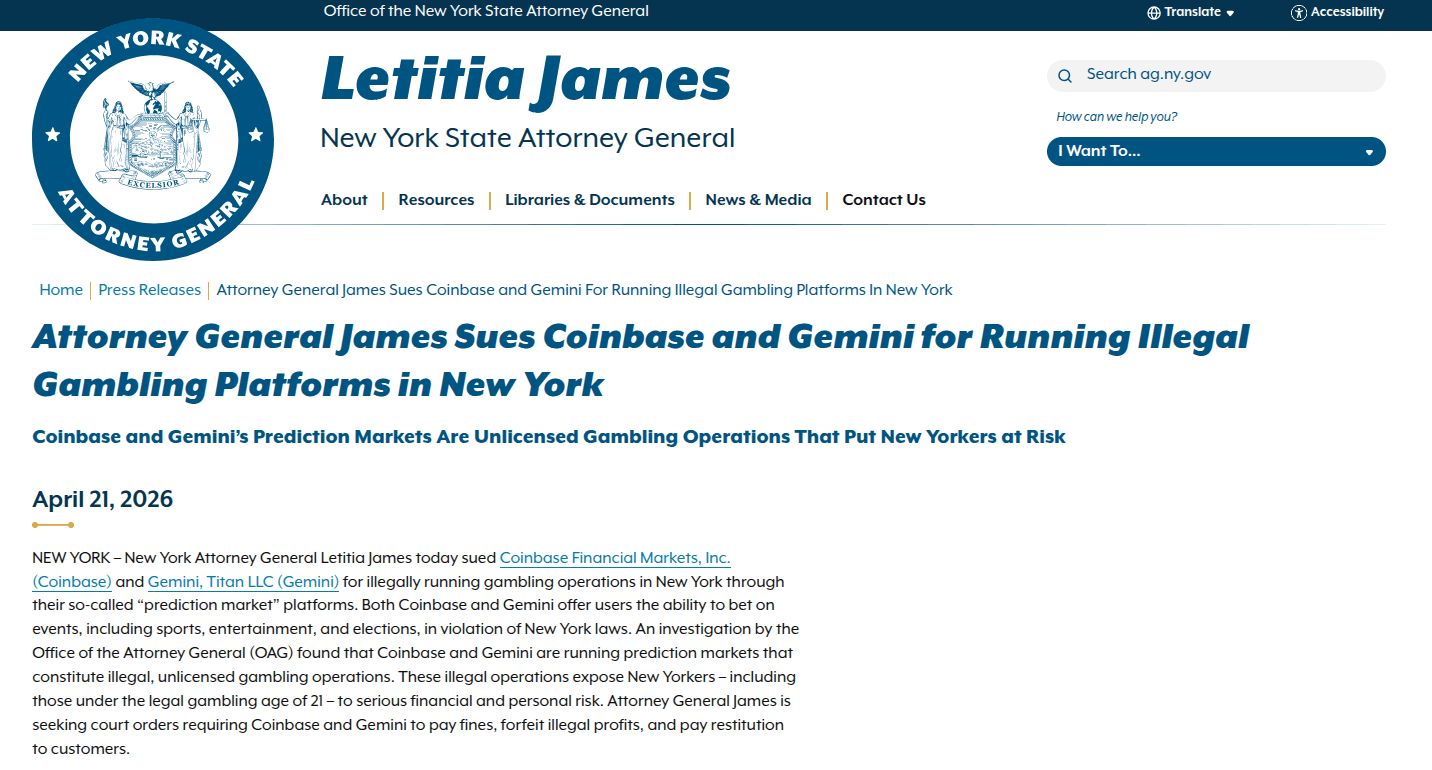
New York's attorney general has filed lawsuits against crypto exchange operators Coinbase Financial Markets and Gemini Titan for allegedly violating state gambling laws, according to court records cited by Reuters.
Copies of the complaints show the state alleges both exchanges failed to obtain licenses from the New York State Gaming Commission to operate their markets, Reuters reported.
“Gambling by another name is still gambling, and it is not exempt from regulation under our state laws and Constitution,” Attorney General Letitia James said in a statement.
James said the lawsuit seeks to recover alleged illegal profits from operating prediction markets in the state, as well as restitution, and would bar Coinbase and Gemini from offering such products to individuals under 21 years of age.
Source: Office of New York State Attorney General
Related: Polymarket in talks to raise $400M at a $15B valuation: Report
State regulators crack down on prediction markets
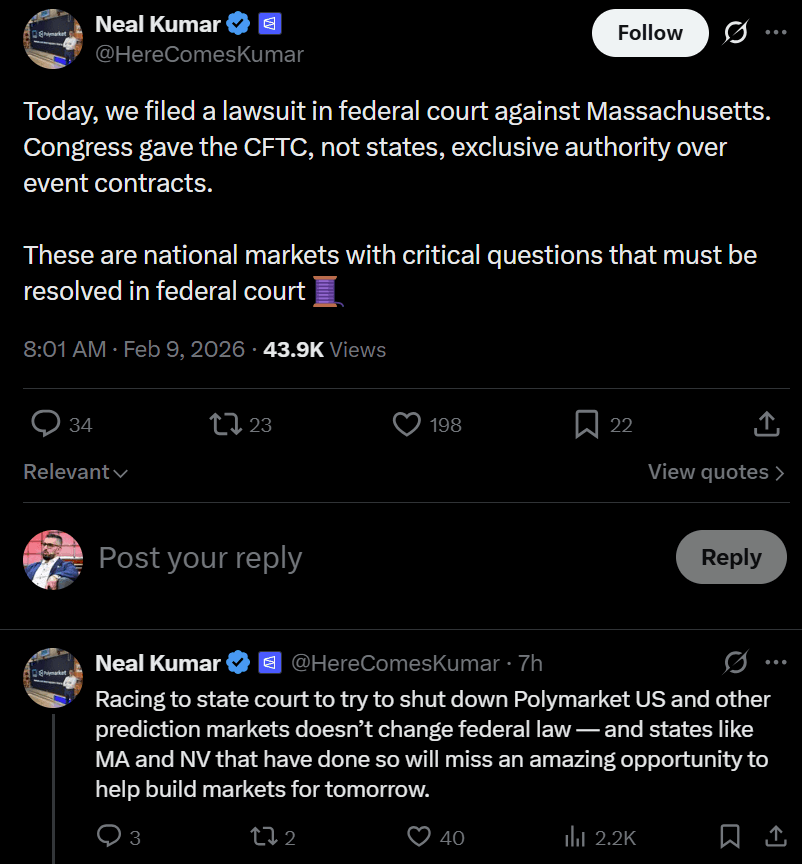
The move fits into a broader push by state regulators, including New York, to assert control over prediction markets, which occupy a fast-growing corner of crypto commerce that allows users to bet on real-world events.
Much of the recent scrutiny has centered on platforms like Polymarket and Kalshi, which have drawn questions over whether their products fall under financial regulation or gambling laws.
Q&A
What are the allegations against Coinbase and Gemini in New York?
Coinbase and Gemini are accused of violating state gambling laws by operating prediction markets without the necessary licenses from the New York State Gaming Commission.
What does New York's attorney general seek from the lawsuits against these exchanges?
The attorney general seeks to recover illegal profits, obtain restitution, and bar Coinbase and Gemini from offering prediction markets to individuals under 21.
What are prediction markets and why are they regulated in New York?
Prediction markets allow users to bet on the outcome of future events, and they are regulated in New York to ensure compliance with state gambling laws.