
2 Days Left: XRP Amendment With Rare 100% Consensus Eyes Activation
XRP's 'fixCleanup3_1_3' amendment achieves 100% consensus, activating soon!
U.Today1 min read

The White House is targeting July 4 for Congress to pass the Digital Asset Market Clarity Act, according to crypto adviser Patrick Witt. This timeline includes Senate markup this month and a House vote before Independence Day.
Mentioned in this story
The White House is aiming for July 4 for Congress to pass the Digital Asset Market Clarity Act, Patrick Witt, executive director of the President's Council of Advisors for Digital Assets, told CoinDesk's Consensus Miami conference on Wednesday.
"We're targeting July 4th. I think that would be a tremendous birthday present for America, celebrating our 250th," Witt said. The mechanics, according to Witt, are: Senate Banking Committee markup this month, four working Senate weeks in June for floor passage and enough runway for a U.S. House of Representatives vote before the Independence Day deadline.
That timeline runs ahead of the prediction Sen. Kirsten Gillibrand shared on the same stage earlier in the day, when the New York Democrat predicted Clarity would reach the president's desk by the first week of August.
"There's not a lot of slack left in the rope right now," Witt said. "But it is an achievable timeline."
The path to markup opened when Sen. Thom Tillis (R-NC) and Sen. Angela Alsobrooks (D-MD) released a compromise on the bill's stablecoin-yield provisions in early May, banning bank-deposit-equivalent yield on stablecoins while leaving room for rewards tied to spending. Witt said the White House convened banks and crypto firms to fashion the language, then handed it to the senators, who ran their own process and arrived at a text both sides found equally unsatisfying.
"Crypto is unhappy, banks are unhappy, but they're both about equally unhappy," Witt said. "And so we know that we got the right compromise." Witt considered that the stablecoin-yield issue “is closed.”
The White House is also closing in on a deal on the conflict-of-interest provision that has divided Democrats and the administration. Witt said the negotiating posture is to accept rules that apply "across the board, from the president all the way down to the brand new intern on Capitol Hill," but reject anything that singles out a particular office or officeholder. "We're not going to allow targeting of anyone's family, any one particular politician," he said. "I'm optimistic that we're going to be able to close that out."
Speaking on what happens if Clarity slips past 2026, Witt said "If we're not setting the standard, if we're not writing the rules, then we are going to be a rule follower, and we're going to be following somebody else's rulebook on this. And God forbid it's China that's ultimately writing those rules."
U.S. leadership in global capital markets, he added, is one of the things that "underwrite American hegemony."
The Digital Asset Market Clarity Act aims to regulate digital assets and includes provisions for stablecoin yields.
July 4 is targeted as the passage date for the Clarity Act, coinciding with America's 250th birthday.
Patrick Witt is the executive director of the President's Council of Advisors for Digital Assets, advocating for the Clarity Act's passage.
XRP's 'fixCleanup3_1_3' amendment achieves 100% consensus, activating soon!
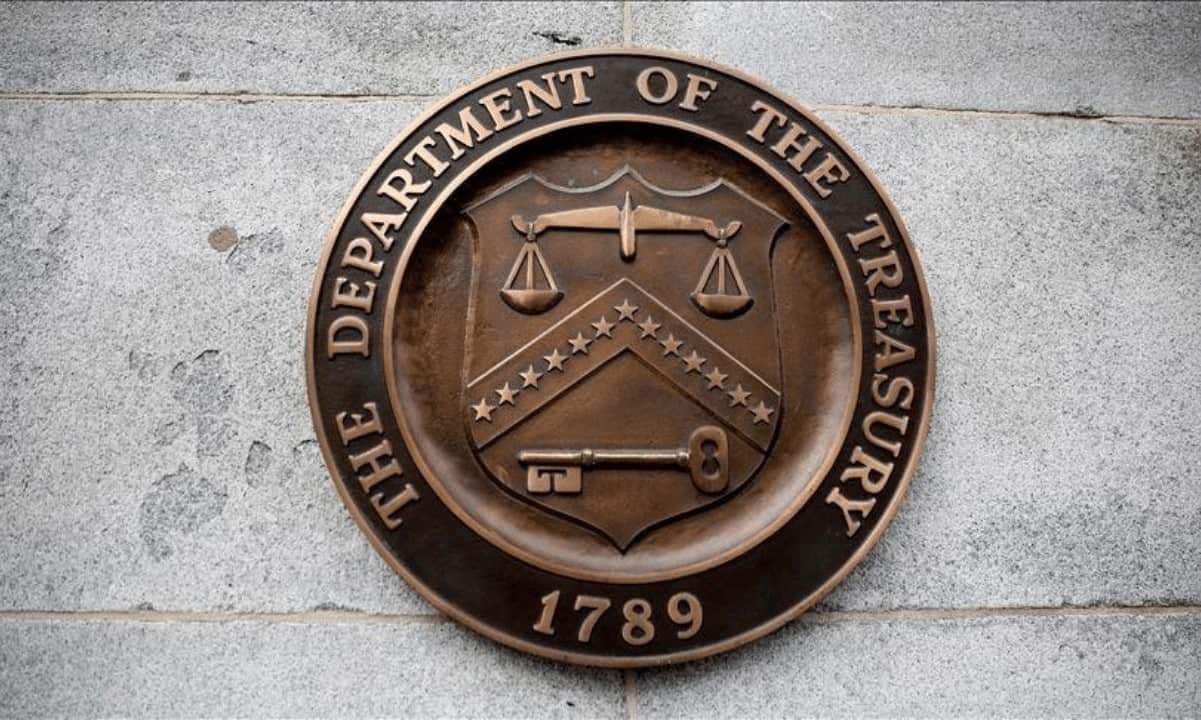
US Treasury imposes sanctions on Sinaloa Cartel associates for crypto money laundering.

Analyst Highlights Ethereum 'Kill Zone' for Optimal Buying

Bitcoin may enter a critical pullback phase if it falls below $74,929.

XRP sees whale accumulation amid market uncertainty, down 5% this week.

Bitcoin may be poised for outperformance against stocks and bonds as inflation persists and bond markets weaken, according to Mark Connors. After a historic 142-day underperformance against the S&P 500, bitcoin is now in a consolidation phase shifting towards outperformance.
See every story in Crypto — including breaking news and analysis.
Witt also discussed the Guiding and Establishing National Innovation for U.S. Stablecoins (GENIUS) Act, the stablecoin-issuer law passed last year, where rulemaking by the Treasury Department, the Office of the Comptroller of the Currency, the Federal Deposit Insurance Corp. and other agencies is closing in on a one-year July deadline.
"These are complicated issues. They require following the Administrative Procedures Act, soliciting comments. And we received a flood of comments," Witt said. The law, he added, exemplifies "the efficient frontier of regulation: just enough to allow an industry to flourish… but not so much that you overly burden an innovation into irrelevance."