
Crypto longs lose $500 million as bitcoin slides to $78,000, SOL and XRP down 5%
Crypto longs face $500 million losses as Bitcoin slides to $78,000
CoinDesk1 min read

Circle is facing backlash over a proposal to increase USDC borrowing costs on Aave, which critics argue would worsen the liquidity crunch. The Aave lending pool is struggling with low liquidity and stagnant borrowing rates amid ongoing market issues.
Mentioned in this story
Circle is facing a wave of criticism after a proposal linked to its chief economist suggested sharply increasing USDC borrowing costs on Aave, as the lending pool grinds through a liquidity crunch that has dragged on since the KelpDAO exploit.
The plan has gone down badly with DeFi users, many of whom say it would make things worse for people already trapped in a broken market.
On April 22, Circle CEO Jeremy Allaire shared a forum post by Gordon Liao outlining adjustments to Aave v3 parameters to fix what he called a “non-clearing” market for USDC.
The pool has been stuck near full utilization for four days. Available liquidity sits below $3 million. Borrow rates have been flat at around 14% even as roughly $60 million drained out of the pool in a single day.
Liao’s fix centers on the “Slope 2” parameter, which controls how sharply borrowing rates climb at high utilization. He wants to raise it to as high as 50%, while also lowering the optimal utilization threshold.
His argument is that 14% simply is not high enough to pull fresh capital in, because many of the people currently borrowing do not particularly care what the rate is; they are trying to exit positions that the April 18 KelpDAO exploit left them stuck in, and they will pay almost whatever it costs to get out.
At full utilization, the parameters would push the maximum supply rate to around 48%. Liao compared the logic to how traditional money markets work: rates spike, capital arrives, rates come back down. He also stressed the post is his personal view, not an official Circle position.
However, after talking to some community members, the economist walked back parts of the proposal. He acknowledged in a follow-up comment on the Aave forum that liquidation thresholds were much lower than he had initially expected.
The exploit itself drained nearly $300 million from KelpDAO, with attackers using compromised rsETH as collateral on Aave to borrow large amounts of real assets, leaving behind bad debt and frozen positions across the protocol.
The response was not warm. Forum user Zeebradoom put it plainly: Liao was “proposing a 50% interest rate on a population that is in some cases physically unable to deleverage.”
The proposal is controversial because critics believe it would exacerbate the existing liquidity crunch and negatively impact users already struggling in a broken market.
The current borrowing rates for USDC on Aave have remained flat at around 14%, despite significant liquidity challenges.
The available liquidity in the Aave USDC pool is currently below $3 million.
The liquidity crunch in the Aave USDC pool has been ongoing since the KelpDAO exploit, which led to a significant withdrawal of funds.
Crypto longs face $500 million losses as Bitcoin slides to $78,000

Pi Network warns users about scams and provides official account verification.

XRP's price surges to $1.55 as network usage spikes, driven by the CLARITY Act.
The CLARITY Act's passage boosts Bitcoin's outlook, but risks loom ahead.

The CLARITY Act clears the way for XRP's rise, targeting $2.
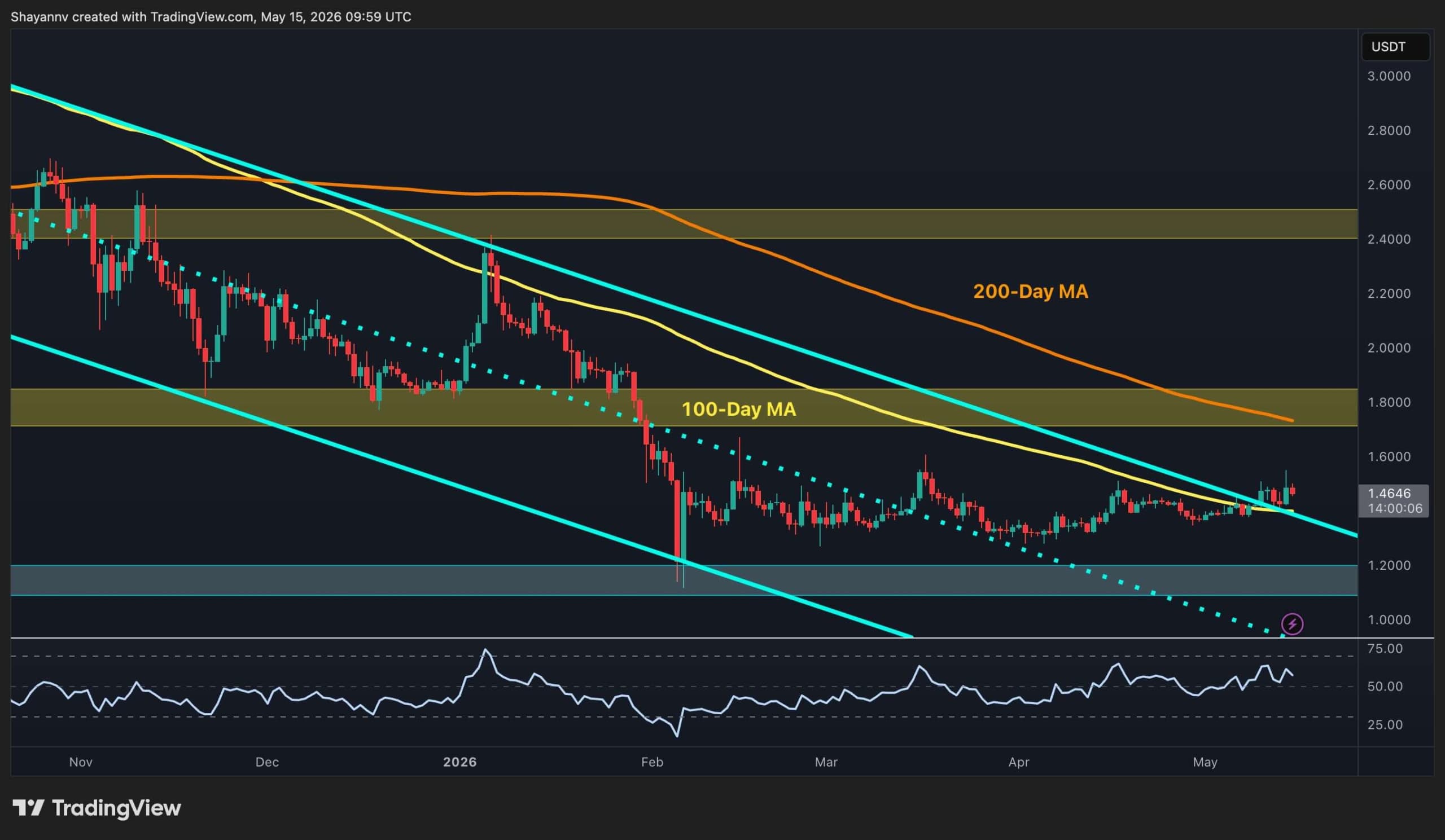
XRP shows bullish momentum, trading at $1.43 and breaking key resistance levels.
See every story in Crypto — including breaking news and analysis.
Another commentator, JosueMpia, said Aave’s priority right now should be “rebuilding market confidence rather than aggressively forcing utilization normalization through extreme interest rate adjustments.” He warned of liquidation cascades and said he would vote against it.
On X, people were less measured. “You need to fire your chief economist,” wrote Avant Protocol CEO Rhett Shipp. Another user went further, arguing that Circle should have deposited USDC directly into the pool instead of drafting governance proposals.
YCC founder Duo Nine stripped it down to the basics:
“Circle’s proposed solution for the Aave crisis is to hike interest rates and liquidate everyone.”
The only one who gave Liao partial credit was pseudonymous analyst PaperImperium, who pointed out that while the diagnosis was not wrong, the prescription was off.
“Going straight to 40% seems destined to force liquidations,” they wrote.
They also raised a harder question, asking if any serious lender would actually put money into the pool at elevated rates when nobody yet knows how much bad debt is sitting in the system.
“This is at its heart a risk that is unmeasured,” the analyst stated.