What Solana’s 108% Growth Means For Its Price Outlook
Solana's SOL per share has surged 108% over the past year, despite price struggles.
NewsBTC1 min read

Ripple's XRP is being tested in Russia for cross-border payments, highlighting its potential as a blockchain alternative to traditional systems. Early trials by the Bank of Russia suggest XRP could facilitate international transactions if legal and technical challenges are addressed.
Mentioned in this story
As global payment systems face pressure to become faster, cheaper, and less dependent on legacy intermediaries, attention is returning to blockchain-based alternatives. While countries explore alternatives to traditional systems, digital assets are increasingly entering the conversation, and XRP is drawing attention. Recent reports around early testing in Russia have sparked fresh discussion about whether XRP could play a larger role in the future of international payments.
Connections between Ripple’s technology and Russia have surfaced through a mix of central bank experimentation and academic research. SMQKE, a market commentator on X, has revealed that in 2018, the Bank of Russia conducted a test on the Ripple platform in its Novosibirsk innovation laboratory, evaluating its potential for cross-border settlements. This outcome suggests it could serve as the basis for such a system pending resolution of organizational, legal, and technical barriers.
Beyond central bank trials, Ripple and XRP have also been highlighted in institutional circles. A report from JPMorgan Chase, reportedly shared exclusively with Mihail Turlakov at Sterbank of Russia, mentioned Ripple for its speed, low cost, and liquidity advantages. This positions it as a compelling digital asset for financial institutions at scale and a potential disruptor in global cross-border payments.
Related Reading: How XRP Ledger Positions Itself At The Center Of Institutional Capital Flows
Academic interest further reinforces this narrative. A 2020 paper from Southern Federal University presented at the FETDE 2020 conference examined blockchain adoption in Russia, giving specific attention to XRP’s role as a bridge currency for payments. Meanwhile, the paper also referenced the spam protection tool on the Ripple network.
Coverage from CoinDesk points to a deeper strategic shift at Ripple centered on vertical integration across the financial stack. BankXRP mentioned a series of 2025 acquisitions involving Hidden Road for prime brokerage with $3 trillion in annual clearing, GTreasury for treasury management with $13 trillion in payments volume, and Rail for stablecoin payments infrastructure.
The Bank of Russia tested Ripple's platform in 2018 at its Novosibirsk innovation laboratory to evaluate its potential for cross-border settlements.
XRP is considered a compelling digital asset due to its speed, low cost, and liquidity, positioning it as a potential disruptor in international payments.
The adoption of XRP for cross-border payments faces challenges related to organizational, legal, and technical issues that need to be resolved.
Solana's SOL per share has surged 108% over the past year, despite price struggles.

Bitcoin is struggling to break key resistance levels, currently facing selling pressure below $82,885. Attention is shifting to major Fibonacci support areas around $74,929 and $71,000–$68,000 as potential stabilization points.

Crypto analyst urges XRP investors to utilize the asset instead of passively holding it.
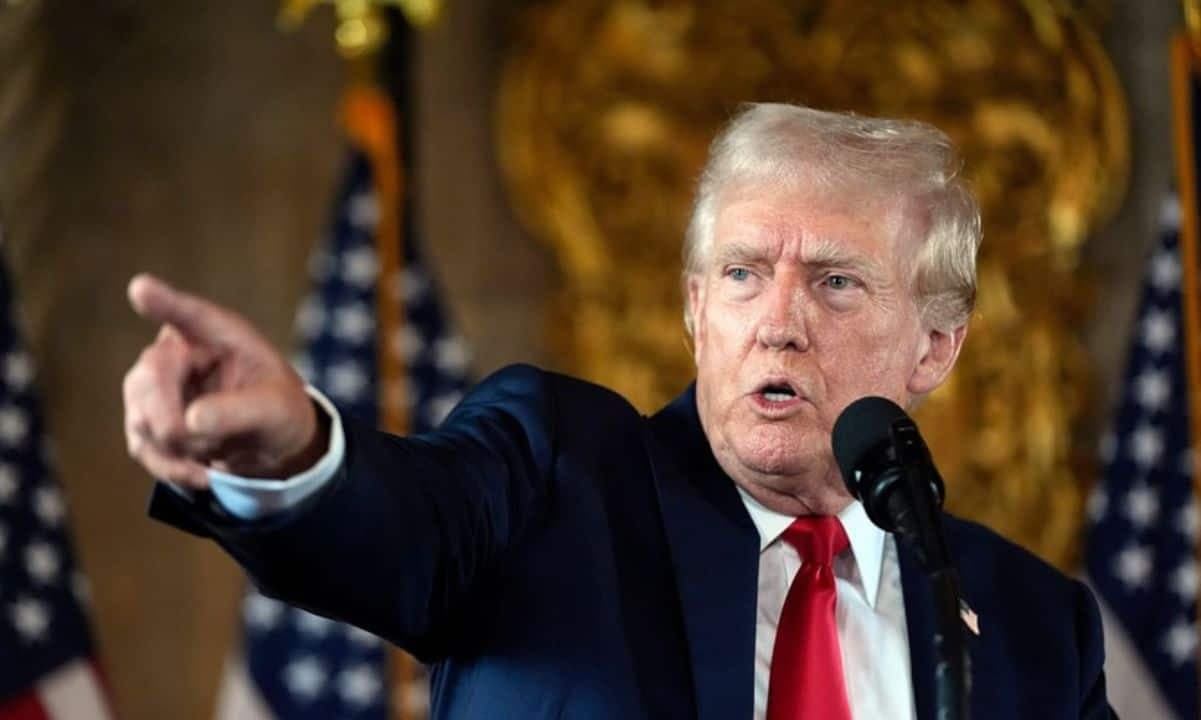
Donald Trump adds Coinbase and Bitcoin stocks to his portfolio in 2026.

Bitcoin price shows signs of consolidation around $80,000 as market dynamics shift.

Crypto analyst Gargoyle advises waiting to buy Bitcoin until high volume signals a bottom.
See every story in Crypto — including breaking news and analysis.
These moves create end-to-end control over custody, liquidity, and settlement. This enables Ripple to integrate its RLUSD stablecoin, which is designed to enable near-instant cross-border payments with fewer intermediaries than traditional correspondent banking systems.
Furthermore, this approach positions Ripple as an institutional financial stack provider rather than just a payments or stablecoin company, as detailed in the CoinDesk Data report commissioned by Ripple.
Coinbase is set to introduce a Trade at Settlement (TAS) feature for XRP futures on May 1, 2026, marking a major step forward for regulated institutional execution.
BankXRP has also mentioned that this new TAS mechanism tool allows institutional participants to execute block trades at the official settlement price, rather than being exposed to unpredictable intraday volatility.
XRP trading at $1.41 on the 1D chart | Source: XRPUSDT on Tradingview.com
Featured image from iStock, chart from Tradingview.com